BaZi health reading
First Things First: What Exactly Is a BaZi Chart?
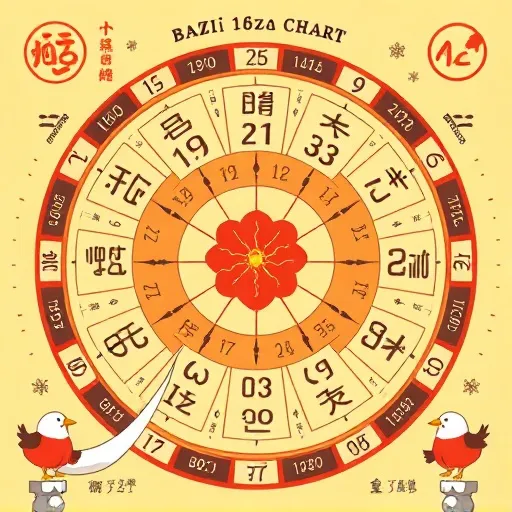
Before we get into the nitty-gritty of how to read your bazi chart for health, let's make sure we're on the same page about what this thing actually is. BaZi — literally "Eight Characters" — is a Chinese astrology system that maps out your exact birth moment using four pillars: the year, month, day, and hour you were born. Each pillar contains a Heavenly Stem and an Earthly Branch, which gives you eight characters total. From those eight characters, a skilled practitioner can derive your Five Elements balance (Wood, Fire, Earth, Metal, and Water), your Day Master (the core representation of you), and a whole lot more. Think of it as your personal operating system: your Day Master is the processor, the Five Elements are your installed apps, and the way they interact determines how smoothly everything runs — including your physical body. That's the foundation of how to read your bazi chart for health, and it's way less mysterious than it sounds.
Why the Five Elements and Organ Correspondences Matter for Your Health
Here's where it gets interesting. In traditional Chinese medicine, each of the Five Elements corresponds to specific organs, emotions, and bodily functions. When you analyze your BaZi chart, you're essentially checking which elements are abundant, which are scarce, and which are clashing. That imbalance? It often shows up in your body long before it shows up on a lab report. This is exactly why how to read your bazi chart for health is such a practical skill — you're basically reading your body's user manual.
- Wood — Liver and gallbladder. Linked to tendons, eyes, and the emotion of anger. A weak Wood element might show up as sluggish digestion or irritability.
- Fire — Heart and small intestine. Linked to blood vessels, complexion, and joy. Excess Fire can mean anxiety, insomnia, or inflammation.
- Earth — Spleen and stomach. Linked to muscles, digestion, and worry. Weak Earth often translates to poor nutrient absorption or fatigue.
- Metal — Lungs and large intestine. Linked to skin, respiratory function, and grief. Metal deficiency may show up as allergies or frequent colds.
- Water — Kidneys and bladder. Linked to bones, hormones, and fear. Depleted Water can mean low vitality, back pain, or hormonal imbalance.
Now, before you panic — having a "weak" element doesn't mean you're destined for illness. It means you have a tendency, a predisposition. And predispositions can absolutely be managed with awareness and the right lifestyle adjustments. That's the whole point of how to read your bazi chart for health: spotting tendencies early so you can work with them, not against them.
Step One: Find Your Day Master and Elemental Identity
Your Day Master is the Heavenly Stem of your birth day — and it's the single most important reference point in your entire chart. It represents you: your core constitution, your elemental identity. Are you a Yang Wood person — tall, driven, maybe a little stiff in the joints? Or a Yin Fire type — warm, expressive, prone to overstimulation? Each Day Master carries its own health signature. A BaZi analysis always starts here because everything else in the chart is read in relation to your Day Master. If you don't know yours yet, you can calculate it using any reputable BaZi calculator online. You'll need your exact birth date, time, and location. (Yes, the hour matters — a lot.) This single step is the gateway to how to read your bazi chart for health with any real accuracy.
Step Two: Count Your Elements and Spot the Imbalances
Once you have your chart laid out, take a look at the distribution of the Five Elements across all eight characters. What you're looking for:
- Missing elements — An element completely absent from your chart often points to a system in your body that needs extra support.
- Dominant elements — An element that appears three or four times can indicate excess, which in Chinese medicine often manifests as inflammation, stagnation, or overactivity in the corresponding organ system.
- Clashing elements — Certain pairings (like Fire and Water, or Wood and Metal) create tension in the chart, and that tension can mirror internal bodily stress.
For example, if your chart is drowning in Water but has zero Fire, a practitioner might flag potential circulatory or cardiovascular vulnerability. If Earth is dominant, digestive health becomes a lifelong focus area. This element-counting exercise is a core part of how to read your bazi chart for health — it's where the abstract symbols start turning into concrete body signals.
Step Three: Read the Month Pillar as Your Body's Season
The month pillar in your BaZi chart is often called the "parents" pillar, but it's also deeply connected to your physical constitution. The season you were born into shapes your elemental environment at birth, and that environmental imprint lingers. Someone born in the dead of winter (Water season) tends to have a cooler constitution — they may run cold, have slower circulation, or struggle with dampness. Someone born in peak summer (Fire season) often runs hot, with a tendency toward dehydration, skin issues, or restlessness. Understanding your birth season gives you a baseline for how to balance your body through diet, exercise, and daily routines. When people ask about how to read your bazi chart for health, this month-pillar piece is the one most folks overlook — and it's one of the most telling.
Step Four: Examine the Interactions Between the Four Pillars
This is where Four Pillars analysis gets nuanced. Beyond just counting elements, you want to look at how the pillars interact with each other. Combinations, clashes, punishments, and harms — these are the relational dynamics that reveal where energy flows smoothly and where it gets stuck. A clash between your day pillar (self) and your year pillar (ancestry/environment) might suggest a constitutional sensitivity that runs in the family. A combination that transforms one element into another can indicate a health pattern that shifts over time — meaning what works for you in your twenties may not work in your forties. This layered insight is exactly what makes Chinese astrology health analysis so valuable. It's not static. It evolves with you. And it's a big part of how to read your bazi chart for health beyond the beginner level.
Step Five: Track Your Luck Pillars for Health Forecasting
Your natal chart is the foundation, but your Luck Pillars (also called 10-year major cycles) add a time dimension. Each decade of your life is governed by a specific pillar that introduces new elemental influences. This is where health forecasting becomes really practical. If you're entering a decade dominated by an element that's already excessive in your natal chart, that's a flag to be proactive about the corresponding organ system. If you're moving into a cycle that brings in a missing element, it might be a period of improved vitality — or, conversely, a time when your body has to adjust to unfamiliar energy. In 2026, more wellness-focused practitioners are incorporating this kind of cyclical thinking into their work. A BaZi reading isn't just a one-time snapshot — it's a dynamic tool you can revisit year after year. Master this, and how to read your bazi chart for health becomes a lifelong practice rather than a one-off curiosity.
Step Six: Cross-Reference Your Chart With Real-Life Symptoms
Here's the crucial part that a lot of people skip: don't treat your chart as a diagnosis. Treat it as a hypothesis. If your BaZi chart suggests weak Metal (lungs, skin), and you've had eczema since childhood and catch every cold that goes around — congratulations, you've found a correlation. That's useful information. It tells you to prioritize respiratory health and skin health, maybe through breathwork, dietary adjustments, or environmental awareness. But if your chart says one thing and your body says another, always trust the body. A day master analysis is a lens, not a verdict. Use it to ask better questions, not to self-diagnose. This honest, grounded approach is the heart of how to read your bazi chart for health responsibly.
Practical Takeaways for Applying Your Chart in 2026
So what do you actually do with all this? Here are some grounded, actionable ways to apply your BaZi chart to your health:
- Adjust your diet by element. If Wood is weak, incorporate more green, leafy foods and sour flavors. If Water is depleted, prioritize hydration, healthy fats, and mineral-rich foods.
- Time your activities with your cycles. Use your Luck Pillars to anticipate high-stress decades and build in more recovery time.
- Support your weakest organ system proactively. Don't wait for symptoms. If your chart flags a vulnerability, get regular check-ups and adopt preventive habits early.
- Use emotional awareness as a health tool. Each element is tied to an emotion. Chronic anger (Wood imbalance) and chronic worry (Earth imbalance) are real physiological stressors. Your chart can help you spot emotional patterns before they become physical ones.
- Revisit your chart annually. As you age and move through different cycles, your health priorities shift. A yearly review keeps your strategy current — and keeps your how to read your bazi chart for health skills sharp.
A Quick Word of Caution About BaZi and Medical Care
Reading your BaZi chart for health is a complementary practice — it's not a replacement for medical care. Think of it as a conversation partner to your doctor, not a substitute. The best practitioners of Chinese astrology health analysis will always tell you the same thing: use the chart to understand your tendencies, then work with qualified healthcare professionals to address actual conditions. Also, be wary of anyone who claims your chart predicts a specific disease with certainty. That's not how this works. Four Pillars analysis reveals patterns and probabilities, not fixed outcomes. You always have agency. Knowing how to read your bazi chart for health means knowing its limits, too.
Your Chart Is a Conversation, Not a Command
Learning how to read your bazi chart for health is a bit like learning a new language — the language your body has been speaking your whole life. It won't give you all the answers, but it will give you better questions. And in a world where wellness advice is increasingly generic and one-size-fits-all, that kind of personalization is genuinely valuable. Whether you're a seasoned BaZi enthusiast or someone who just discovered their Day Master last week, the journey is the same: stay curious, stay grounded, and let the chart be a guide — not a gospel. Your body already knows what it needs. The chart just helps you listen more clearly. So pull up your chart, trace those eight characters, and start the conversation — because how to read your bazi chart for health is a skill that keeps giving back, year after year.