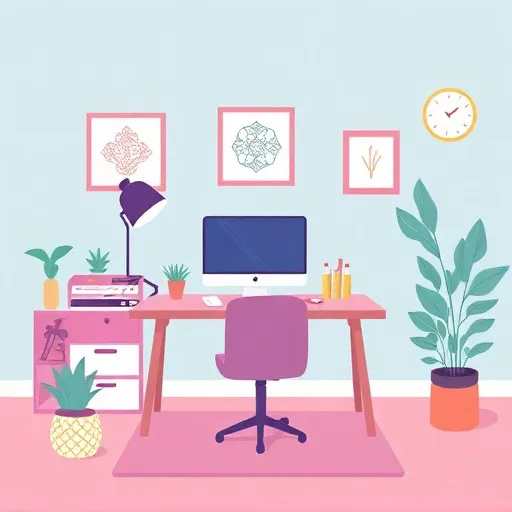
Remote work is now p
Why Feng Shui for the Office Desk Is Having a Moment
Let's be real for a second — the way we work has been completely reshuffled over the past few years. Remote and hybrid setups that everyone once called "temporary" have become permanent for a massive chunk of the workforce. And that means the desk you plant yourself at every single day isn't just a piece of furniture anymore. It's your command center, your conference room, and honestly, sometimes your entire office. That's exactly why more people than ever are digging into how to set up a feng shui office desk — because when your workspace is also your living space, the stakes feel a lot higher.
Feng shui fits neatly into this shift because it's fundamentally about one thing: intentional placement. It asks you to think about where you sit, what you face, what's behind you, and what's cluttering your line of sight. Even if you're skeptical of the metaphysical side, the practical side — better lighting, clearer sightlines, less clutter, a real sense of control over your space — is pretty hard to argue with. Plenty of interior designers and workplace consultants now borrow feng shui principles without ever calling them that. So whether you're a believer, a curious beginner, or just someone who wants a desk that doesn't make you sigh every morning, learning how to set up a feng shui office desk has something real to offer you.
The Command Position and Office Desk Layout for Maximum Focus and Control
If you only take one thing away from this whole article, make it this: the command position. In feng shui, the command position is the spot in a room where you can see the doorway without being directly in line with it, and where you have a solid wall behind you. Think of it as the "seat of power" — the spot a confident leader would naturally choose. Sitting there is believed to promote feelings of security, focus, and control, while sitting with your back to a door or in a direct line of traffic is thought to create low-grade anxiety (which, let's be honest, most of us already feel at work).
Here's how to find it when you're figuring out how to set up a feng shui office desk in a typical room:
- Place your desk so you face the doorway at a slight diagonal — you should be able to see who enters without staring straight at the opening.
- Put a solid wall behind you. A window behind your back is considered unstable in feng shui (and it's genuinely distracting).
- Avoid sitting directly in line with the door, which is thought to let energy rush at you too aggressively.
- If your room doesn't allow this — small apartments, shared spaces, awkward layouts — don't panic. A small mirror or reflective surface positioned to show you the doorway is a classic workaround.
If you work in an open-plan office or a co-working space, adapt rather than abandon the principle. Face outward from your cubicle or desk cluster when you can, and avoid having your back exposed to a main walkway. This is one of the most practical tips for how to set up a feng shui office desk when you don't control the whole room.
Choosing the Right Desk and Chair with Feng Shui Five Elements and Ergonomics
Feng shui extends to the furniture itself. The shape and material of your desk carry meaning, and — conveniently — the recommendations tend to align with good ergonomics. When you're thinking about how to set up a feng shui office desk, don't skip the furniture.
Desk Shape, Wood Material, and the Five Elements Framework
- Rounded or soft-edged desks are preferred over sharp, angular ones. Sharp corners are said to create "poison arrows" — directed energy that feels aggressive. If you're stuck with a rectangular desk, just avoid pointing a sharp corner directly at where you sit.
- Wood is the classic choice. In the five-element framework, wood represents growth, creativity, and upward momentum — all good things for a career. Solid wood or wood-veneer desks are ideal.
- Glass desks can work, but they're associated with the water element and can feel "slippery" or unstable. If you love your glass desk, balance it with wood accents or a plant.
- Avoid overly small desks if you can help it. Feng shui values a sense of space and expansiveness; a cramped desk signals cramped thinking.
Chair Back Support and Armrests for Command Position Energy
Your chair should have a high, supportive back — ideally one that covers your shoulder blades. This ties back to the command position principle: a solid back equals support. A chair with armrests is also favored, since it suggests being "held" and supported in your work. It's a small detail, but it matters when you're learning how to set up a feng shui office desk that actually feels good to sit at.
Office Desk Placement Rules to Avoid Slanted Ceilings and Window Glare
Beyond the command position, there are a few placement rules worth knowing. These are the ones people ask about most often when they're figuring out how to set up a feng shui office desk:
- Don't put your desk directly under a window facing out. Facing a window sounds lovely, but in feng shui it's considered distracting — your energy scatters outward instead of focusing on your work. It's also a real-world glare problem. If you must face a window, keep it to your side rather than directly in front.
- Avoid placing your desk under a slanted ceiling or exposed beam. Overhead beams are thought to create "pressure" energy directly above you. This is a very old principle, and honestly, it just makes sense — nobody feels relaxed sitting under a heavy beam.
- Keep your desk away from the door's direct path. You want to see the door, not be in the door's traffic lane. A desk planted right in the entry path is thought to invite disruption and distraction.
- Don't back your desk against a window. A solid wall behind you is the goal. A window behind you is considered a lack of backing and can create a subtle sense of vulnerability.
Decluttering Your Workspace for Energy Flow and Qi Circulation
Here's where feng shui and every productivity system on earth agree: clutter is the enemy. In feng shui, clutter is believed to stagnate energy — it blocks the flow of qi and creates mental friction. In practical terms, a messy desk makes it harder to focus, find things, and feel calm. Before you even think about how to set up a feng shui office desk with decor, you've gotta clear the surface first.
- Clear everything off the desk surface. Yes, everything.
- Sort into three piles: keep, relocate, and discard or donate.
- File or digitize paper. Paper piles are the number one offender.
- Tame the cables. Tangled cords are literal knots of stagnant energy — and they look terrible. Cable clips and a single power strip go a long way.
- Keep only what you use daily on the surface. Everything else lives in a drawer or on a shelf.
Once the surface is clear, you'll be amazed how much lighter the whole room feels. That's not mystical — it's just psychology. But feng shui would say the energy is moving again, and that's a key step in how to set up a feng shui office desk that actually works.
Desk Decor Ideas with Plants, Warm Lighting, and Earth Element Objects
Now for the fun part. Feng shui has opinions about desk decor, and most of them are genuinely pleasant additions to a workspace. Here's what to add — and what to keep off — when you're deciding how to set up a feng shui office desk:
- A small plant. Wood element, growth, life. A pothos, snake plant, or small bamboo works well. Bonus: plants have been shown to improve mood and air quality.
- A small lamp with warm light. Fire element. Good task lighting also reduces eye strain.
- A meaningful object. A small stone, a photo, a piece of art that represents a goal. Feng shui encourages objects with personal meaning over generic decor.
- A bowl or tray for organization. Earth element — grounding and stabilizing.
- Something round. Round shapes soften sharp angles and are said to smooth energy flow.
Things to reconsider: sharp, pointed objects aimed at your seat (scissors, letter openers, angular art); clutter piles (we covered this); dried or dead plants (replace them); too many reflective surfaces directly in front of you, which can feel distracting; and a mirror facing your desk, which in feng shui can be thought to reflect energy back and forth, creating restlessness.
Lighting, Color Palette, and Bagua Map Zones for a Balanced Office Desk
Lighting is where feng shui and modern workspace science overlap most neatly. Natural light is ideal — position your desk to get daylight from the side rather than straight ahead or behind. For artificial light, aim for a mix: a warm task lamp for focused work, and softer ambient light for the rest of the room.
On color, feng shui generally favors earth tones (beige, warm brown, terracotta) for stability and focus, soft greens and blues for calm and creativity, and warm neutrals as a base with one or two accent colors that reflect your goals. Bright reds and oranges are energizing but can be overstimulating in large doses — use them as accents, not wall colors, unless you thrive on high energy.
The bagua map is the feng shui energy map you can overlay on your desk to assign zones to different life areas — wealth, career, creativity, relationships, and so on. A simple way to use it: mentally divide your desk into a 3x3 grid. The far-left corner (from your seated position) is often associated with wealth and abundance — many people place a small plant or a meaningful object there. The center is health and balance — keep it clear. The front-center is career — a good spot for your monitor or the work you're actively focused on. Don't overthink it. The point is intention, not perfection. This is a fun layer to add once you've nailed the basics of how to set up a feng shui office desk.
Digital Clutter, Monitor Placement, and Tech Setup for Feng Shui Office Desk
In 2026, no desk setup guide is complete without addressing tech. Feng shui doesn't have ancient rules about monitors and webcams, but the underlying principles apply beautifully when you're figuring out how to set up a feng shui office desk in the modern era:
- Position your monitor so you're not directly facing a window — that means less glare and less scattered energy.
- Keep your screen at eye level — good ergonomics and good energy flow.
- Clear your digital desktop too. A cluttered screen creates the same mental friction as a cluttered desk. Feng shui practitioners increasingly talk about "digital clutter" as part of the environment.
- Hide the cable nest. Yes, again. It really matters.
Common Feng Shui Office Desk Mistakes and Seasonal Maintenance Tips
Even well-intentioned setups go wrong. Watch out for these when you're learning how to set up a feng shui office desk:
- Chasing perfection. Feng shui is about flow, not a magazine spread. A slightly imperfect setup you actually use beats a perfect one that stresses you out.
- Over-decorating. More objects don't mean more energy — they often mean more clutter.
- Ignoring ergonomics. No amount of good feng shui fixes a chair that hurts your back.
- Forgetting maintenance. The setup isn't a one-and-done. Revisit it seasonally — a two-minute tidy at the end of each day keeps the energy (and your sanity) flowing.
And if you're wondering whether you can pull this off in a tiny apartment or shared office — absolutely. The core principles of how to set up a feng shui office desk — command position, decluttering, intentional placement — scale down beautifully. In a small space, a mirror to see the door and a clear desk surface go a long way. You don't need to buy special feng shui items, either. Plants, lamps, a tray, and a clear surface are more than enough. Most people feel a shift immediately after decluttering and repositioning — it's largely psychological — and deeper benefits build over weeks as the space becomes a habit. Setting up a feng shui office desk isn't about superstition; it's about being deliberate with the space where you spend a huge portion of your life, and honestly, that's something worth getting right.