Professional illustration about Development
USDA Office Overview
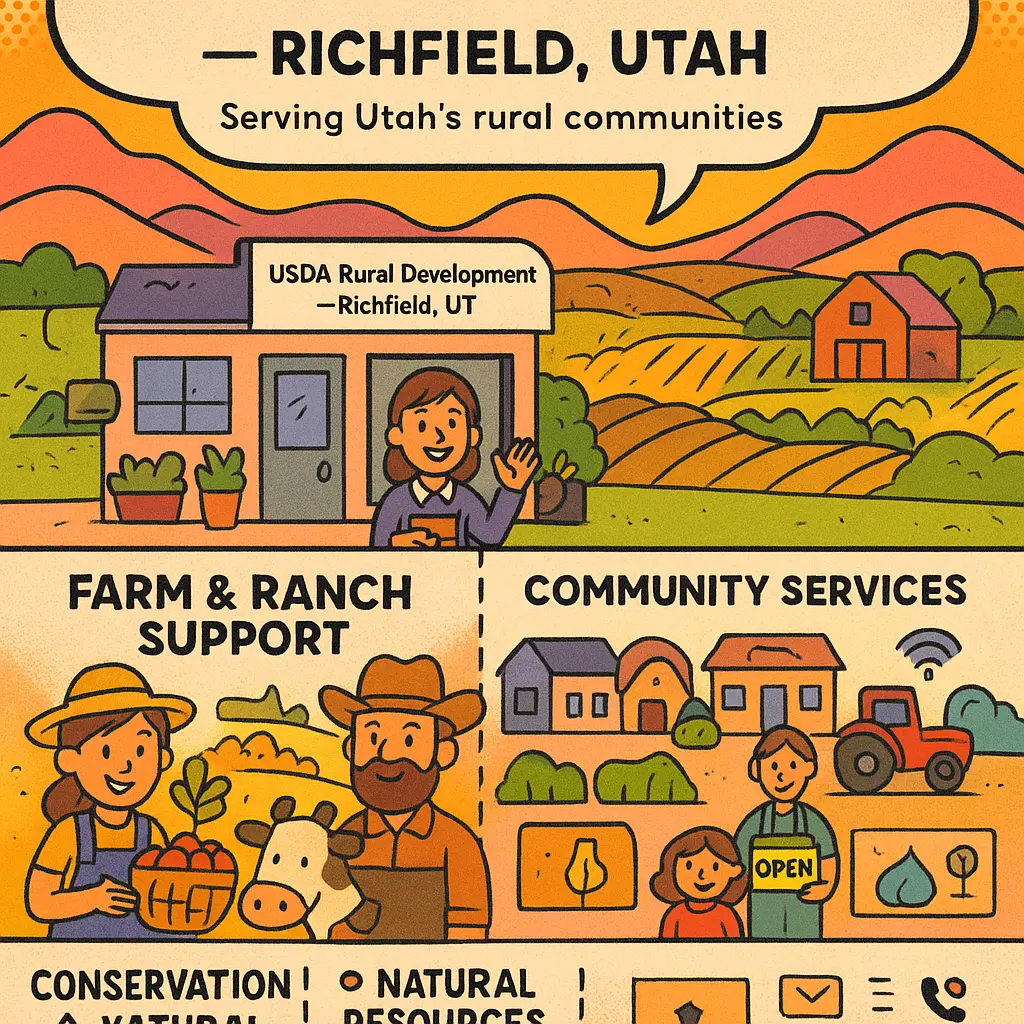
The USDA Rural Development office in Richfield, Utah, serves as a crucial hub for advancing the mission of the United States Department of Agriculture in the heart of Utah’s rural communities. As part of the broader Utah State Office network, the Richfield location connects local farmers, ranchers, business owners, and tribal groups with an extensive range of rural development programs tailored to address the unique challenges and opportunities present in south-central Utah. Staffed by experts in areas like community facilities funding, Single Family Housing Guaranteed Loan Program servicing, and Water and Environmental Programs, the office offers hands-on assistance with everything from grant applications to navigating program regulations.
USDA’s Richfield office is a cornerstone for rural economic development, focusing on programs that foster growth, public health, and infrastructure improvement. For example, through the Business and Industry Guaranteed Loan and Value-Added Producer Grants, local agricultural producers and entrepreneurs can secure financing to expand operations, add new product lines, or innovate their business models. These business loan guarantees not only benefit individual enterprises but also create jobs and strengthen the economic fabric of rural communities. The office’s involvement doesn’t stop at funding; specialists provide cooperative development guidance, helping small towns form partnerships for shared equipment, distribution channels, or community facilities projects.
Support for essential infrastructure is another major function of the USDA office. The Water & Waste Disposal Loan & Grant Program is particularly impactful for communities facing aging water systems or environmental challenges. Staff at the Richfield Service Center walk local governments and utility districts through each phase—from initial needs assessment to final project close-out—ensuring compliance with all USDA and federal regulations. In recent years, the office has been instrumental in launching water and wastewater projects that directly improve public health by providing safe drinking water and reliable sanitation to residents throughout the region.
Housing is a primary concern in rural Utah, and the Richfield USDA office is a go-to resource for both individuals and developers seeking access to affordable options through Single Family Housing loans and Multifamily Housing Programs. Whether guiding a first-time homebuyer through the Guaranteed Loan application process or assisting a nonprofit in developing multi-unit complexes for workforce housing, USDA representatives ensure residents understand eligibility requirements, application steps, and ongoing USDA loan servicing. The office also collaborates with tribal relations liaisons to make sure housing and infrastructure programs are accessible and culturally appropriate for Native American communities.
Beyond economic and housing development, the USDA office in Richfield actively supports conservation and stewardship of Utah’s natural resources. Staff coordinate with field offices and National Forests to promote sustainable agriculture, soil health, and water conservation practices. Technical assistance is available for farmers and ranchers interested in implementing new conservation measures or participating in cost-share programs that enhance productivity while protecting the land for future generations.
To make its services more accessible, the Richfield office operates as part of a network of USDA office locators and Service Centers across Utah. Residents and local officials can schedule appointments for in-person consultations, attend workshops on grant awards and program updates, or access resources on rural health, infrastructure projects, and community facilities programs. The office’s commitment to personalized, responsive service ensures that rural Utahns—regardless of their community’s size—have an advocate and resource to help them navigate the complex landscape of federal rural development assistance.
In summary, the USDA Rural Development office in Richfield is not just a government outpost—it is a partner and problem-solver, dedicated to improving the quality of life, economic vitality, and sustainability of Utah’s rural communities. Through its comprehensive suite of programs and its deep local knowledge, the office stands as a vital bridge connecting federal resources with the real-world needs of Utah’s farmers, ranchers, business leaders, and residents in 2026 and beyond.
Professional illustration about Agriculture
2026 USDA Programs
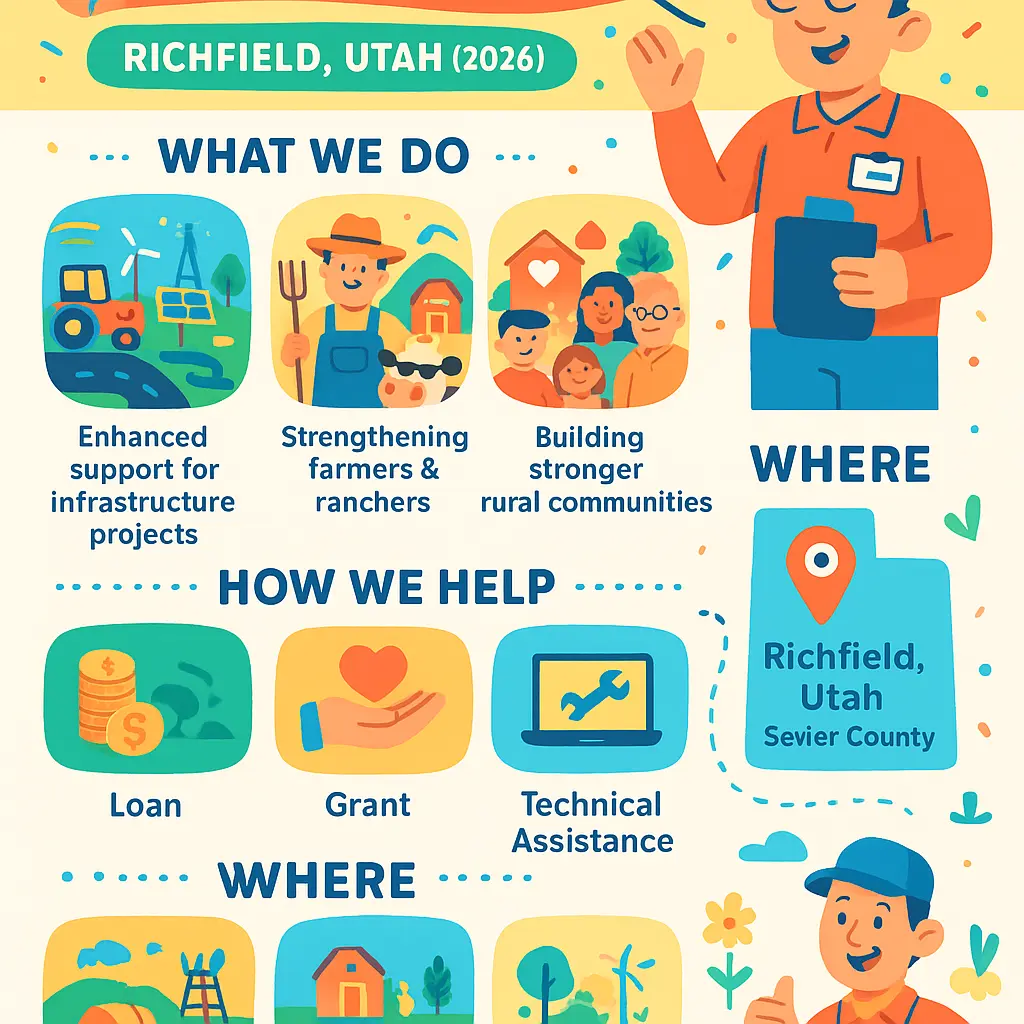
In 2026, USDA Rural Development programs in Richfield, Utah continue to evolve, offering a dynamic array of resources designed to strengthen local farmers, ranchers, and rural communities. The Utah State Office and regional Field Offices are rolling out enhanced support for infrastructure projects that focus on both economic growth and public health. One notable initiative this year is the Community Facilities Programs, which prioritize modernizing healthcare clinics, schools, and public safety buildings in Sevier County and surrounding areas. These funding opportunities are making a visible impact—helping communities access rural health resources, upgrade emergency services, and build resilient educational infrastructure.
Farmers and ranchers in Richfield can benefit from the 2026 Value-Added Producer Grants, which encourage agricultural producers to diversify operations and increase profitability by processing raw products into higher-value goods. This program gives local producers a competitive edge, supporting everything from artisanal cheese production to organic grain packaging. Alongside these grants, the Business and Industry Guaranteed Loan Program is expanding, now offering higher loan guarantees and streamlined USDA loan servicing to help small businesses access capital for equipment purchases, facility upgrades, and cooperative development.
Housing remains a top priority for the United States Department of Agriculture in Utah this year. The Single Family Housing Guaranteed Loan Program is enhancing eligibility for first-time homebuyers and moderate-income families, with updated program regulations reflecting the latest market data and property values in rural Utah. Additionally, the Multi-Family Housing Programs are improving rental options for seniors and low-income residents, supporting the construction and renovation of affordable apartment complexes in Richfield and neighboring towns. These efforts are especially significant for growing populations and reflect the USDA’s commitment to sustainable rural development.
Water and Environmental Programs have also seen significant advancements for 2026. The Water & Waste Disposal Loan & Grant Program is now funding larger-scale water treatment upgrades and environmental conservation projects, targeting rural communities facing aging infrastructure or water quality issues. Recent grant awards have enabled local governments to develop comprehensive water management plans and initiate natural resources conservation efforts, protecting the environment while ensuring reliable service for residents.
USDA continues to recognize the importance of tribal relations and cooperation with local governments. The Utah Service Center in Richfield is actively engaging with tribal communities and rural municipalities, ensuring that all eligible groups can access Rural Development funds and technical assistance. Through targeted outreach and program updates, the USDA office locator tools make it easy for stakeholders to find the right contacts and get personalized support for their grant applications or business loan guarantees.
For local entrepreneurs and cooperatives, 2026 brings new opportunities through Rural Business and Cooperative Programs. These initiatives foster economic development in rural areas by supporting startups, expanding existing businesses, and providing guidance for cooperative development. Workshops and webinars coordinated by the USDA Utah offices cover topics from sustainable business practices to leveraging community facilities funding for maximum impact.
Richfield’s proximity to National Forests also opens additional doors for natural resources conservation projects. USDA collaboration with local stakeholders supports responsible land management, fire prevention strategies, and conservation education efforts. Through these multifaceted programs, the United States Department of Agriculture is helping rural Utah build stronger, healthier, and more resilient communities in 2026.
Key tips for maximizing USDA support this year: - Engage with your local Field Office early for personalized guidance and updates about program regulations. - Explore multiple funding streams, such as combining infrastructure grants with business loan guarantees for comprehensive development. - Take advantage of technical assistance workshops to ensure your applications meet the latest criteria. - Stay informed on tribal relations initiatives and collaborative opportunities for inclusive rural development.
By leveraging the full range of 2026 USDA Rural Development programs, communities in Richfield, Utah can address critical needs in housing, healthcare, water systems, and business growth, ensuring continued prosperity and sustainability across the region.
Professional illustration about Agriculture
Richfield Utah Agriculture
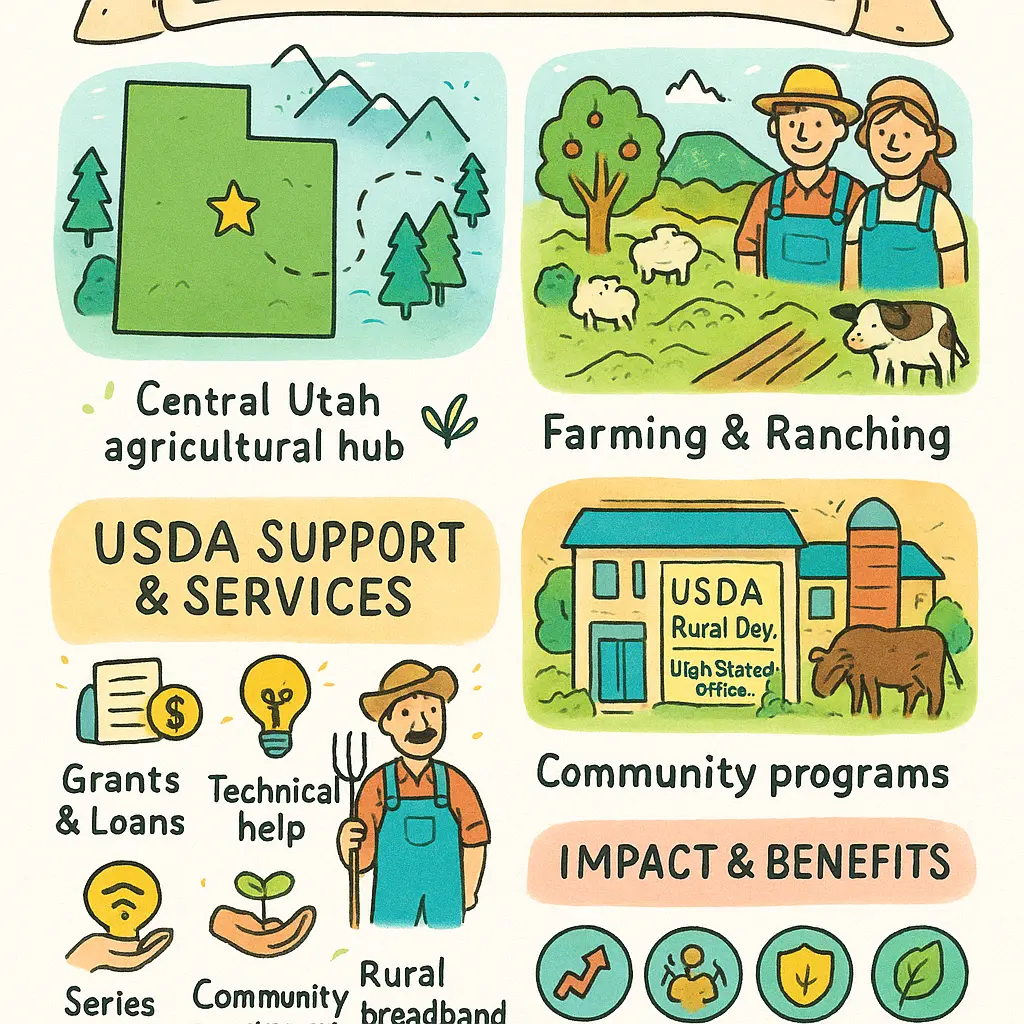
Richfield, Utah stands as a vibrant hub for agriculture in Central Utah, where generations of farmers and ranchers have shaped the local landscape and economy. The region thrives thanks to the ongoing support and resources from the USDA Rural Development and the Utah State Office, making it a model for rural communities throughout the state. With its deep roots in farming and ranching, Richfield’s agricultural community benefits from a range of rural development programs tailored to the unique needs of this area—including infrastructure projects, business loan guarantees, and public health initiatives—all facilitated by the United States Department of Agriculture’s dedicated field offices and Service Center based in the region.
One major pillar supporting Richfield’s agricultural vitality is the USDA’s Single Family Housing Guaranteed Loan Program, which enables farm families and agricultural workers to become homeowners right in the heart of rural Utah. This program not only stabilizes families but also helps sustain the workforce necessary for crops and livestock operations. Alongside this, the Multi-Family Housing Programs and Value-Added Producer Grants play a crucial role in expanding housing options and encouraging innovative agricultural businesses. For instance, many local producers have accessed Value-Added Producer Grants to develop specialty dairy products, artisan cheeses, and organic produce—boosting both farm income and the local economy.
Richfield’s agricultural infrastructure receives continual upgrades with help from the Community Facilities Programs and the Water & Waste Disposal Loan & Grant Program. These initiatives fund essential projects such as modernizing irrigation systems, expanding processing facilities, and improving water quality for both commercial and residential use. In 2026, several farms in Sevier County, where Richfield is located, benefited from newly awarded USDA grants for water conservation and infrastructure, directly impacting yields and overall sustainability. Such improvements also support natural resources conservation, ensuring that Richfield’s fertile valleys and public lands—including those near nearby National Forests—remain productive and healthy for future generations.
The Rural Business and Cooperative Programs empower local entrepreneurs by providing financial support and technical assistance for cooperative development, business expansion, and marketing efforts. For example, a group of young ranchers in the Richfield area recently utilized USDA-backed business loan guarantees to launch a cooperative focused on direct-to-consumer beef sales, effectively capturing a larger share of the market while preserving traditional ranching culture. These programs foster economic development in rural areas, create jobs, and encourage youth to stay and invest in their hometowns, directly countering rural population decline.
Richfield’s agricultural community further strengthens its resilience by partnering with USDA specialists on tribal relations and community facilities funding. This ensures that the voices of all rural residents—including neighboring tribal nations—are heard and that resources are allocated equitably. USDA loan servicing and program regulations are streamlined through the local Service Center, where farmers and ranchers can access personalized assistance and the USDA office locator simplifies finding the right contacts for specific needs.
Public health in Richfield also benefits from the close integration between agriculture and rural health resources, as healthy communities are essential for a robust farming sector. Through strategic investments in rural clinics, food safety initiatives, and outreach programs, the USDA helps ensure farmers, workers, and their families have access to vital care and information.
In summary, the synergy between Richfield’s agricultural legacy and the comprehensive support from the U.S. Department of Agriculture’s wide array of programs creates a dynamic, forward-looking rural economy. By continuously adapting to new opportunities and challenges in 2026, Richfield’s farmers, ranchers, and agricultural businesses continue to thrive—ensuring the region’s role as a cornerstone of Utah agriculture endures for generations to come.
Professional illustration about Utah
Loan Assistance Options
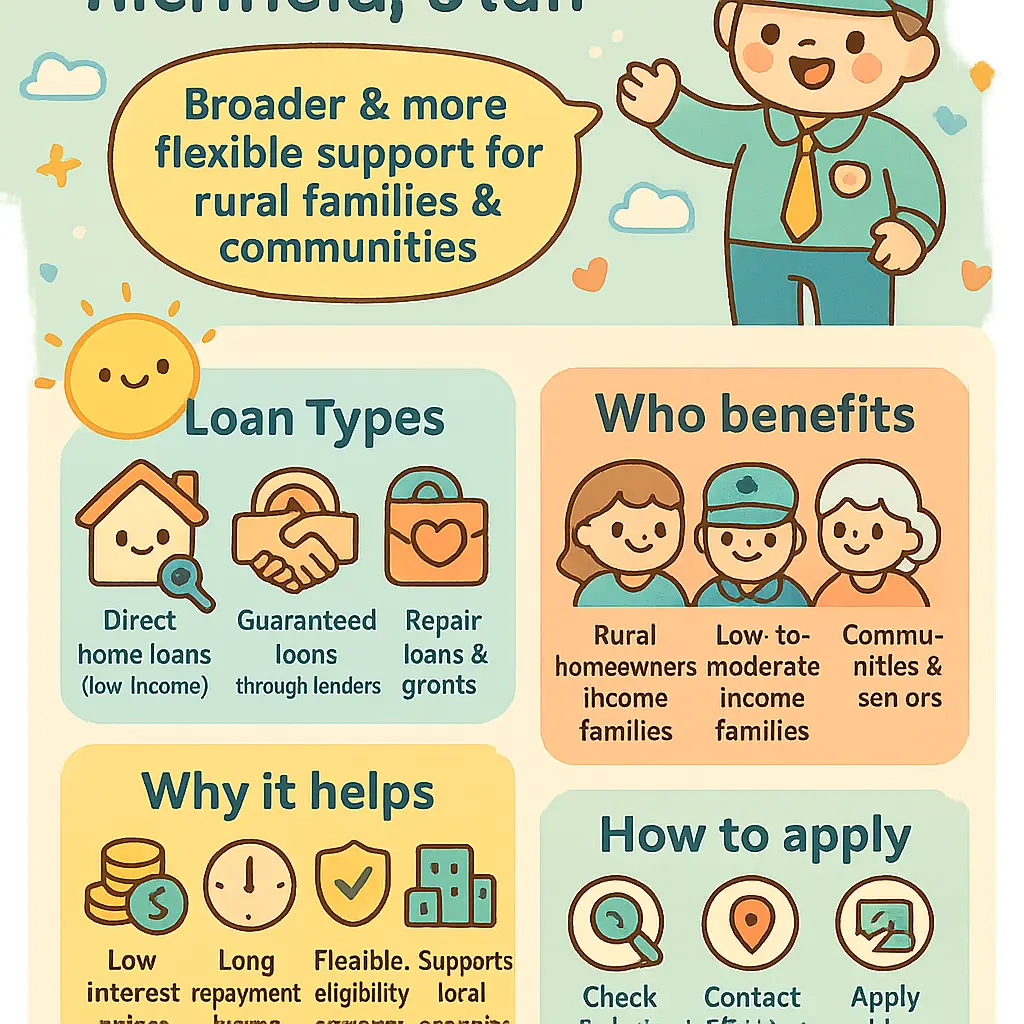
When it comes to loan assistance options in Richfield, Utah, the range of support offered by the USDA Rural Development programs in 2026 is broader and more flexible than ever before. The U.S. Department of Agriculture and its Utah State Office are committed to fostering strong, sustainable growth in rural communities, recognizing that access to affordable financing is a cornerstone for economic vitality. Whether you’re a first-time homebuyer, a farmer seeking to modernize your operation, a small business owner aiming for expansion, or a community leader looking to improve local infrastructure, the United States Department of Agriculture provides multiple pathways to help you secure the funding you need.
For individuals and families, the Single Family Housing Guaranteed Loan Program has become a vital resource in 2026, helping many Utah residents move into homes with zero down payment and competitive interest rates. This program is particularly impactful in areas like Richfield, where housing affordability is a top concern. The application process has been streamlined through local USDA Field Offices and the USDA office locator, making it more user-friendly and accessible for those unfamiliar with federal loan programs. Borrowers who qualify can take advantage of flexible underwriting, reduced mortgage insurance costs, and even loan servicing options if financial challenges arise later.
Farmers and ranchers in Sevier County have found the Rural Business and Cooperative Programs and the Value-Added Producer Grants essential for maintaining competitiveness in today’s agricultural markets. These initiatives not only offer low-interest loans and grant awards for equipment upgrades but also support business expansion, cooperative development, and innovations in value-added products. For example, a local dairy farm in Richfield utilized a Business and Industry Guaranteed Loan to expand its processing facility, enabling it to create new product lines and tap into niche markets beyond Utah. The loan guarantee helped the farm secure financing at a favorable rate and provided additional technical assistance through the local Service Center.
Community leaders and local governments benefit from the Community Facilities Programs and the Water & Waste Disposal Loan & Grant Program, which are instrumental in tackling infrastructure projects that improve public health, safety, and quality of life. These funding options support the construction and modernization of everything from fire stations and healthcare centers to water treatment plants, addressing critical needs in rural areas. In recent years, Richfield has tapped into Water and Environmental Programs to upgrade wastewater systems, ensuring compliance with updated environmental regulations and safeguarding natural resources for future generations.
Multifamily housing needs are also addressed through the Multi-Family Housing and Multifamily Housing Programs, offering guaranteed and direct loans to developers and non-profits committed to building or renovating affordable rental units. This is especially important for seniors, low-income families, and seasonal workers who form the backbone of Richfield’s diverse economy. By leveraging USDA loans, developers can access favorable terms that make rural housing projects feasible without compromising on quality or long-term affordability.
For Native American communities and those interested in tribal relations, USDA Rural Development Utah offers dedicated assistance and technical guidance, ensuring that tribal entities can fully participate in rural development programs and benefit from funding streams designed to promote culturally appropriate economic development.
When considering which loan option fits your goals, it’s important to review program eligibility requirements, application deadlines, and program regulations—all of which are clearly outlined by the Utah USDA State Office. If you’re unsure where to start, local USDA Service Centers and Field Offices provide free consultations, walking you through the available options and helping you navigate the sometimes complex landscape of rural development financing. Additionally, many programs are designed to complement each other, allowing borrowers to layer grants and loans for maximum impact. For instance, a rural health clinic in Sevier County recently combined a Community Facilities loan with grant funding to expand its services and purchase new medical equipment, greatly enhancing rural health resources and access to care.
As the landscape of rural Utah continues to change, it’s clear that the USDA’s loan assistance options are evolving to keep pace. With a focus on sustainable growth, natural resources conservation, and the unique needs of rural communities, these programs ensure that Richfield and surrounding areas are well positioned for a vibrant, resilient future. Whether your focus is homeownership, public health infrastructure, business expansion, or community amenities, USDA Rural Development remains a key partner in unlocking new opportunities and driving economic development in 2026.
Professional illustration about Office
Farmers Resource Guide
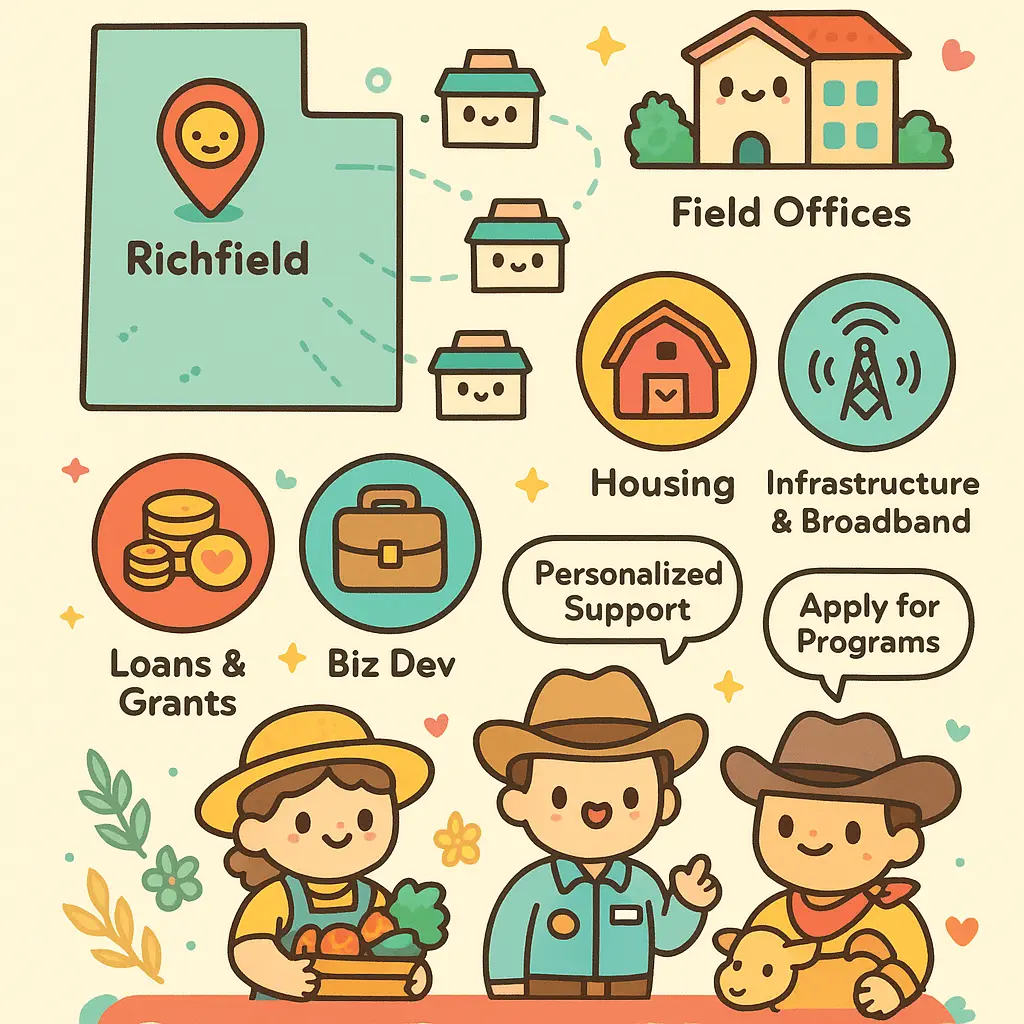
When it comes to navigating resources for farmers and ranchers in Utah, especially around Richfield, understanding the wide spectrum of support available through the USDA Rural Development programs is essential. The Utah State Office and local Field Offices serve as gateways, offering personalized guidance and direct access to the U.S. Department of Agriculture’s latest initiatives. For anyone new to USDA services, the USDA office locator is the fastest way to find your nearest Service Center and talk with rural development specialists who understand the unique challenges of central Utah agriculture.
Farmers in Richfield and the surrounding rural communities benefit from a combination of financial support options, technical assistance, and community-based programs specifically designed to elevate local agriculture and economic development. For those pursuing homeownership or seeking to upgrade housing for farm laborers, the Single Family Housing Guaranteed Loan Program and Multi-Family Housing Programs offer flexible loan solutions, competitive rates, and guidance through program regulations. These opportunities are frequently updated, so working with the Service Center ensures you’re using the most current forms and eligibility criteria as of 2026.
One of the most impactful funding streams for agricultural producers is the Value-Added Producer Grants. These grants support farmers and ranchers looking to develop new products, expand market reach, or invest in innovative on-farm technologies—think niche cheeses, packaged meats, or new organic crops. Local USDA Rural Development agents can provide one-on-one assistance for preparing competitive grant applications, explaining evaluation rubrics, and clarifying reporting requirements. Reviewing previous grant awards reveals that Utah producers have successfully used these funds for greenhouse expansions, specialty crop processing facilities, and even for collaborative projects with regional cooperative groups.
The USDA’s Business and Industry Guaranteed Loan program, another cornerstone for local economic growth, enables agricultural entrepreneurs and cooperatives to access capital for infrastructure projects, equipment upgrades, and rural business development. Whether you’re building a new feed mill, expanding your cattle operation, or transitioning to regenerative grazing, these business loan guarantees incorporate flexible terms and often pair with other federal rural health resources to bolster community resilience.
Water scarcity is a persistent concern in Utah, and the USDA’s Water & Waste Disposal Loan & Grant Program stands out for its role in supporting rural water infrastructure projects. In 2026, more municipalities and tribal relations have been prioritized, bringing expanded water and environmental programs that address not only irrigation needs but also drinking water quality for rural households. Community Facilities Programs similarly support the construction and modernization of local health clinics, food pantries, and educational outlets, directly impacting public health and quality of life for farmers and their families.
For those interested in conservation, the USDA collaborates with the National Forests and provides technical support for natural resources conservation efforts. These partnerships facilitate sustainable land management, soil health improvements, and responsible grazing practices. Getting involved in these programs is easier than ever, as field offices now offer digital appointment scheduling and virtual training seminars, streamlining access to program experts and grant consultants.
Finally, cooperative development remains a vital component of rural economic development in 2026. Through the Rural Business and Cooperative Programs, farmers in Richfield can form producer groups, share resources, and negotiate better prices and market access. USDA specialists offer workshops on governance, by-laws, and effective cooperative leadership, while also providing insight into leveraging federal and state funds for business expansion.
With all these options available, regular visits to your local USDA Service Center and ongoing conversations with program officers will keep you informed about updates, new rural development programs, and upcoming grant cycles. By blending customized advice, current program details, and real-world examples, this Farmers Resource Guide empowers Utah producers to utilize every tool the United States Department of Agriculture has to offer for a thriving, resilient agricultural community.
Professional illustration about USDA
Eligibility Requirements
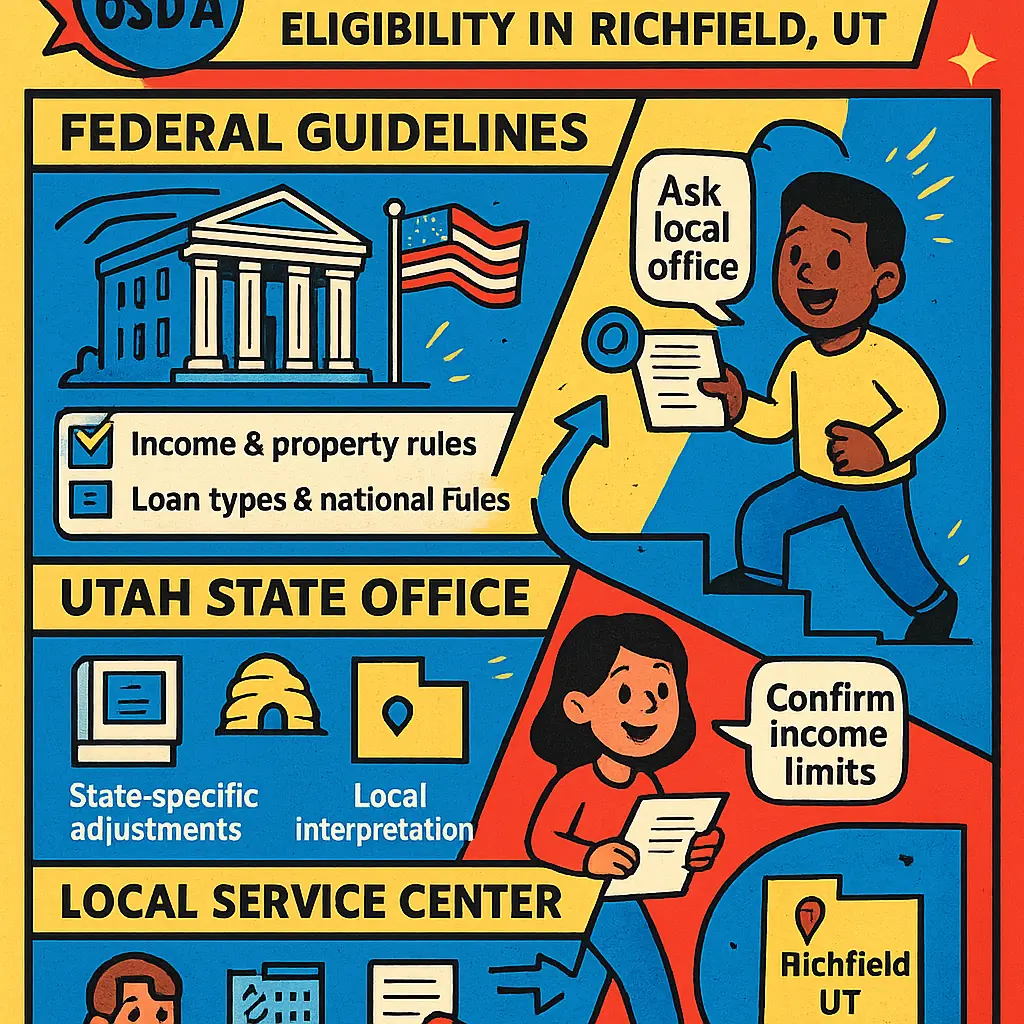
Navigating the eligibility requirements for USDA Rural Development programs in Richfield, Utah hinges on understanding both the broad federal guidelines set by the United States Department of Agriculture and the nuanced regulations enforced at the Utah State Office and local Service Center. For individuals, families, farmers, ranchers, and even local municipalities seeking support, meeting these criteria is essential for successful participation in programs like the Single Family Housing Guaranteed Loan Program, Multi-Family Housing Programs, Community Facilities loans, Rural Business and Cooperative Programs, and more.
Residential USDA Loans:
For families and individuals interested in the Single Family Housing Guaranteed Loan Program, eligibility depends on several factors:
Location: The property must be located in a USDA-eligible rural area, as defined by the USDA office locator. Richfield, Utah continues to qualify as of 2026, but it's wise to verify the most current maps through the local Utah USDA Field Offices. Income Limits: There are established income thresholds, calculated by household size and county, to ensure the program benefits rural populations with low to moderate income. As these figures are updated annually, applicants should consult the latest adjusted median income statistics for Sevier County. Creditworthiness: While USDA loans typically have more flexible credit requirements compared to conventional loans, applicants must demonstrate credit reliability and the ability to manage monthly payments. This may involve a review of credit history, debt-to-income ratio, and employment stability. Use of Property: The home must serve as the primary residence. Vacation homes, investment properties, or income-producing structures are generally ineligible. Legal Status: U.S. citizenship or eligible non-citizen status is mandated for all applicants.
Programs for Farmers, Ranchers, and Rural Businesses:
Rural business owners, agricultural producers, and cooperative organizers can seek out opportunities through the Rural Business and Cooperative Programs, Value-Added Producer Grants, and Business and Industry Guaranteed Loan programs. Common requirements include:
Rural Location: The business operation or proposed project must be in an area designated as rural by the United States Department of Agriculture. Legal Entity: Applicants can range from individuals to cooperatives, tribes, public bodies, and for-profit or nonprofit entities, but they must demonstrate legal existence and authority to operate in Utah. Viable Operations: Businesses must showcase economic viability, have a feasible business plan, and provide evidence that their ventures will contribute to rural economic development in areas like Richfield. Matching Funds: Certain grants, especially Value-Added Producer Grants, expect applicants to match a portion of the requested funds through their own resources or third-party investment.
Community Facilities and Infrastructure Programs:
Applications for Community Facilities Programs, Water & Waste Disposal Loan & Grant Program, and Water and Environmental Programs must typically be initiated by eligible public bodies, nonprofit organizations, or federally-recognized tribal entities. Requirements to access these funds include:
- Demonstrated Community Need: Projects should directly address essential public services, such as rural health resources, education centers, emergency services, or public health and natural resources conservation.
- Rural Population Caps: Most programs require that the served population falls below a set cap—most often under 20,000 residents—to focus resources on truly rural communities.
- Project Readiness: Applicants must provide proof of site control, demonstrated project readiness, environmental clearances, and realistic, vetted budgets.
- Contribution to Economic and Infrastructure Development: The proposed facility or infrastructure upgrade must advance the economic vitality, public safety, or infrastructure resilience of Richfield and its surrounding rural areas.
Tribal and Multifamily Housing Programs:
Utah has a diverse rural population, including Native American tribes with unique eligibility considerations. Multifamily Housing Programs and tribal-collaborative initiatives generally require:
- Recognition: Tribal applicants must be federally recognized, and multifamily housing developers must be legally established and meet multifamily eligibility criteria.
- Affordability Commitment: Housing projects should prioritize low to moderate-income individuals and remain affordable for a required minimum period as outlined in program regulations.
Practical Tips for Meeting Eligibility in 2026:
- Stay Current: Regulations and boundaries for program eligibility are periodically updated. Contact the Utah State Office, check with local Service Centers in Richfield, or use the USDA office locator for tailored guidance.
- Document Thoroughly: Incomplete or outdated paperwork is a common stumbling block. Gather the most recent tax returns, proof of residency, business financials, and evidence of need or impact. USDA loan servicing prefers digital submission—consider scanning and organizing documents in advance.
- Engage Early: Application cycles for grant awards and loan guarantees can be competitive. Starting conversations with regional USDA Rural Development representatives early ensures you're aware of upcoming deadlines and have spot-on documentation.
By following these evolving eligibility requirements, Richfield residents, local leaders, and entrepreneurs can successfully access the extensive resources offered by the USDA to enhance economic development, public health, and infrastructure in their rural Utah communities.
Professional illustration about Farmers
Application Process Steps
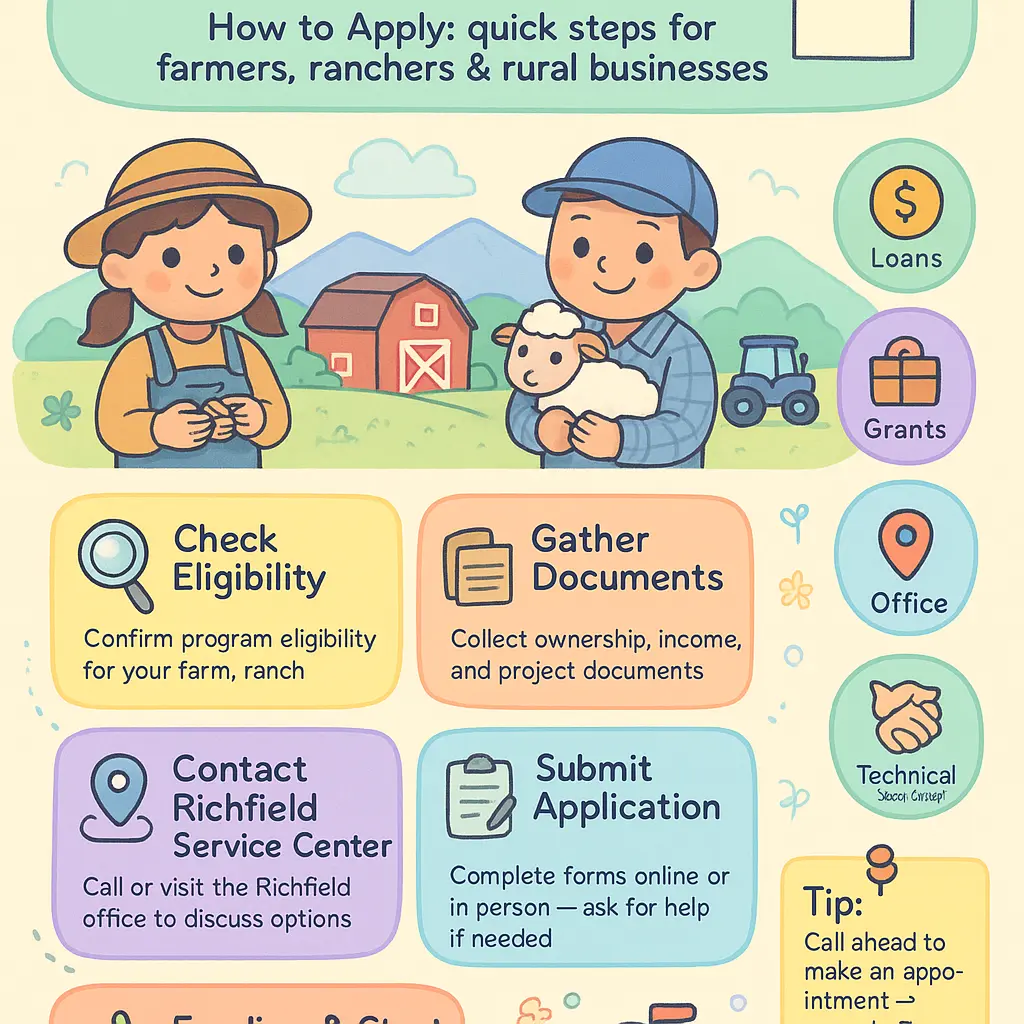
Navigating the application process for USDA Rural Development programs in Utah, especially through the Richfield Service Center or related field offices, involves several crucial steps tailored to meet the needs of rural communities, farmers, ranchers, and local businesses. To ensure efficient access to resources for Community Facilities, Single Family Housing Guaranteed Loan Program, Multifamily Housing Programs, Rural Business and Cooperative Programs, and Water & Waste Disposal Loan & Grant Program, it’s important to understand what happens at every phase, and how to approach each part methodically.
The journey typically starts with identifying which USDA initiative best fits your goals—whether you’re a farmer aiming for Value-Added Producer Grants, a rural entrepreneur looking into Business and Industry Guaranteed Loans, or a local government seeking funding for infrastructure projects or environmental improvements. The United States Department of Agriculture provides a range of rural development programs tailored to different sectors, so refining your focus is step one. The Utah State Office usually offers resource sheets, FAQs, and preliminary eligibility tools to help prospective applicants choose wisely.
Once you’ve chosen the right program, gather essential documentation—this commonly includes proof of land or property ownership, business plans, financial statements, tribal relations documentation if relevant, and details about the project’s community impact or economic development potential. For water and environmental programs, you may need environmental review forms, public health and natural resources conservation materials, and cooperative development plans. The USDA field offices can assist with checklists and personalized guidance, but it’s wise to prepare everything in advance to avoid delays.
Submitting your application means following program-specific regulations and formatting guidelines. For Single Family Housing loans or Multifamily Housing Programs, applications may require credit checks, income verification, and lender documentation. Business and Cooperative Programs tend to ask for market analysis, feasibility studies, business loan guarantees paperwork, and sustainability projections. Community Facilities funding, on the other hand, might demand community impact statements and infrastructure plans. Always reference current forms from the Utah State Office or Richfield Service Center, as requirements adapt to policy changes and local conditions—from 2026 grant awards to newer USDA loan servicing standards.
After submission, USDA staff at your local or state office will review applications for completeness, regulatory compliance, and alignment with program goals. They may reach out for clarifications or additional documentation, and it’s common to require on-site visits or virtual interviews—particularly for water and environmental assistance projects or cooperative development grants. Applicants should remain proactive during this stage, responding immediately to requests and providing updates as needed to demonstrate readiness and commitment to rural development.
Application evaluation timelines can vary; water and environmental programs sometimes involve extended assessments due to infrastructure complexities, while Single Family Housing loans generally move faster if documentation is clear. Engaging directly with your Service Center—either Richfield or another nearby—helps applicants track status, ask about USDA office locator details, and seek advice on navigating bottlenecks. Many successful candidates in Utah recommend establishing ongoing communication with field office staff to ensure transparency and facilitate problem-solving.
If approved, final steps may include executing legal agreements, establishing grant or loan servicing accounts, and planning project implementation. At this point, it’s vital to familiarize yourself with ongoing compliance requirements—such as annual reporting, rural health resources documentation, and public health standards—as well as keep abreast of future opportunities for further economic development or infrastructure funding. For community facilities or business development, maintain records of expenditures and outcomes, as this information supports future applications and strengthens your position for subsequent USDA initiatives.
In summary, working through the USDA Rural Development application steps in Utah is a collaborative, detailed process involving careful preparation, strategic engagement, and ongoing communication with field offices and Service Center teams. Prioritize gathering accurate documentation, understanding program regulations, and utilizing local USDA resources to maximize your chances for approval and effective project execution, ensuring that your community or business thrives within the diverse landscape of Utah’s rural development programs.
Professional illustration about Ranchers
USDA Contact Information
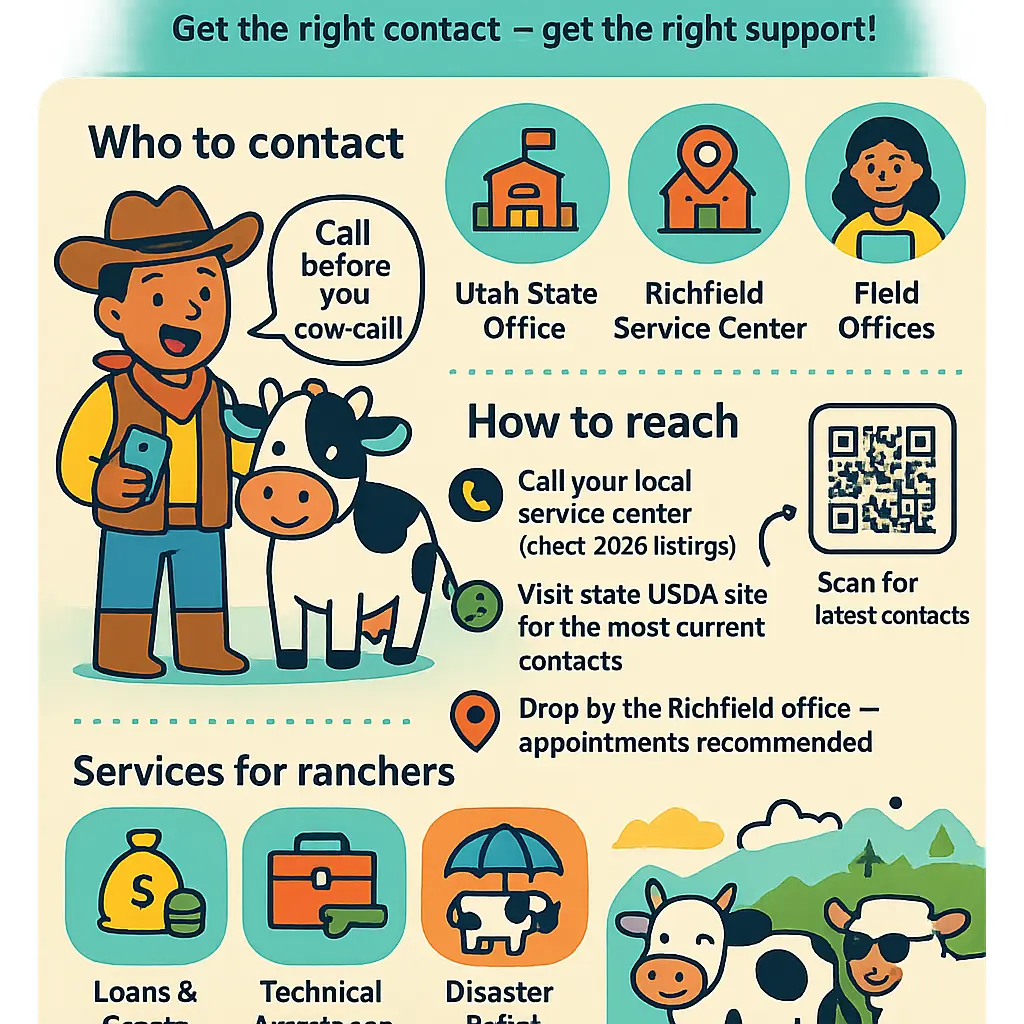
When reaching out to the USDA Rural Development Utah State Office or its service centers in Richfield, it’s crucial to use the most accurate contact channels available as of 2026. The Utah State Office and local field offices play an essential role in supporting farmers, ranchers, rural business owners, and community leaders in navigating USDA loan servicing, securing funding for infrastructure projects, and accessing rural development programs such as the Community Facilities Programs, Single Family Housing Guaranteed Loan Program, and Water & Waste Disposal Loan & Grant Program.
The main USDA Rural Development Utah State Office is located in Salt Lake City, but Richfield hosts specialized field offices dedicated to serving Sevier County and surrounding rural communities. USDA team members in these offices provide personalized assistance for a wide range of program areas, including Multifamily Housing Programs, Rural Business and Cooperative Programs, and Value-Added Producer Grants that support economic development in rural areas and tribal relations.
Navigating USDA Contacts Effectively
To connect with the right USDA representatives, consider the following advice:
- Utah Field Office Direct Lines: The Richfield Service Center typically staffs Rural Development specialists who can answer program-specific queries, help interpret program regulations, and guide you through application procedures for grant awards, business loan guarantees, cooperative development, and rural health resources. If you’re unsure which branch addresses your needs, the main desk in Richfield can direct you to the appropriate caseworker or specialist.
- Program-Specific Contacts: For certain funding opportunities—such as Water and Environmental Programs or infrastructure projects—ask specifically for a technician or program officer familiar with community facilities funding and water & waste disposal projects. Their knowledge of local requirements and federal updates (especially new eligibility rules in 2026) streamlines your experience.
- Loan and Grant Servicing: Individuals with active loans—such as participants in the Single Family Housing loans or Business and Industry Guaranteed Loan programs—should always contact the servicing branch directly listed on USDA correspondence to ensure faster resolution and compliance with program changes. The Richfield office updates its servicing contacts regularly in line with USDA policy modifications for rural communities.
- Multifamily Housing Assistance: Landlords, property managers, and non-profits interested in multifamily housing programs can reach out to dedicated housing specialists who assist not only with applications and program eligibility, but also with navigating annual inspections, grant renewals, and public health regulations critical for maintaining rural housing standards in Utah.
- Tribal Relations and Cooperative Development: Richfield’s USDA staff are also equipped to guide tribal applicants and rural cooperatives through specialized application processes, building partnerships tailored to unique tribal needs and supporting value-added producer initiatives essential for tribal and cooperative economic development.
Practical Considerations and Step-by-Step Guidance
Locally, accessing up-to-date service starts with using the USDA office locator service, which helps residents find the nearest field office. If your inquiries relate to forestry, conservation, or natural resources, look for the nearest Natural Resources Conservation Service (NRCS) personnel available through the Richfield office or neighboring service centers. For urgent matters—such as emergency infrastructure repair or immediate grant processing—visit or call the Richfield Service Center during office hours for expedited assistance.
Notably, each USDA office frequently updates contact numbers and staff assignments. In 2026, mobile phone lines linked to field agents have become more common, providing direct reach to specialists in public health, water & environmental assistance, and economic development for Utah’s rural communities. Keep a current list of staff extensions and email addresses provided by the office during interactions, and regularly request updated staff contacts to avoid delays.
Farmers, ranchers, and business owners are encouraged to attend local information sessions and workshops hosted regularly at the Richfield office, which are advertised through USDA bulletins and local notice boards. These sessions not only introduce new resources but also allow face-to-face introductions with your USDA contacts—essential for building positive working relationships and accessing real-time guidance for complex projects and applications.
Finally, when contacting the USDA in Richfield or statewide, always prepare important documents in advance—such as farm business descriptions, current financial data, property information, and community project outlines. Bringing detailed records ensures your questions receive targeted answers and helps USDA staff offer precise, actionable support matched to your unique situation.
Professional illustration about Facilities
Community Support Services
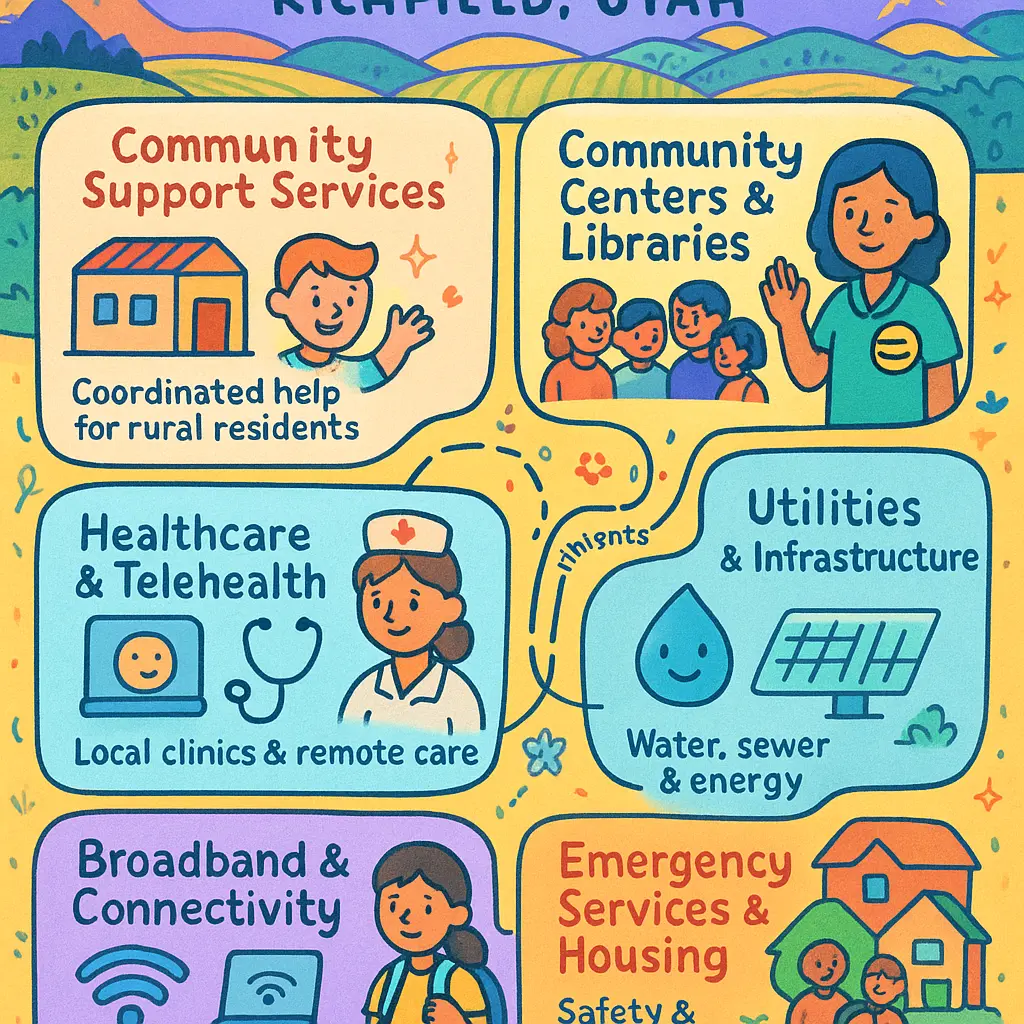
Building strong rural communities in Richfield, Utah goes far beyond providing agricultural support—it’s also about empowering residents through comprehensive community support services coordinated by the USDA Rural Development and the U.S. Department of Agriculture. The Utah State Office and local USDA Service Center work all year to ensure the backbone of rural lifestyles—farmers, ranchers, tribal partners, small business owners, and families—never lack the resources for economic progress, public health, infrastructure renewal, and environmental stewardship.
Residents here gain direct access to the Single Family Housing Guaranteed Loan Program, promoting home ownership by assisting qualified buyers with affordable mortgages, even in challenging market conditions of 2026. The USDA office helps young families understand program eligibility and loan servicing, making the home buying process transparent and stress-free. Multifamily Housing Programs also remain critical, encouraging developers to expand options for affordable rental housing. These initiatives help keep Richfield vibrant and support seasonal workers and multi-generational locals seeking modern, safe living accommodations.
Public health & safety are elevated with grant-funded improvements via the Community Facilities Programs. Example projects include renovated clinics, enhanced fire stations, emergency response centers, and community health initiatives. These types of facilities make a direct impact on everyday life; a rural health clinic expansion, for instance, improves access to preventative care for isolated families, while upgraded school cafeterias ensure all children can access healthy meals regardless of household income.
Water and environmental stability are persistent concerns in every Utah rural area, especially considering climate fluctuations and population migration trends seen in 2026. The USDA Water & Waste Disposal Loan & Grant Program targets these needs head-on by enabling local water authorities and cooperative associations to modernize treatment plants and delivery infrastructure. Community water lines, upgraded sanitation systems, and environmental cleanup grants reduce contamination risk for residents, safeguard local streams, and support the long-term viability of recreation areas surrounding National Forests. The direct involvement of USDA field offices saves local governments time and money, ensuring program regulations and engineering standards are met on every infrastructure project.
Economic development flourishes in Richfield through the Rural Business and Cooperative Programs, which offer not just business loan guarantees, but crucial technical assistance and Value-Added Producer Grants. The support provided in recent years has sparked new co-ops for sustainable agriculture, rural food processing, and innovative renewable energy projects. For example, women-owned start-ups and tribal relations-focused organizations have received mentoring on accessing federal funding and forming regional partnerships. If you’re a local entrepreneur, visiting the USDA office locator helps connect you with outreach specialists who understand rural Utah’s unique business landscape and can assist your grant application process or lending requirements step-by-step.
A special emphasis is always placed on tribal communities and underserved populations. Dedicated USDA outreach includes listening sessions, bilingual resources, and the guidance to adapt solutions to local cultural norms. Staff become familiar faces throughout Richfield, meeting neighborhood leaders, school coordinators, and volunteers to guarantee everyone has the opportunity to benefit from Rural Development programs. The interplay of federal funding, grassroots planning, and data-driven assessment results in lasting infrastructure, job growth, and conservation of natural resources that form the cornerstone of resilient rural Utah life.
To make the most of community support services, residents and local organizations are encouraged to stay engaged with regular USDA office presentations, feedback surveys, and educational workshops on water management, rural health resources, and cooperative development. Embracing these opportunities helps build trust, ensures funding priorities reflect current community challenges, and supplies every Richfield inhabitant with the knowledge and access needed for future prosperity in rural America.
Professional illustration about Environmental
Sustainable Farming Initiatives
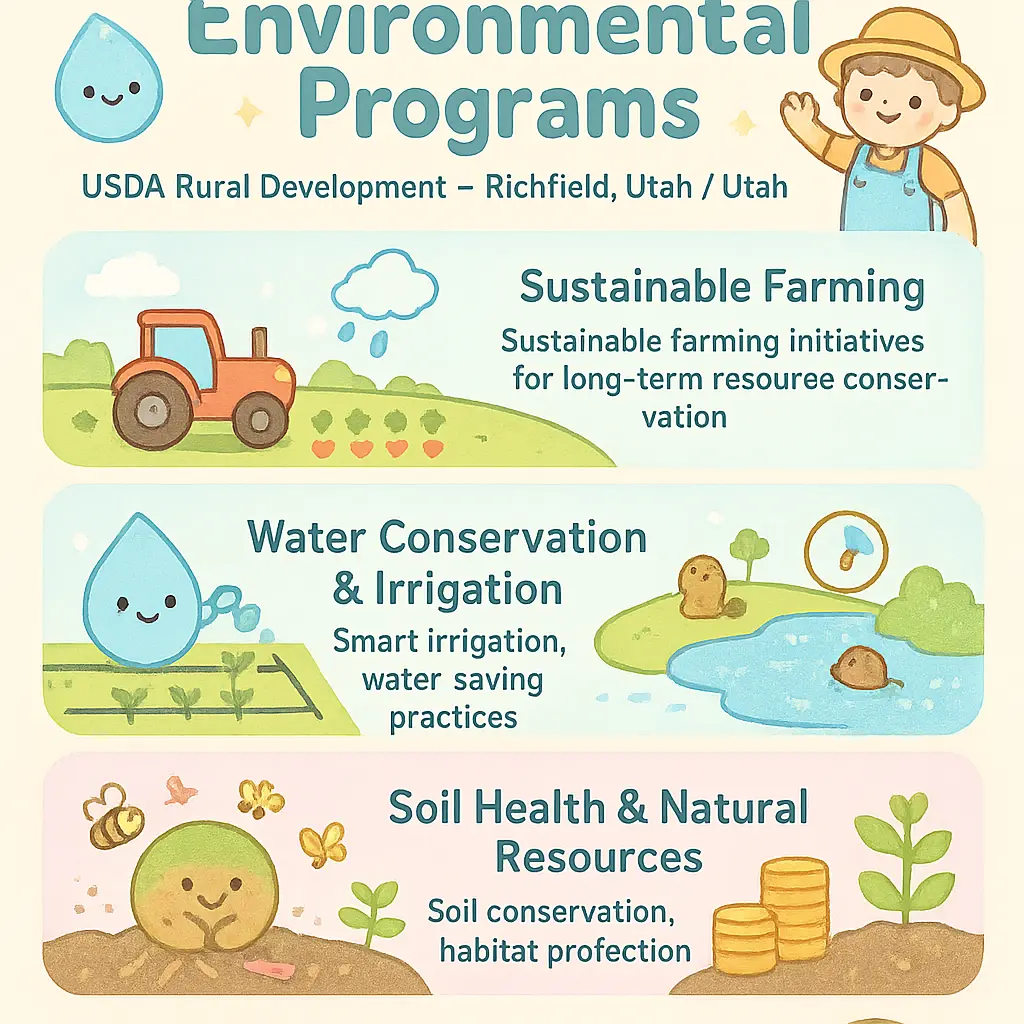
Sustainable farming initiatives have become a core focus for the USDA Rural Development programs across Richfield, Utah, aligning with both prolonged conservation of natural resources and economic progress in rural communities. The U.S. Department of Agriculture, including the Utah State Office and its Service Centers throughout Sevier County, is actively supporting local farmers and ranchers by introducing practical tools, funding opportunities, and field-verified strategies that help balance the immediate needs of agricultural productivity with long-term environmental stewardship.
One of the standout initiatives in the region is the integration of the Water and Environmental Programs. This suite of assistance options empowers rural producers to manage their water usage more efficiently, a vital adaptation in arid Utah climates. Through the Water & Waste Disposal Loan & Grant Program, local farms and agricultural businesses can access funding to modernize irrigation, construct water reuse systems, and implement drought-resistant infrastructure, all of which drastically cut water waste while ensuring robust yields. These improvements benefit not just individual farm operations but elevate public health outcomes and maintain ecosystem viability for future generations.
In addition, value-added agriculture has taken root here, largely boosted by the Value-Added Producer Grants. These grants, administered by the United States Department of Agriculture, provide critical resources for innovative projects such as eco-friendly processing facilities, specialty crop production, and organic farming systems. For instance, some Richfield area producers have used such funding to launch small-scale dairy operations employing carbon-neutral techniques, while others have introduced rotational grazing or regenerative soil practices to sequester carbon and bolster soil nutrition. These efforts align closely with USDA’s vision and also open new revenue streams, all while actively participating in natural resources conservation.
The Multi-Family Housing and Single Family Housing Guaranteed Loan Programs not only benefit growing rural townships but encourage sustainable land management through responsible rural development. New and remodeled homes meeting USDA program regulations utilize modern insulation, energy-efficient appliances, and site planning that minimizes ecological impact, integrating sustainability into the everyday fabric of Richfield life.
Moreover, the Rural Business and Cooperative Programs assist in foundational cooperative development. Group purchasing for sustainable fertilizers or environmentally friendly pest management tools makes it easier for smaller operators to join the green transition economically. Through business loan guarantees, local enterprises can expand into new sustainable markets—like direct-to-consumer vegetable boxes or solar-powered greenhouses—thus reinforcing economic development in these rural areas while minimizing energy usage and resource consumption.
Preserving the health of natural landscapes, particularly the National Forests surrounding Richfield, is closely linked with successful sustainable farming. USDA partnerships help farmers integrate forest buffers, conserve wildlife habitats, and adopt integrated pest management. Such regionally tailored strategies reflect continual engagement with tribal relations officers and field offices striving for holistic, community-wide improvements that support both productive agriculture and the greater environmental mission.
Importantly, ongoing grant awards provide incentive and accountability. Grant recipients interact with the USDA office locator and local Service Center staff for ongoing USDA loan servicing and technical support. In this way, farmers and ranchers don’t just receive funding; they gain full-spectrum partners for both regulatory compliance and innovation—ensuring that infrastructure projects suit unique local ecologies and support future community facilities such as shared equipment barns, produce cold storage hubs, or educational spaces for spreading sustainability best practices.
In summary, sustainable farming initiatives channeled through the USDA’s multifaceted rural development programs in Richfield are setting formidable benchmarks for Utah agriculture. With practical guidance, strategic funding, and a commitment to collaborative rural growth, small and midsize producers are now positioned to thrive economically while preserving and nurturing their most precious resources—land, water, and community well-being—for generations to come.
Professional illustration about Guaranteed
Food Safety Standards
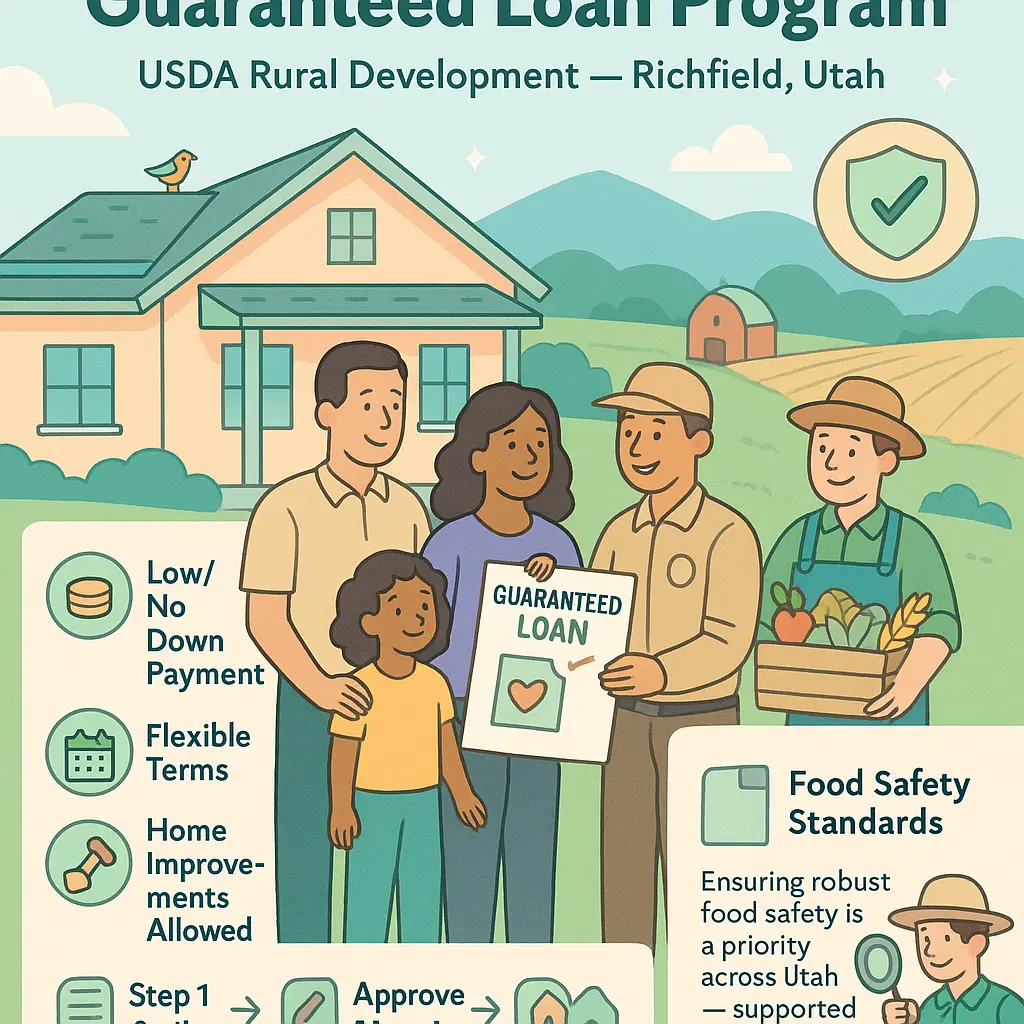
Ensuring robust food safety standards is an absolute priority for the USDA Rural Development and the wider U.S. Department of Agriculture across Utah, including in Richfield. The Utah State Office supports local field offices and the Service Center by maintaining first-rate guidelines that touch on nearly every facet of agricultural production and service accessibility. These standards are vital not only for keeping locally grown foods, meats, and dairy safe for public health, but they also shape eligibility and compliance for programs like Value-Added Producer Grants, Community Facilities initiatives, and Water and Environmental assistance.
Regular communication with farmers, ranchers, and rural communities ensures everyone’s up-to-date on changes to sanitation regulations, handling requirements, and storage protocols. For example, producers participating in Multi-Family Housing or Single Family Housing Guaranteed Loan Program who offer community-based food options must follow rules prescribed by the USDA and adjusted for local realities in Utah. Service Centers provide training and technical assistance, helping agricultural entrepreneurs, cooperative members, and rural enterprises adapt to regulations on pesticide usage, food traceability, and animal welfare—each element crucial for demonstrating commitment to national food safety objectives.
USDA office locator tools empower small operators in Richfield to stay connected with program specialists who answer detailed questions about food labeling, best storage practices, and program regulations. Whether a business is seeking a Business and Industry Guaranteed Loan or exploring cooperative development services, advisers ensure facilities—like community kitchens, public pantries, and agribusiness processing plants—meet federally recognized practices for pest control, prevention of cross-contamination, and compliance with updated processing standards as of 2026.
In Utah, water safety often intersects directly with food security, making programs like Water & Waste Disposal Loan & Grant Program fluid partners in addressing both safe community water infrastructure and corresponding agricultural standards. It’s essential for grant awards distributed to rural producers to require upgrades meeting the latest irrigation guidelines and equipment sanitation benchmarks—thus protecting natural resources and supporting long-term food system resilience. Through infrastructure investments prompted by Rural Development and continual On-site inspections, compliance is kept on track, and any infractions are efficiently managed without undue disruption to local commerce.
USDA involvement with tribal relations and underrepresented rural groups fosters inclusion of culturally specific food practices within the government’s safety standards. Recent workshops hosted in Richfield emphasized lessons from tribal consultants and community health professionals about preserving traditional food preparation methods while aligning with mainstream public health preventative measures in 2026. Such collaboration is critical for ensuring universal safety without disrespecting culinary heritage.
To streamline adherence, community facilities funding recipients are encouraged to deploy HACCP (Hazard Analysis & Critical Control Points) plans adapted for their unique operations, with checklists provided by USDA Rural Development agents that are updated regularly. From cold chain monthly audits to quarterly animal health checks, these proactive measures empower rural businesses and organizations—like farm-to-school programs or local farmers’ markets—to build food safety directly into their economic development strategies.
A practical tip for anyone participating in rural development programs: proactively document every step of inventory management and sanitation routines. USDA loan servicing requires verifying these records during evaluations, and regular audits help secure ongoing participation in multifamily housing programs or business loan guarantees. Offering training for staff—including translators for tribal history or rural migrant workers—and using current digital platforms for reporting, keeps all collaborators on the same page and makes urgent responses in the case of contamination events much quicker.
In essence, food safety in rural Utah is as much about relationships, planning, and shared responsibility as it is about strict rules. Producers, program managers, and local governments collaborate through constant peer learning and practical adaptation of field-tested USDA materials. By mid-2026, evolving approaches reflect emerging food chain technologies and consumer health insights, ensuring food safety standards set in Richfield influence best practices statewide and safeguard public trust everywhere food from Utah rural communities reaches American tables.
Professional illustration about Housing
Grant Opportunities 2026
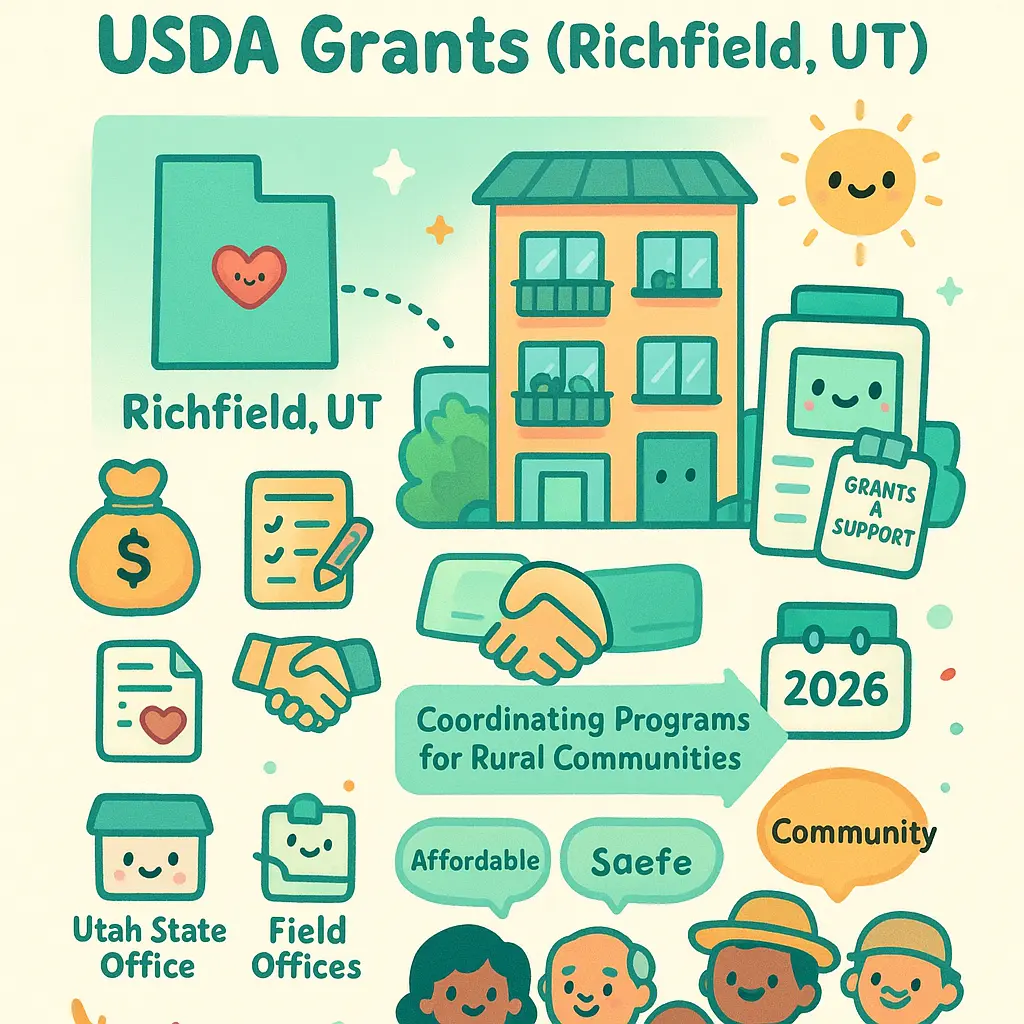
Grant opportunities through the USDA Rural Development and the U.S. Department of Agriculture remain an invaluable resource for Utah’s rural communities in 2026. The Utah State Office of USDA, along with its various Field Offices and Service Centers, is actively coordinating programs that support farmers, ranchers, and local organizations aiming to strengthen economic development, public health, and infrastructure across rural Utah. For communities in and around Richfield, several high-impact grants are available, each designed to address unique local priorities—from clean water access and vital community facilities to rural housing and cooperative businesses.
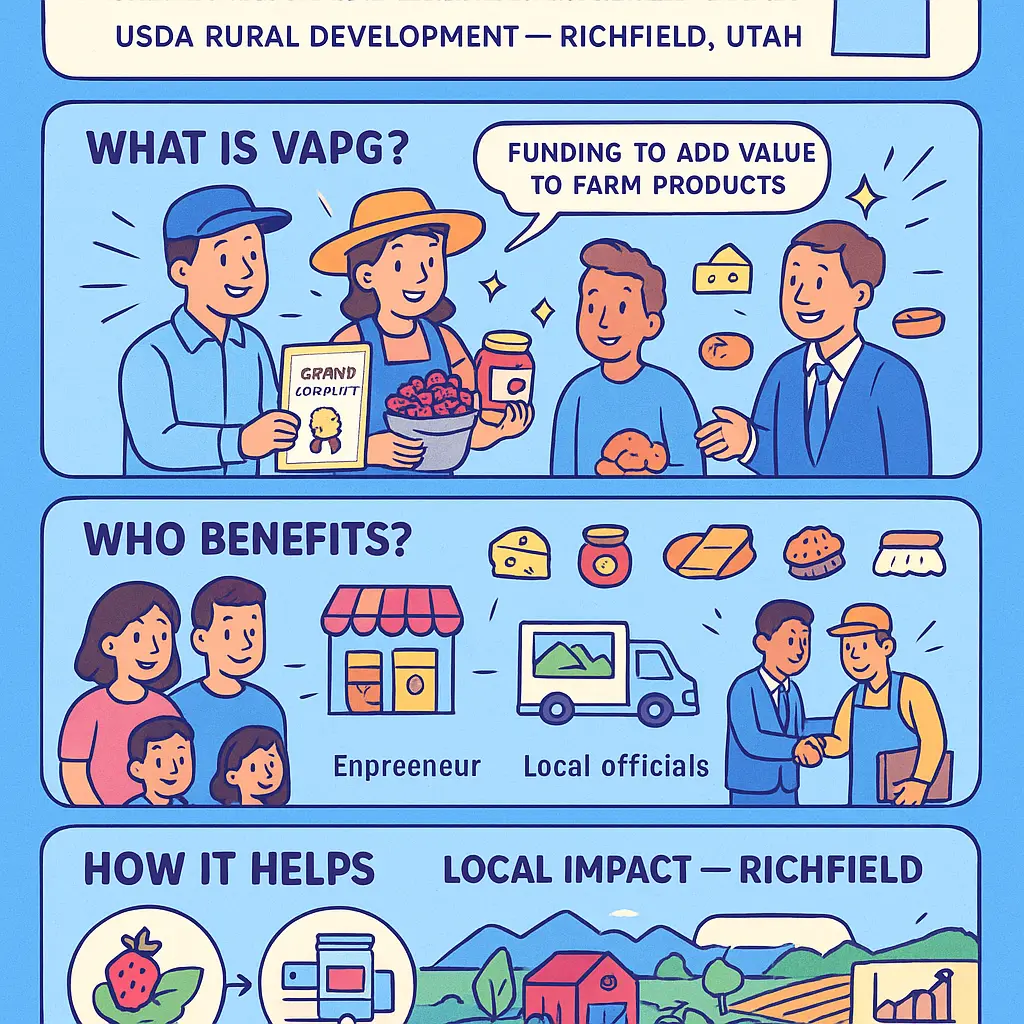
Farmers, food entrepreneurs, and ranchers are encouraged to consider the Value-Added Producer Grants, which help agricultural producers enter value-added activities in 2026. These grants often cover activities like food processing, organic transition, or innovative farm-to-market strategies that can make a small agricultural business more competitive. The grant not only provides desperately needed cash flow, but also connects awardees to resources within the USDA’s rural development ecosystem for training and mentorship. Successful applicants often showcase new cooperative models, collaborative marketing, or the creation of secondary products such as artisan cheeses, specialty meats, or custom grains—a boost to both income streams and job creation in rural areas.
For city, tribal, or special district officials evaluating infrastructure projects, the Water & Waste Disposal Loan & Grant Program is especially impactful for 2026. Given recent rounds of federal investments, this program pays special attention to water and environmental assistance in Utah’s smaller towns that are updating aged pipes, water treatment plants, or implementing flood-preparedness technology to serve people living in scattered rural neighborhoods. It also supports the construction or expansion of essential public health services, benefiting everything from public schools and businesses to rural health resources like community clinics or pharmaceutical refrigeration storage. Applicants who demonstrate clear public health or natural resources conservation benefits, collaborative plans with tribal relations offices, or compliance with the most recent program regulations often receive higher consideration.
Another popular Rural Development option for 2026 is the Community Facilities Programs, which include both loans and grants for everything from emergency services infrastructure—like new fire trucks or public safety buildings—to more long-term investments such as broadband network expansion or youth recreational centers. By leveraging USDA grant awards, Utah communities can secure match funding to compound larger state or private financing packages. These facilities are key to public safety and rural quality of life, helping preserve population, stimulate small business growth, and retain healthcare talent.
On the housing front, rural Utahans—especially first-time homebuyers or young families—should review opportunities from the Single Family Housing Guaranteed Loan Program and Multi-Family Housing Initiatives. The guaranteed loan programs open pathways to affordable homeownership with below-market interest rates and flexible credit requirements, making rural housing viable even in regions with escalating rents. For nonprofits and developers focusing on affordable apartments, the 2026 cycle of Multifamily Housing Programs targets high-need segments, especially seniors and modest-income families. Receiving a combine of direct loans or guarantees greatly reduces the financial risk and ensures accessible, modernized housing stock remains available in the region.
Rural business leaders haven’t been forgotten by the USDA. The Business and Industry Guaranteed Loan program is designed to stimulate local business development and support cooperative ventures. In an era of rural labor shortages and enhanced e-commerce demands, 2026 is the ideal year for rural entrepreneurs to expand manufacturing, harness renewable energy, or develop food hubs. The Business and Cooperative Programs also offer grant programs for feasibility studies, staff training, and technical assistance, focusing on sustainable job creation and resilience for adverse market changes.
The key to success is regularly connecting with the Utah State Office or using the USDA office locator tools for Richfield and neighboring counties. Experienced local Rural Development professionals provide guidance in navigating changing program requirements, meeting deadlines for 2026’s robust slate of funding cycles, and aligning applications with local priorities like economic development in rural areas, infrastructure enhancements, or natural resources conservation. Consistent consultation helps applicants document rural community needs—think: new clinics, water supply projects, or business loan guarantees—while also streamlining required materials such as cooperative development plans, federal forms, and tribal coordination letters, ensuring maximum competitiveness for every grant or loan petition.
In short, whether you’re a local government leader, cooperative organizer, first-time homebuyer, or Main Street entrepreneur, there’s never been a better year than 2026 to discover the comprehensive grant and loan programs administered by the United States Department of Agriculture in Utah. If you take the time to explore every relevant avenue—from Water & Waste Disposal investments and Community Facility assets, to rural storage, processing, and market building—you’ll unlock impactful new opportunities to strengthen and revitalize Utah’s rural communities today and for the future.
Professional illustration about Multifamily
USDA Rural Development
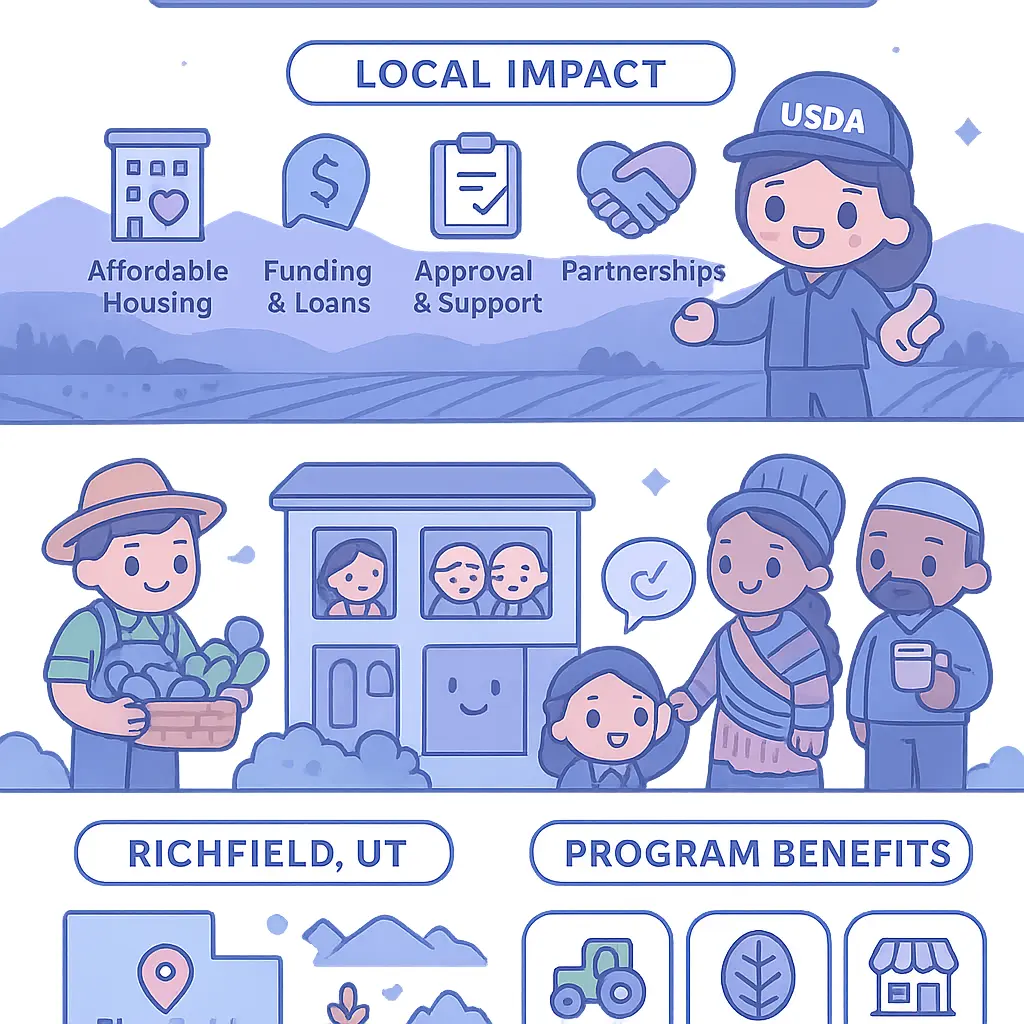
USDA Rural Development in Utah continues to be a lifeline for strengthening rural communities, with its Richfield area serving as a hub of progress in 2026. Through ongoing collaboration with the U.S. Department of Agriculture (USDA), local farmers, ranchers, tribal nations, and business owners benefit from a robust portfolio of rural development programs tailored to enrich every facet of community life. One crucial program is the Single Family Housing Guaranteed Loan Program, supporting rural families yearning for homeownership in Richfield and beyond; this initiative offers flexible pathways in response to evolving housing needs and changing market conditions typical of mid-decade America. Eligible families are now accessing home financing with favorable terms, improved USDA loan servicing options, and practical counseling made available by the Utah State Office.
USDA’s commitment here can also be observed through its Community Facilities Programs, which fund essential infrastructure projects across Sevier County. For instance, recently awarded grants have assisted Richfield in upgrading its public health and emergency services—helping clinics modernize medical equipment and empowering local fire departments with advanced safety technology. With increasing infrastructure demands anticipated throughout rural Utah in 2026, particularly due to population shifts and growing environmental considerations, the Water and Environmental Programs step up as vital resources. They enable streamlined access to water & waste disposal loan and grant programs, directly aiding small-town municipalities as they bolster water quality, revamp distribution systems, and respond more effectively to environmental regulations. Town leaders are offered practical guidance by USDA Service Center staff every step of the way—peer-to-peer insight that’s indispensable for projects involving natural resources conservation and sustainable drinking water solutions.
Multifamily housing programs remain indispensable for rural economic development amid evolving housing trends. Local property developers capitalizing on these USDA offerings in Richfield and nearby communities report positive outcomes—increased availability of safe rentals meeting the needs of seasonal workers, families, veterans, and seniors. Multifamily housing opportunities ensure labor force stability that’s crucial for broadening business attraction and supporting community growth. USDA rural development experts help stakeholders navigate permitting hurdles and align remodeling efforts with the latest program regulations.
Economic advancement is strongly fostered by USDA’s suite of Business and Cooperative Programs, now adapted for rural Utah’s changing marketplace. A surge in Value-Added Producer Grants has enabled Richfield area entrepreneurs and agricultural producers to pursue innovative processing, marketing, and packaging strategies that open new consumer markets nationwide. For example, farm co-ops benefiting from USDA technical assistance introduce regionally produced foods to urban stores across western states, adding economic spark and resilience to Richfield’s businesses. Moreover, those venturing into indigenous, food-sovereign, or tribally powered partnerships find flexible support through specialized tribal relations staff and cooperative development workshops.
In terms of financing, the Business and Industry Guaranteed Loan Program supplies necessary capital to local start-ups and long-established businesses ready to grow, diversify, or recover from rural events such as drought or “main street” economic disruptions. Success stories abound of Richfield downtown revitalization credits and new service companies employing locals willing to develop essential trade skills. Anyone with interest is encouraged to connect with a local USDA field office or leverage the office locator tool online for guidance focused on eligibility, application procedures, and grant awards tracking.
Proactive collaboration with National Forests and conservation services gives farmers, ranchers, and landowners in Richfield practical input on managing natural resources sustainably. Field offices circulate updates on evolving best practices so participants can mitigate adverse weather impacts, conserve water, and employ expertise that brings long-term returns on local investments in agriculture. Current rural development resources extend not only to farm-based stakeholders, but also upwards to non-farm entities committed to economic development in rural areas, bridging divides and ensuring nobody is left behind through these essential USDA initiatives in 2026.
An up-to-date approach, community-first communication, and comprehensive program support define USDA Rural Development in Richfield, Utah—offering a roadmap for other regions looking to replicate innovation and resilience in their own rural communities. Whether it's finding affordable housing, expanding local public health services, establishing cooperative tourism ventures, enhancing natural resources, or meeting day-to-day infrastructure needs, rural residents have cutting-edge resources empowering their journey in today's rapidly changing economic landscape.
Professional illustration about Cooperative
Environmental Conservation Efforts
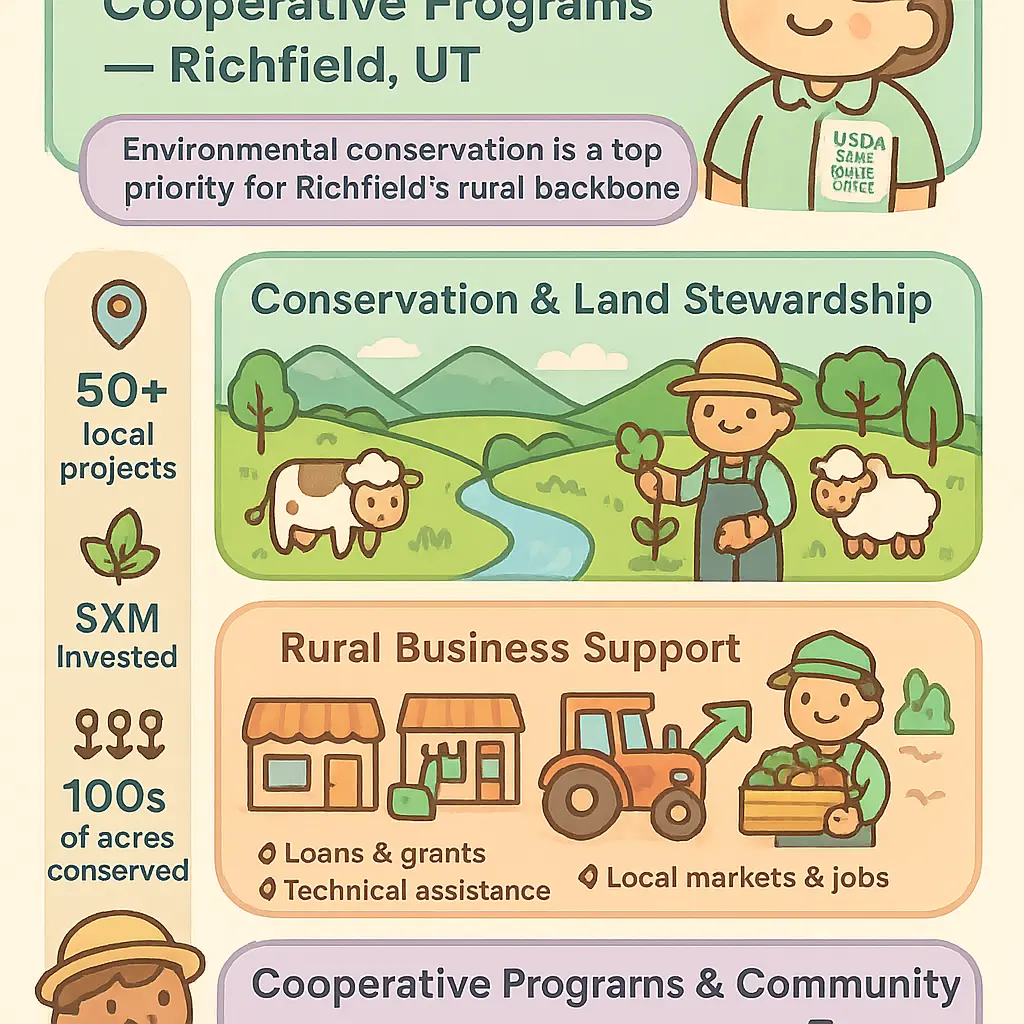
Environmental conservation stands as a top priority for the United States Department of Agriculture (USDA) within Richfield, Utah’s rural backbone. Through innovative efforts led by the USDA Utah State Office and targeted USDA Rural Development programs, notable strides have been made since 2026 to safeguard the region’s natural resources, water quality, and overall ecosystem health. One of the vital mechanisms driving these initiatives falls under Water and Environmental Programs, which marshal Water & Waste Disposal Loan & Grant Program funds to keep Utah’s rivers cleaner, rural soils richer, and country landscapes protected for future generations. Farmers and ranchers in the area work hand-in-hand with local USDA Field Offices to incorporate state-of-the-art irrigation schemas, fence off riparian zones, and install sediment catchments—all as part of USDA's celebrated conservation partnership efforts.
These environmental ventures also encompass the protection and proper stewardship of sprawling National Forests nearby. The USDA-Service Center in Richfield routinely collaborates with aboriginal representatives and tribal relations champions to ensure community voices inform both small-scale and regional conservation strategies. On-the-ground, these look like regular public health briefings on local agriculture runoff management, updates about federal program regulations regarding Sustainable Land Management, and pilot projects for infrastructure updates birthdays to offer superior environmental benefits within rural communities.
Smart applicants tap into Community Facilities Programs and associates such as grant-award managers or cooperative development consultants to champion eco-friendly insulation, rural waterworks filtration, or organic waste incineration facilities—effectively addressing not just today’s climate realities but future requirements too. It’s not just large operators making a difference: family farmers upgrade farmhouse windbreaks and wetlands pasturage through Single Family Housing Guaranteed Loan Program backing, even as local schools install efficient well monitoring sensors—with the aid of Rural Business and Cooperative Programs' microgrants—to spark kids’ excitement around conservation as a local value. Multifamily Housing Projects supported by Multifamily Housing Programs increasingly embrace earth-healthy design principals, maximizing shade cover while incorporating energy-low appliances so every single resident benefits from these green advances.
Economic vitality and environmental stewardship naturally go hand in hand, evident in Value-Added Producer Grants* fostering diverse business expansions tied specifically to sustainable agriculture—for example, a new cheese business that reuses milk waste through water recycling facilities. Business and Industry Guaranteed Loan program options further unlock growth prospects while embedding real responsibility toward the land and water supply chains supporting these operations. Dedicated Service Center advisors ensure that deadlines, all regulation updates, and specific project advice show on USDA loan servicing stage, guiding local applicants through necessary green compliance, opportunities, and risk management safeguards.
On top of that, coordinated interagency platforms connect USDA involving not only farmers and ranchers, but volunteer groups, conservation scientists, and neighbors devoted to sustainable outcomes in Richfield’s region. Their united efforts open new routes to maintain protected forest corridors, implement native plant restoration, invest in solar-supportive coop expansions, and prevent rural health problems tied to faulty or antiquated infrastructure. Water and Environmental assistance is embedded into everyday service through USDA office locator outreach, tightened oversight on water basin agreements, and the flexible application of technical resources.
Practical recommendations for Rural Development work? Focus annual project budgeting on proactive grant-awards for infrastructure both modern and heritage. Give strong attention to emerging native ecosystem risks and seasonal drought markers. Emphasize access to global best-practice guidance offered by USDA rural health resources and natural resources conservation divisions. Engage the entire rural diaspora for ongoing feedback—farmers shouldn’t have to solve environmental challenges or contend with pollution or resource loss alone. In 2026 and beyond, collaborative business loan guarantees provide stable economic development in rural areas while protecting what truly matters: a thriving external environment synced to resilient rural hearts.
Professional illustration about Producer
Local Success Stories
When it comes to making a real difference on the ground, USDA Rural Development initiatives in Richfield, Utah demonstrate a tangible impact, unlocking unique opportunities purpose-built for the region’s residents, families, entrepreneurs, and public officials. Evolving and adapting to current community needs in 2026, several programs from the U.S. Department of Agriculture have led to compelling local triumphs — concrete results that truly embody economic development for rural areas in Utah.
One inspiring local success emerged when the Richfield Volunteer Fire Department secured significant support through the Community Facilities Programs, enabling them to build a modern firehouse that — as of spring 2026 — facilitated shorter emergency response times and better equipment maintenance. The expansion qualified under updated Community Facilities funding guidelines, ensuring transparent eligibility while meeting growing public health obligations. Now, nearly 12,000 residents from neighboring rural communities can readily access advanced life safety services, a critical public resource as climate extremes increase across the state’s rural neighborhoods.
Farmers and ranchers around Sevier County, particularly in the Richfield periphery, have also benefitted enormously from collaborative efforts channeled through USDA’s Value-Added Producer Grants as the demand for local and organic products sharply rises heading into summer 2026. One highlighted producer, Pine Hollow Orchard, diversified its crop line and equipped an onsite processing shed using hybrid grant-loan financing. Managed with support from knowledgeable specialists based at the Utah State Office and local USDA Field Offices, that small applicant unlocked new revenue streams by creating apple ciders marketed at state farmers’ markets.
Dreaming even larger, the Business and Industry Guaranteed Loan solution paired with the modern Rural Development office in Richfield became the booster rocket for a food distribution coop known as Mill Meadow Marketplace. Its ambitious business plan, funded in late 2026, guarantees stability for upwards of 35 farm and artisan members, translating directly into seasonal job creation and building year-round income immunity amid cost pressures impacting rural entrepreneurs through 2026. Access to USDA loan servicing put this venture confidently on track to overtake conventional grocery store reliance while supporting tribal US partners enthusiastic about adding traditional foods and crafts to the mix.
The growing multi-generational draw towards staying local has sparked considerable neighborhood renewal initiatives too. Low and middle income families tapped into the updated Single Family Housing Guaranteed Loan Program received tailored technical assistance via the Richfield Service Center. Among newcomers, Matson-Lee family relocated from urban northern Utah in summer of 2026 and could quickly secure their first country home. With adapted program regulations simplifying approval for eligible housing developments inside Richfield, the turnaround on keys-in-hand accelerated compared to older processes. Rural Housing Loans such as these coil a support system as housing shortages ebb.
Upgrading community connectivity and sustainability, Water & Waste Disposal Loan & Grant Program dollars have already begun revolutionizing suitable drinking and wastewater systems for the first North Richfield basin, enhancing environmental standards once lagging as late as 2023. Having a rapid reclamation and renewal cycle is especially valued near protected natural resources — like Iron Bluffs National Forest — sustaining wild habitats parallel to thoughtfully expanding residential infrastructure.
These vivid examples from inside and around Richfield illustrate a pattern: programs coordinated via the USDA office locator aren't merely administrative networks, they're ongoing relationships powering tactical growth in rural Utah. When Environmental Quality teams rigorously brief government partners, every investment unleashes multiple rings of improvement, enhancing rural health resources, convenience, and even property values in Utah communities.
Tomorrow’s investors, agricultural visionaries, and civic leaders need only look at these organically grown local stories as inspiration. From first-time borrowers and agripreneurs to regional planners, families, and food collectives, USDA-assisted infrastructure projects have ushered repair beyond facilities, shaping trajectories from elementary schools to business clubs. This commitment remains palpable everywhere in Richfield — sense it when new children arrive safely by bus, taste it on dinner tables centered on stroked landscapes, and trust it as public trails get fixed once deserted.
Altogether, supportive policies in Rural Development are monuments to communities anchoring their future, crafted ingeniously by hands-American and tribal together-rather than far-off powers culminating credit solely for assistance. These partnership-centered strategies from the United States Department of Agriculture and USDA Rural Business and Cooperative Programs sustainably uplift every patient, shopper, retiree, student and innovator pushing Richfield into a thriving modern era. As new grant awards and cooperative development ventures enter the mix, 2026 promises even more firsts in shared prosperity powered by dedication, endurance, and purpose-rooted collaboration.