Professional illustration about Lily
Introduction to Lilys Flowers
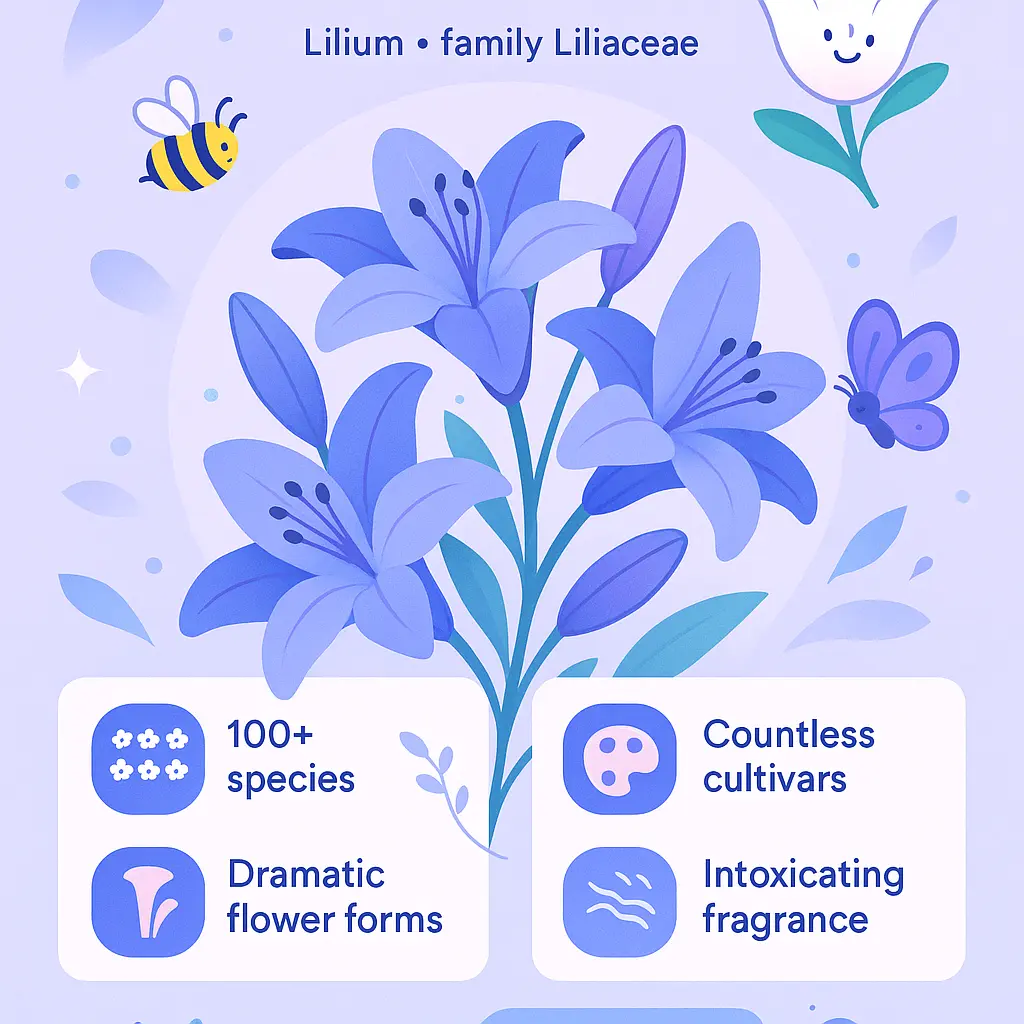
Among the world’s most beloved ornamental plants, the Lily—botanically known as Lilium from the family Liliaceae—holds a unique place in both gardens and hearts. With over 100 recognized species and countless cultivars, Lilies are renowned for their dramatic flower forms, intoxicating fragrance, and astonishing color diversity, making them a staple in both flower arrangements and modern landscaping. Iconic varieties such as the Tiger lily, Stargazer Lily, Madonna lily, Martagon lily, Spider Lily, Crinum Lily, and Easter Lily each showcase distinctive traits, from the recurved petals and bold spots of the Tiger lily to the pure white elegance of the Madonna lily. Each species is not just a feast for the eyes but also carries deep symbolism; for instance, lilies often represent purity, rebirth, and transience, which is why they frequently appear in funerals, literature, and as state flowers or floral emblems across regions in 2026.
What truly sets Lilies apart among flowering plants is their fascinating structure. Each lily grows from a bulb—a specialized storage organ that allows these perennials to survive harsh winters and burst into bloom year after year. The cultivation of lilies, whether for private gardens or as cut flowers, hinges on understanding their propagation techniques. Most lilies are propagated by dividing bulbs, scaling, or even by growing from seed, though hybrid lilies—like the ever-popular Stargazer—are typically bred for specific flower aspects such as color, petal shape, and scent. Modern lily breeding focuses not only on enhancing ornamental value but also on improving resilience against pests and diseases that can threaten bulbs and blooms alike. For gardeners in 2026, selecting disease-resistant cultivars and learning about common lily pests, such as lily beetles and aphids, remains crucial for maintaining healthy, long-lived displays.
Lilies are not just garden plants; their impact spans cuisines, cultures, and medicinal traditions. In Chinese and Japanese cuisine, certain lily bulbs are prized for their delicate flavor and nutritional benefits, appearing in soups and desserts. However, awareness of lily toxicity is key, especially for cat owners, as ingestion can be fatal for felines. Historically, various species have been used in traditional medicine, though modern research continues to explore their full medicinal potential. Additionally, lilies have inspired countless references in literature and art, where their floral emblem status underscores themes of beauty and transience.
The allure of lilies also lies in their adaptability. Whether you’re seeking a perennial showpiece for a mixed border, an elegant focal point for a flower arrangement, or a symbolic gift, there is a lily for every need. Their diverse flower forms range from upright trumpets to downward-facing turkscaps, and their palette spans from pure whites and vivid reds to deep purples and bright yellows. With the rise of high-resolution stock photos in 2026, lilies are increasingly visible in visual media, celebrated for their photogenic qualities and dramatic presence.
For anyone interested in exploring the world of lilies—be it through hands-on gardening, culinary adventures, or artistic endeavors—understanding these flowering plants’ species diversity, propagation methods, and cultural significance opens a world of possibilities. By selecting the right lily cultivar for your zone, staying informed about lily pests and diseases, and appreciating the historical and symbolic layers of this remarkable genus, you can fully enjoy the timeless splendor that lilies have brought to gardens and societies for centuries.
Professional illustration about Photos
Popular Lily Varieties 2026
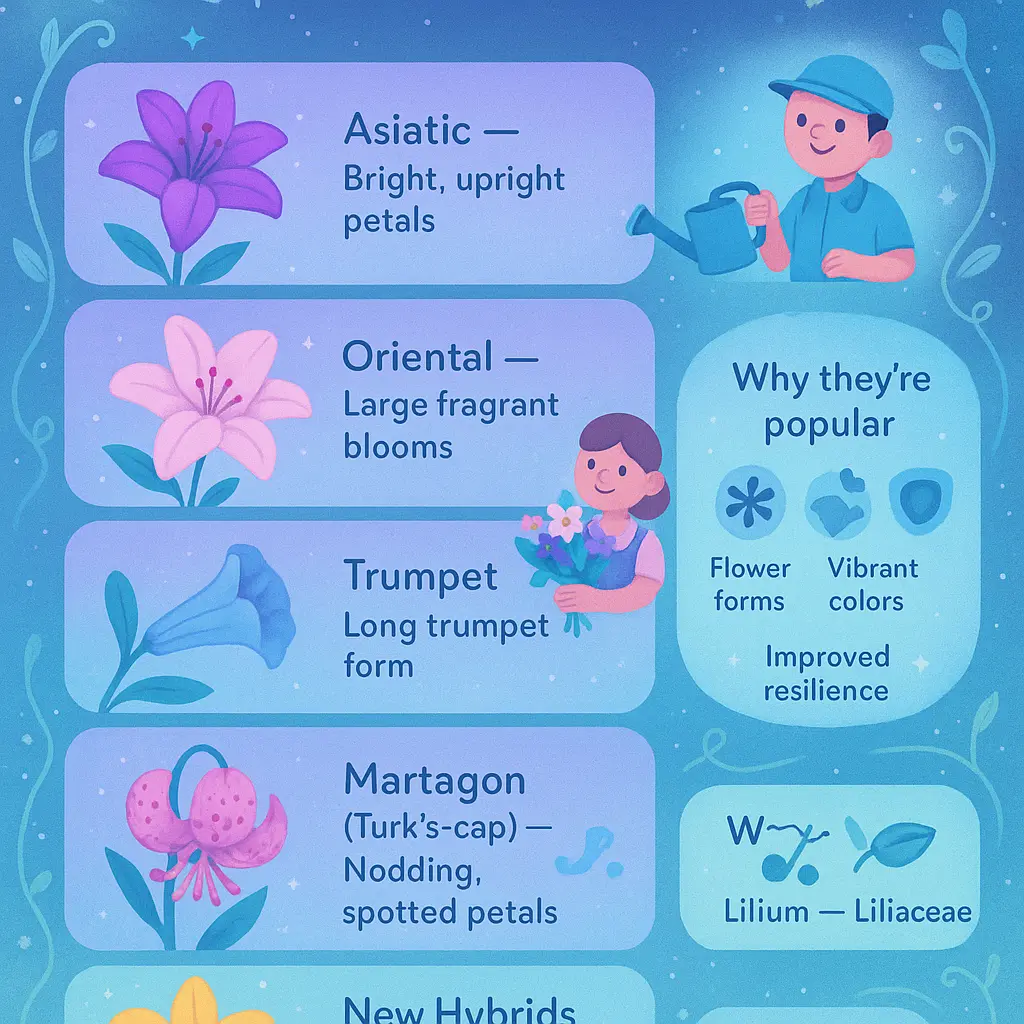
When it comes to the most sought-after Lily varieties in 2026, gardeners and florists are embracing both traditional favorites and newer cultivars that highlight exceptional flower forms, vibrant colors, and improved resilience. Lilium, the genus at the heart of the diverse Liliaceae family, continues to amaze with species and hybrids that serve as stunning ornamental plants, reliable perennials, and iconic garden plants. Among the standouts, the Tiger Lily (Lilium lancifolium) remains a star for its bold orange petals splashed with black spots, which bring a wild energy to any flower arrangement. Its robust nature and easy bulb propagation techniques also make it a go-to for gardeners seeking low-maintenance options with high ornamental value.
Stargazer Lily has experienced a surge in popularity, especially as a cut flower in 2026 thanks to its large, upward-facing blooms and sweet fragrance. Hybridized for optimal performance, Stargazer’s vibrant pink and white blossoms symbolize prosperity and passion, which ties into the broader spectrum of Lily symbolism embraced by modern floral designers. These lilies are frequently featured in both funerals and celebratory events, balancing emotional resonance with their striking appearance. On the other hand, Madonna Lily (Lilium candidum) continues to be treasured for its elegant white trumpets—an emblem of purity and renewal—often used in religious and cultural ceremonies. The Madonna Lily’s historic status as a state flower and floral emblem in various regions only adds to its prestige in contemporary gardens.
Martagon Lily (Lilium martagon), with its distinctive recurved petals and spotted pattern, is a favorite among collectors and enthusiasts who appreciate unique flowering plant forms. These lilies thrive in woodland settings and are highly valued for their adaptability and prolific bulb production, making them ideal for naturalized garden designs. Spider Lily and Crinum Lily, while technically belonging to closely related genera, have seen a boom in interest due to their exotic looks and adaptability to warmer climates. Spider Lilies, in particular, are celebrated for their delicate, spidery petals that add flair to flower arrangements and are increasingly featured in tropical-inspired landscapes in 2026.
The Easter Lily (Lilium longiflorum) remains a staple for spring displays, its pure white blooms symbolizing hope and renewal across cultures. Breeders have focused on enhancing its disease resistance and extending blooming periods, making it more versatile for commercial production and home gardens. Specialized Lily breeding programs now offer cultivars tailored for varying soil types, climates, and pest and disease resistance, allowing gardeners to select varieties perfectly suited to their local conditions.
In terms of Lily propagation, enthusiasts now favor techniques like bulb division and scaling to ensure healthy, genetically diverse plants. This has encouraged the spread of newer cultivars, including those bred specifically for improved performance in challenging environments. Many modern Lilies are hybridized for not only their aesthetic appeal but also their reduced toxicity to cats—a concern for pet owners, as traditional Lilies are known for their risk to feline companions. Breeders in 2026 often highlight these safety features in new releases.
Beyond their garden uses, trending Lily species and cultivars are gaining traction in culinary, medicinal, and cultural contexts. In Chinese and Japanese cuisine, edible Lily bulbs are prized for their delicately sweet flavor and nutritional benefits. The increased availability of specialty cultivars bred for culinary use in 2026 is driving a new wave of gourmet interest. Additionally, certain Lily species are studied for their potential medicinal uses, from anti-inflammatory applications to traditional remedies.
With the explosion of high-quality Stock Photos showcasing dramatic Lily blooms and innovative garden designs, enthusiasts are more inspired than ever to explore new varieties. The visual diversity—from the regal Madonna Lily to the quirky Spider Lily—reflects the ongoing evolution in Lily species and cultivars. Whether you’re planning a woodland retreat with Martagon Lilies, creating a vibrant border with Tiger Lilies, or seeking fragrant accents with Stargazers, the comprehensive range of Lilies available in 2026 gives you endless creative possibilities. Gardeners, florists, and culinary professionals alike continue to expand the role of Lilies beyond tradition—making them an essential, multifaceted flower for the modern era.
Professional illustration about Lilies
Symbolism of Lilys
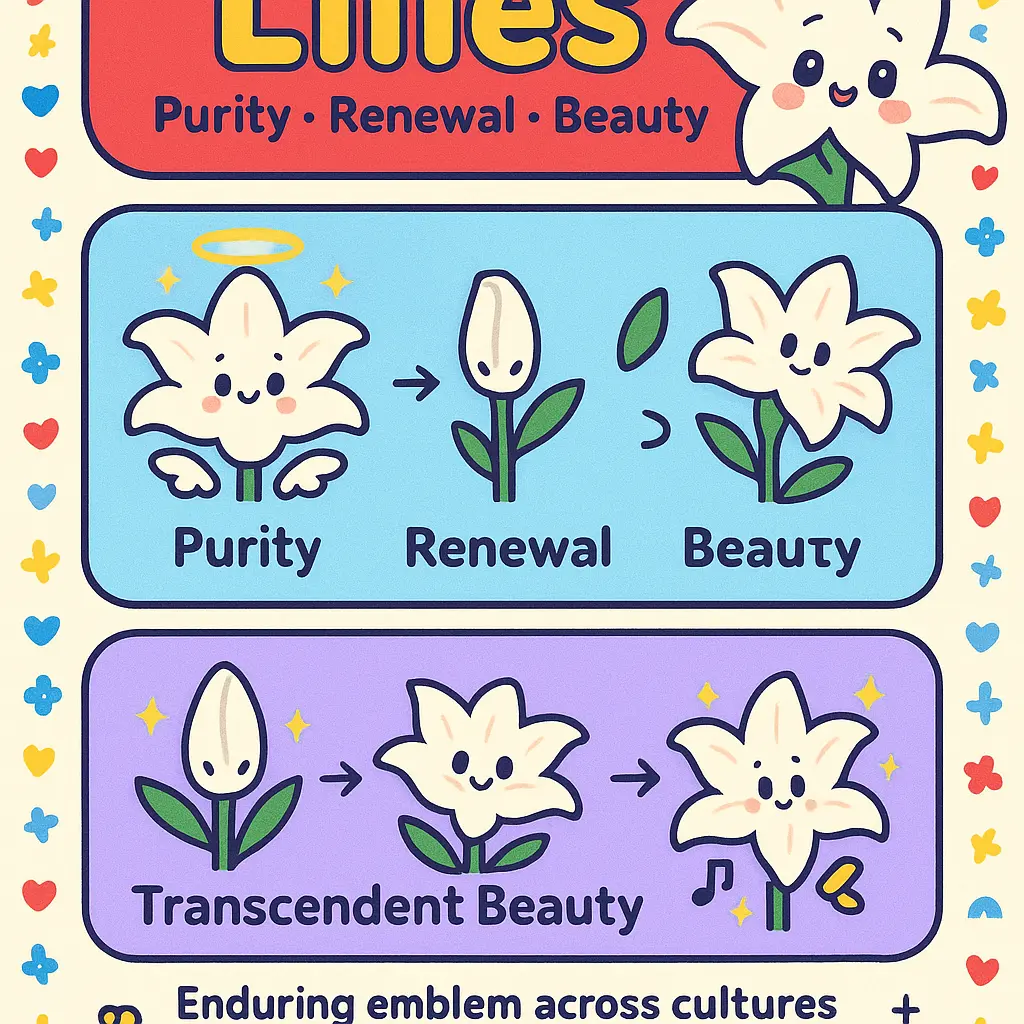
Lilies have long been regarded as more than just ornamental plants; their symbolism runs deep across cultures, religions, and traditions. In 2026, the Lily remains an enduring emblem of purity, renewal, and transcendent beauty, making it a sought-after choice in flower arrangement for weddings, funerals, and various cultural rituals. Each species and cultivar within the genus Lilium and the Liliaceae family carries its own symbolic weight, from the dignified Madonna lily—often associated with the Virgin Mary and innocence—to the vibrant Tiger lily, which frequently symbolizes courage and passion due to its bold, orange flower form and distinctive spots.
Cultural and Historical Layers of Lily Symbolism
Lilies have appeared in literature, art, and religions for centuries. The white Easter Lily, a popular garden plant and perennial bulb, is synonymous with resurrection and hope, especially during springtime celebrations. In Japanese cuisine, the edible bulbs of certain lilies, such as the Crinum Lily, are considered delicacies, while the same flower might represent abundance and fertility in East Asian folklore. The Stargazer Lily, introduced as a hybrid in the late 20th century and now even more prominent in 2026 garden designs, symbolizes ambition and limitless possibilities, reflecting its upward-facing flower aspect and intense fragrance.
Lilies also hold state flower status in regions like Saskatchewan, where the Western Red Lily is celebrated as a floral emblem of provincial pride. In contrast, the Spider Lily's strikingly unique form has become a symbol of the fleeting nature of beauty, often featured in modern stock photos for its visual drama and emotional impact.
Lily Symbolism in Contemporary Contexts
Today, lilies are ubiquitously used in funerals to represent the soul's restored innocence after death. Their medicinal uses—historically valued for anti-inflammatory properties—are less emphasized now, but their psychological and emotional symbolism has only grown. Many people choose lilies in flower arrangements to convey sympathy, purity, or hope, making them a staple for both personal and public ceremonies. The Madonna lily, for example, continues to be featured in literary works and art installations to evoke themes of serenity and spiritual awakening.
Practical Implications of Lily Symbolism
When selecting lilies for your garden or floral design, consider their symbolism to enhance the intended message. For expressions of gratitude or friendship, opt for hybrids like the Stargazer Lily with vibrant colors and a fragrant scent. If purity or remembrance is the goal, the classic white Easter Lily or the Martagon lily, with its elegant, nodding flowers, may be more appropriate. Gardeners and florists should also be aware of lily toxicity to cats; while the bulbs and flowers are visually appealing and hold strong symbolic value, they pose significant risks if ingested by pets.
Beyond traditional meanings, lilies are increasingly seen as symbols of resilience and adaptation, especially in the context of lily breeding and propagation techniques that have produced hundreds of new cultivars by 2026. These advances have allowed for lilies to thrive in diverse climates and gardens, ensuring their place as a perennial favorite both for their ornamental value and their rich tapestry of cultural and emotional significance.
Examples of Lily Symbolism in Daily Life
- In weddings: Madonna lilies are often chosen to represent purity and commitment.
- At memorials and funerals: Easter Lilies convey sympathy and spiritual renewal.
- Garden planting: Tiger lilies may symbolize boldness and the celebration of life, ideal for statement plantings.
- Literary works: Lilies often serve as metaphors for fleeting beauty, hidden strength, or a new beginning.
Understanding these layers of meaning can enrich your appreciation of lilies, inform your flower arrangement choices, and add depth to your garden's design. Whether you're browsing stock photos for floral inspiration or planning a perennial border, keeping the symbolism of lilies in mind ensures your selections carry both aesthetic and emotional significance.
Professional illustration about Lilium
Best Growing Conditions
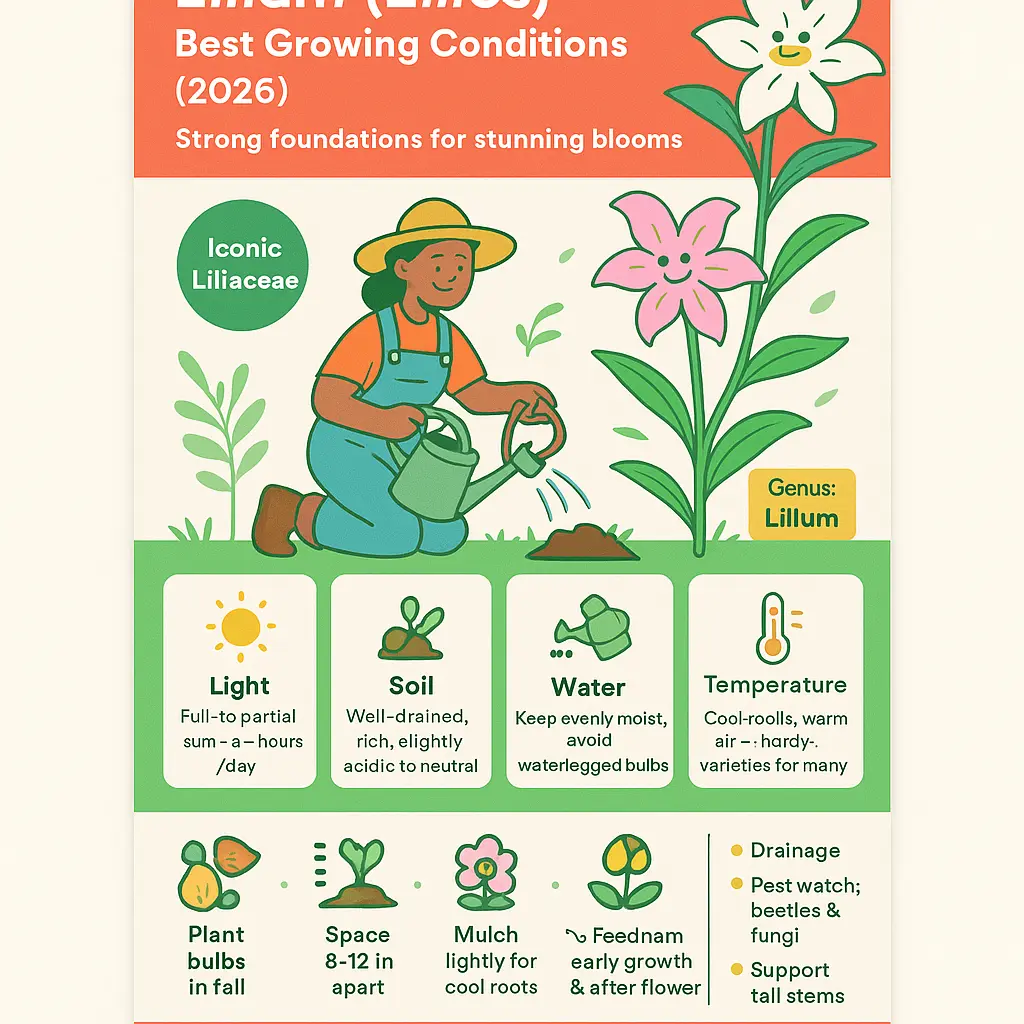
For gardeners and flower lovers looking to cultivate Lilies in 2026, understanding the best growing conditions is the foundation for stunning blooms and healthy plants year after year. Lilies (Lilium), one of the most iconic ornamental plants in the Liliaceae family, thrive when their needs are met with precision. Whether planting majestic Tiger lily, fragrant Stargazer Lily, classic Madonna lily, or exotic Spider Lily, each species and cultivar has specific requirements that can make all the difference in your garden, flower arrangements, and even stock photos for professional use.
Soil & Drainage:
Lilies are true perennials that flourish in well-draining, loose, loamy soil enriched with organic matter. Avoid heavy clay or waterlogged areas, as excess moisture can cause the bulb to rot—a common issue highlighted in recent studies focusing on lily pests and diseases. To boost the soil’s structure, amend your planting bed with compost and a touch of sand if necessary. The ideal pH range is slightly acidic to neutral, about 6.0 to 7.0, which encourages superior flower form and vibrant colors. Mixing in well-rotted manure before planting bulbs will further elevate your lilies’ ornamental value.
Sunlight Requirements:
Most lilies, including Easter Lily and the increasingly popular Martagon lily, require full sun to partial shade. Aim for at least 6 hours of direct sunlight daily for optimal flowering and sturdy stems. Gardeners in hotter regions may want to provide afternoon shade or plant lilies near taller garden plants to protect them from intense summer sun—especially important for species like Crinum Lily that can be sensitive to scorching conditions.
Watering Practices:
Proper hydration is key but should be balanced to avoid soggy roots. Water deeply once or twice a week depending on rainfall, letting the soil dry out slightly between waterings. Newly planted lily bulbs should be kept moist but not saturated, supporting root establishment and successful propagation. Using mulch is highly recommended—it helps retain moisture, suppresses weeds, and keeps the bulb cool during heat waves, all critical for long-term perennial success.
Spacing & Air Circulation:
When planting lilies individually or in clusters, space bulbs about 12 to 18 inches apart. This ensures ample air circulation, which reduces the risk of fungal problems such as Botrytis blight—an issue observed in stock photos depicting affected lilies. Airflow not only keeps the foliage dry but also maintains healthy growth, especially in hybrid varieties bred for spectacular flower arrangements.
Temperature & Climate Factors:
In 2026, with climate variability affecting many regions, choosing the right lily species suited to your local conditions is crucial. For example, Tiger lilies are remarkably hardy and can withstand colder winters, making them ideal for northern gardens. Stargazer Lily and Spider Lily, however, prefer milder climates with moderate winters and warm summers. Mulching in late fall provides bulb insulation, ensuring perennial performance even in chilly zones.
Feeding & Fertilization:
Lilies respond well to moderate feeding throughout the growing season. Use a balanced, slow-release fertilizer as soon as shoots emerge in spring. Potassium-rich formulations enhance flower size and color, while excessive nitrogen should be avoided to prevent lush foliage at the expense of blooms. Foliar feedings during active growth can further support robust flowering and bulb development.
Pest & Disease Management:
Staying proactive about lily pests and diseases is essential. Aphids, red lily beetles, and fungal pathogens are the most common threats to garden lilies in 2026. Regular inspection and prompt removal of affected leaves or buds, combined with organic sprays or biological controls, can safeguard your ornamental plants. Crop rotation and removing spent flower stalks after blooming also help limit disease pressure.
Unique Cultivar Needs & Examples:
Certain species and cultivars, such as Madonna lily, demand alkaline soils and prefer to be left undisturbed once established. Martagon lilies thrive in woodland settings with dappled shade and rich leaf mold, reflecting their natural habitat. Spider Lily shows resilience in wetter soils, making it an excellent choice for rain gardens. For culinary uses, some lilies like the bulbs of the Lilium brownii are prized in Chinese cuisine—requiring sandy soil and autumn planting for best flavor.
Practical Tips for Gardeners:
- Always plant lily bulbs in the fall or early spring, pointed end up, at a depth of about 3 times the height of the bulb.
- For floral emblem or state flower arrangements, select cultivars known for longevity and vibrant blossoms.
- Remember, lilies are toxic to cats; if you keep pets, avoid growing them indoors or in accessible outdoor areas.
- Support tall flowering stems with stakes during windy months to prevent breakage, ensuring lilies remain garden highlights and top subjects for stock photos and literary references.
By tailoring these best growing conditions to your specific lily species, garden layout, and local climate trends in 2026, you’ll unlock spectacular displays and healthy, thriving lilies that stand out in both tradition and modern flower arrangements.
Professional illustration about Liliaceae
Planting Lilys Step-by-Step
Planting Lilys Step-by-Step
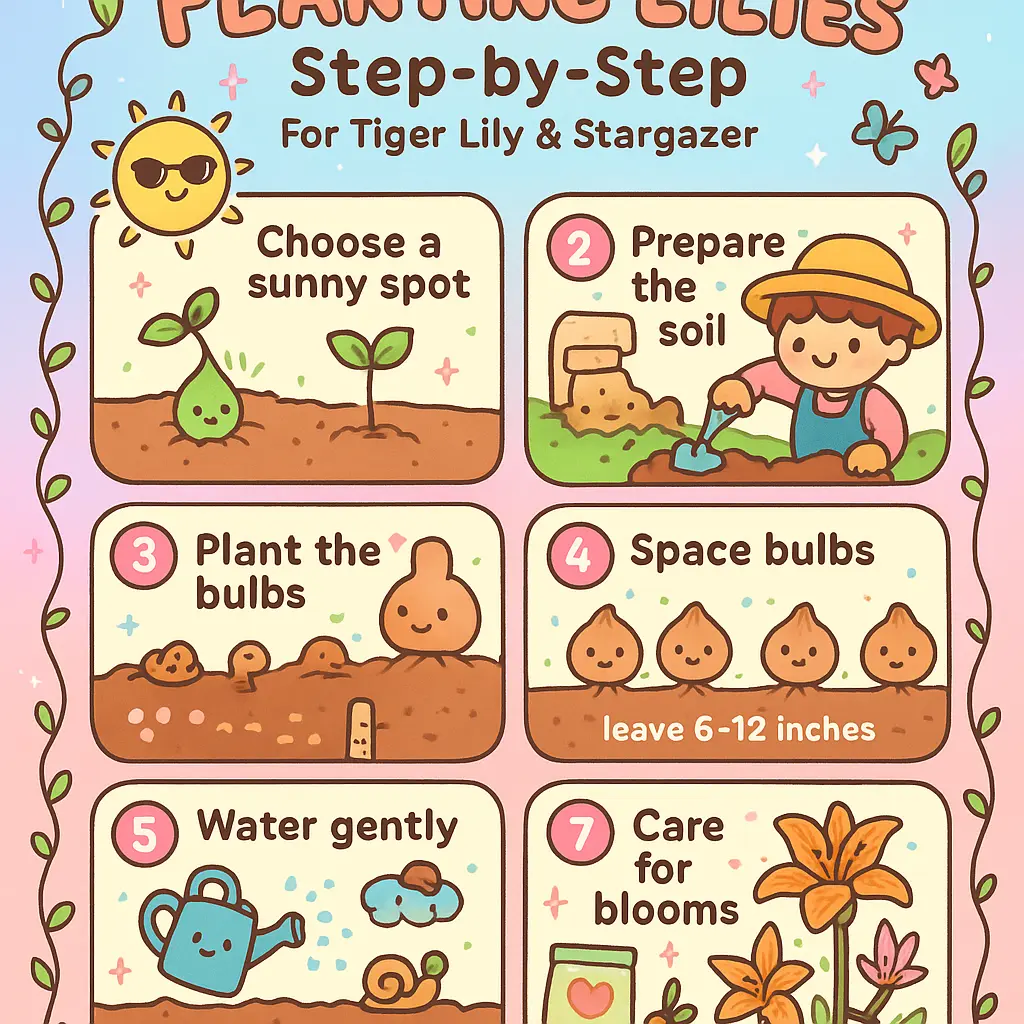
No matter if you’re a seasoned gardener or a total beginner, planting lilies can be a real joy when you know the right techniques. Let’s break down the lily planting process to help you get the healthiest blooms, whether you’re thinking about starting Tiger lily, Stargazer lily, Madonna lily, Spider lily, Crinum lily, Easter lily, or one of the hundreds of cultivated lily hybrids. The beauty of lilies (Lilium species, in the Liliaceae family), is that they are adaptable perennials with extravagant flowers that make them show-stopping garden plants and a staple in flower arrangements.
1. Choosing the Right Lily Bulb and Cultivar
First, select healthy lily bulbs. Look for bulbs that are firm and plump, with no mold, soft spots, or obvious damage. The type of lily you plant makes a difference—Stargazer lilies offer dramatic color and intense fragrance, while Madonna lilies provide an elegant white bloom with deep cultural symbolism, often used in funerals and religious ceremonies. Tiger lilies and Martagon lilies are known for their resilience and adaptability. If your garden is in a region with hot summers, Crinum lilies or Spider lilies might be more suitable. Whether you select an heirloom species or a modern cultivar depends on your preferred flower aspect, color, and bloom time.
2. Understanding the Ideal Location and Soil Preparation
Lilies are sun lovers—most species and hybrids do best with at least 6-8 hours of direct sunlight each day. They thrive in well-draining soil that is rich in organic matter. Heavy, waterlogged clay can cause bulbs to rot, so amend with compost, sand, or peat moss if needed. Lilies don’t do well in areas where water sits after rain. Check your garden’s drainage before planting; if necessary, consider raised beds or plant lilies on a slope.
3. Planting Depth, Spacing, and Technique
Plant lily bulbs in spring or fall, depending on your local climate and the specific cultivar—Easter lilies, for instance, should be planted in late fall for spring blooms. Dig holes about three times the height of the bulb (usually 4 to 8 inches deep) and space bulbs 8-14 inches apart so each flowering plant has sufficient room to mature and develop healthy roots. Placing the bulb with the pointed side up is key; gently cover with soil, firm it down, and water deeply after planting.
4. Watering and Mulching
Keep the soil consistently moist (not soggy), particularly during the establishment period. Overwatering is a common killer of Lilium, so let the top inch of soil dry out between waterings. In 2026, gardeners favor organic mulches like shredded bark or pine needles to retain moisture and keep lilies cool—this also helps suppress weeds and modulate soil temperature during hot spells.
5. Fertilizing for Vigorous Growth
Apply a balanced slow-release fertilizer formulated for flowering bulbs when planting and supplement as the lilies grow, especially in nutrient-poor soils. Lilies benefit from extra potassium to boost flower formation and overall plant vigor. Don’t overdo the nitrogen, as it encourages leafy growth at the expense of spectacular blooms.
6. Supporting Stems and Flowering Care
Some lilies, such as Tall Oriental hybrids and Martagon lilies, can grow to impressive heights and may require staking to prevent the stems from bending or breaking in wind and rain. Use unobtrusive supports and tie stems loosely. Deadheading spent flowers prevents the plant from setting seed, which keeps energy focused on bulb health and future blooms—crucial if you want top-tier floral display season after season.
7. Propagation and Dividing
Once established, lilies can be propagated by dividing clumps every 3-4 years, ideally in late fall. This not only rejuvenates crowded bulbs but also gives you more plants to expand your ornamental beds or share with friends. Tiger lily bulbils and stem bulbils provide easy propagation options for certain species.
8. Pests, Diseases, and Toxicity Considerations
In 2026, gardeners still battle classic lily pests like aphids, red lily beetles, and fungal diseases such as Botrytis. Inspect plants regularly, handpick pests, and use organic sprays if necessary. Always be mindful that most true lilies are toxic to cats, sometimes even in small quantities, so plant with caution if you have pets that like to chew on garden plants. Lilies also feature in various cultural contexts and even culinary uses (especially in Chinese and Japanese cuisine), but only certain species and cultivars are safe to consume.
9. Real-Life Example: Planting a Mixed Lily Border
Imagine planting a mixed border with Stargazer lilies for fragrance, Tiger lilies for robust color, and Easter lilies timed to bloom in early spring. By staggering planting times, using proper spacing, and providing stake support for taller species, you’ll create a dramatic, multi-layered display that not only enhances ornamental value but also provides a fresh supply of stock photos for your flower-themed projects.
With careful attention to these planting steps, you’ll cultivate a spectacular lily patch that rewards you year after year with breathtaking flowers and lasting garden memories.
Professional illustration about Flower
Watering and Fertilizing Tips
When it comes to growing Lilies—whether you’re tending Tiger Lilies, Stargazer Lilies, Madonna Lilies, Martagon Lilies, or more exotic species like Crinum Lily and Spider Lily—the right balance of watering and fertilizing is essential to get those iconic blooms and vibrant foliage pictured in countless stock photos and admired in flower arrangement art. Since Lilium species are perennial flowering plants that develop from bulbs, understanding their growth cycle makes all the difference in watering regime and nutrient timing.
Watering Tips for Healthy Lilies
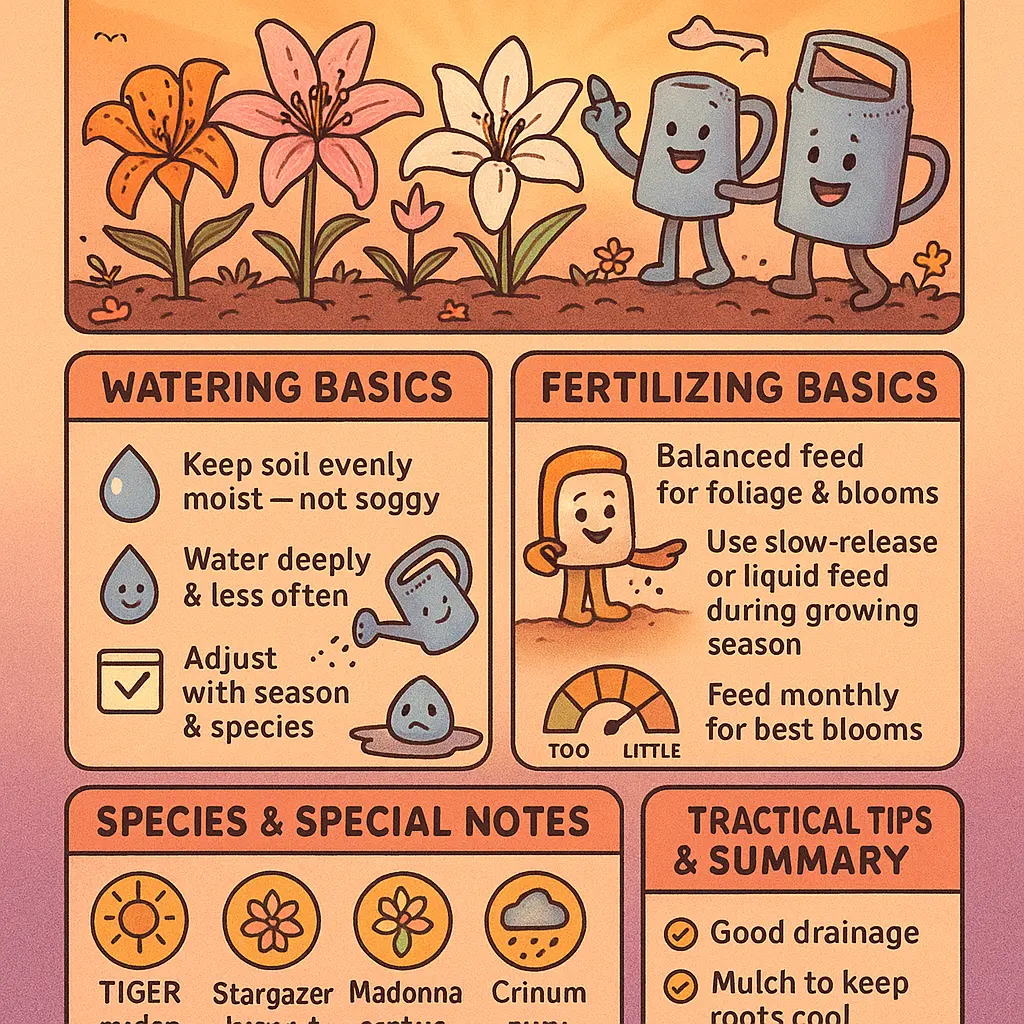
Lilies prefer well-drained soil that stays consistently moist but never soggy. Oversaturation, especially in heavy soils or clay pots, can cause bulb rot—a common problem in ornamental plants belonging to the Liliaceae family. Ideally, water your lilies deeply about once a week, increasing frequency during hot, dry spells or if you notice the top couple of inches of soil drying out. For cultivars like the Easter Lily or garden hybrids bred for larger flowers, even moisture is especially critical during the bud formation stage. Using mulch can help regulate temperature and retain moisture, mimicking the lilies’ native forest floor conditions. If you’re in a region with unpredictable rainfall, consider drip irrigation to target the root zone and avoid wetting the foliage, which reduces the risk of fungal diseases such as botrytis blight—a major concern for Lilium species.
Fertilizing Strategies for Vigorous Growth
Feeding lilies is not just about boosting bloom size or intensifying their famed fragrance; it’s also about supporting the bulb’s perennial life cycle and enabling successful lily propagation techniques. Begin with a balanced, slow-release fertilizer high in phosphorus when shoots emerge in early spring. This supports root development and prepares the plant for a robust flowering season. As the season progresses and stems elongate, you can follow up with a liquid feed rich in potassium—a trick borrowed from experienced lily breeders and gardeners cultivating premium flower forms for show and for the floral industry. Potassium encourages strong stems (a must for species like Madonna lily with tall, graceful flower spikes) and enhances flower pigmentation seen in prized cultivars.
It’s important to avoid excessive nitrogen, which can lead to lush leaf growth at the expense of blooms. If you’re growing lilies as garden plants for ornamental value or for lily flower arrangements, look for fertilizers labeled for bulbs or flowering plants. A granular bloom booster (with a ratio around 5-10-10) is perfect for Lilium hybrids and species alike. Apply fertilizer as a top dressing around the root zone, keeping pellets away from direct bulb contact to avoid burning.
Real-World Examples and Seasonal Adjustments
For gardeners cultivating Tiger lily or Stargazer lily, timing is key: Fertilize right when new green shoots appear, then again lightly after the flowers fade, supporting the bulb as it stores energy for next year’s blooms. In hot climates or containers, lilies—especially Crinum lily and Spider lily—may need more frequent watering and supplemental feeding in midsummer. Watch for yellowing leaves or stunted buds; these are signs that your lilies could be battling nutrient deficiencies or inconsistent moisture.
Lily pests and diseases like aphids, which are attracted to over-fertilized or stressed lilies, can also be mitigated by following careful fertilizing and watering routines. Studies in 2026’s ornamental plant journals report that lilies grown with organic compost or worm castings not only resist pests better, but also show richer colors—a crucial detail for those growing lilies for cultural uses, such as funerals or floral emblems.
Special Considerations for Advanced Cultivars and Culinary Lilies
As lily breeding and cultivation expands—with new hybrids and species introduced every year—the nutritional needs of these plants can shift subtly. For edible lily bulbs used in Japanese and Chinese cuisine, like those of Lilium lancifolium, minimal use of chemical fertilizers is preferred, with a focus on organic inputs to enhance both flavor and safety.
In summary, successful lily gardening in 2026 revolves around attentive watering and thoughtful feeding geared to each cultivar’s demands and the particular species’ role—whether as a garden showstopper, culinary ingredient, or subject of state flower and floral emblem pride. Tailoring your care to the specific growth habit, soil condition, and use of the lily will ensure healthy, dazzling blooms that stand out in any flower arrangement or garden display.
Professional illustration about Ornamental
Lily Pest and Disease Control
Lily gardeners know that keeping their prized Lilies — whether it’s the brilliant Tiger lily, classic Madonna lily, elegant Martagon lily, or show-stopping Stargazer Lily — healthy and thriving means taking proactive action against pests and diseases. In 2026, as ornamental plants remain a staple in landscape design, updated pest and disease control is essential to preserve the ornamental value and striking flower forms that make species and cultivated hybrids of Lilium (in the Liliaceae family) such sought-after flowering plants.
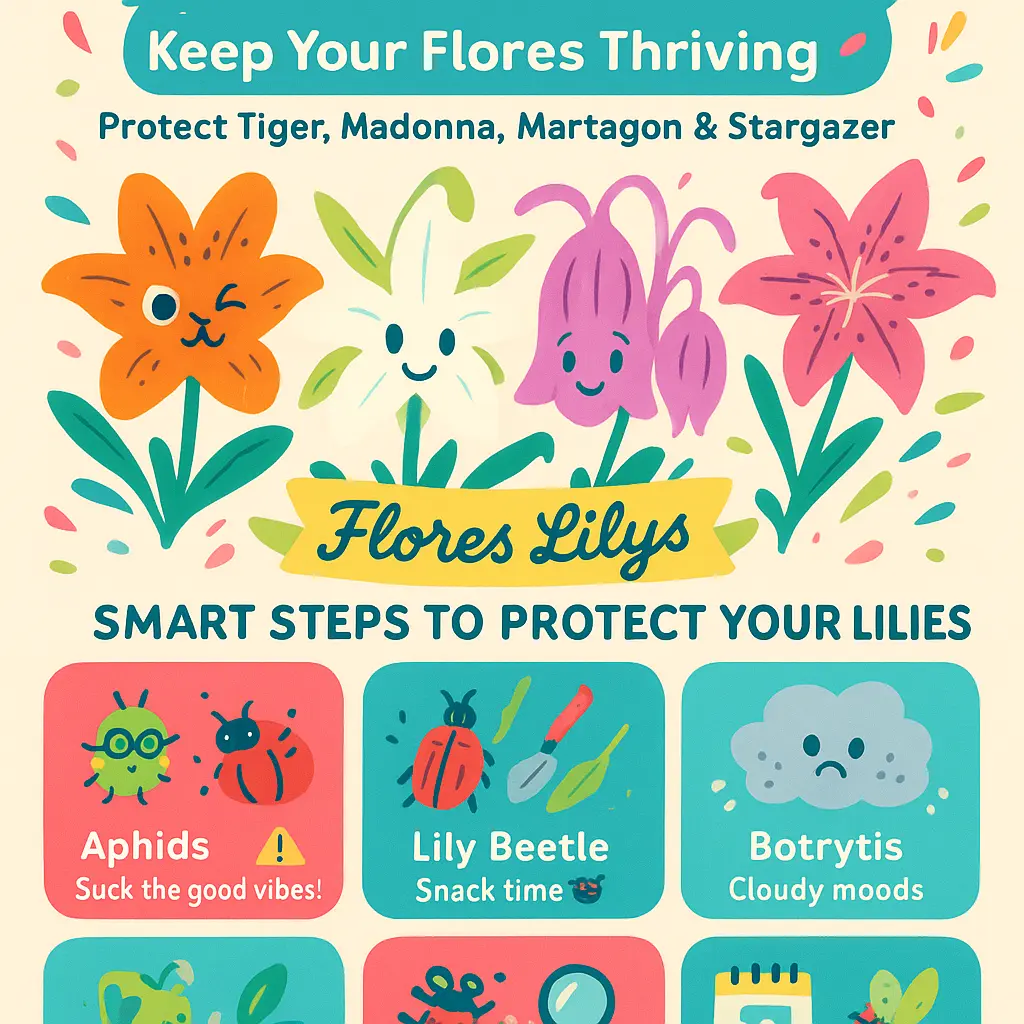
Common lily pests include aphids, lily beetles (especially the dreaded red lily leaf beetle), thrips, slugs, and snails. The lily beetle, in particular, has become an increasing concern in North America and Europe, recognized through Stock Photos and garden reports for its vivid red color and voracious appetite for both lilies and their close relatives, such as spider lily and crinum lily. These pests can quickly strip the leaves, reduce photosynthesis, and jeopardize the annual perennial show lilies provide each spring and summer. Integrated pest management (IPM) is widely favored for lilies nowadays: regularly inspect the foliage for bright red beetles or clusters of small, sticky black eggs on stems. Hand-picking, though labor-intensive, remains effective and avoids the environmental consequences of non-selective pesticides. For persistent infestations, neem oil or insecticidal soap — applied early in the morning when pollinators are least active — can suppress populations safely.
Diseases in lilies often appear as brown spots on leaves or distorted stems, often caused by fungi or bacteria thriving in moist, warm environments. Botrytis blight (Gray mold) is notorious, leading to foliage dieback and weakened flower spike development. Good cultural practices are key to managing lily fungi: always plant bulbs in well-drained soil, space plants to ensure solid air circulation, and avoid overhead watering, which encourages fungal spores to spread. After any sign of disease, promptly remove affected tissues and destroy (don’t compost) them to limit re-infection cycles. For established perennial lilies like Easter lily, which are more susceptible to soil-borne diseases, rotate planting locations every few years and use only certified disease-free bulbs for propagation. Fungicide application is an option for severe outbreaks, but always choose products recommended for ornamental garden plants and adhere strictly to label instructions.
Bacterial soft rot is another concern, particularly in hybrid lilies with thick, fleshy lily bulbs. Early signs include wilted or yellowing leaves and mushy, foul-smelling bulbs. To prevent soft rot, manage irrigation carefully so bulbs are never left in standing water. Inspect bulbs during storage — discarding any that show rot before replanting — and sterilize tools before use. Promoting good hygiene extends to pots and garden beds, reducing the risk of cross-contamination. Gardeners breeding lilies or propagating rare species should pay special attention to hygiene, as unusual cultivars often have less inherited resistance.
Beyond physical damage, pest or disease pressure can compromise more than just a flower’s appearance: it reduces their ornamental value in both the garden and floral arrangements, impacts the state flower display in regions like Michigan, and even limits culinary or medicinal uses seen in Japanese or Chinese cuisines. While lilies symbolize purity and renewal in literature and culture, stressed plants rarely bloom to their full potential, potentially missing out on their roles in weddings, funerals, or as a stunning floral emblem.
For gardeners with pets, it’s also important to note that many species of lilies — particularly true lilies in the Lilium genus, but also members of the broader Liliaceae family like crinum and spider lilies — are highly toxic to cats. Pesticide use must be chosen with care to avoid further risks to animals that roam your gardens.
Embracing organic methods, like encouraging beneficial insects (ladybugs and lacewings naturally prey on aphids and thrips), mulching to limit weed competition, and integrating resistant lily hybrids or cultivars, ensures sustainable pest and disease control for years to come. Awareness, vigilance, and proper horticultural techniques give lilies in your garden or flower arrangement the best chance to shine season after season, preserving their legacy as one of history’s most loved garden plants.
Professional illustration about Species
Seasonal Care for Lilys
Caring for Lily species and cultivars throughout the seasons is key to cultivating a healthy, long-lived display of this stunning flowering plant in your garden or landscape beds. Most members of the Liliaceae family—such as Tiger Lily, Stargazer Lily, Madonna lily, and Martagon lily—are perennials, meaning their bulbs require careful attention during transitions from one season to the next. Proper seasonal care can result in abundant blooms, striking flower arrangement opportunities, and lasting ornamental value.
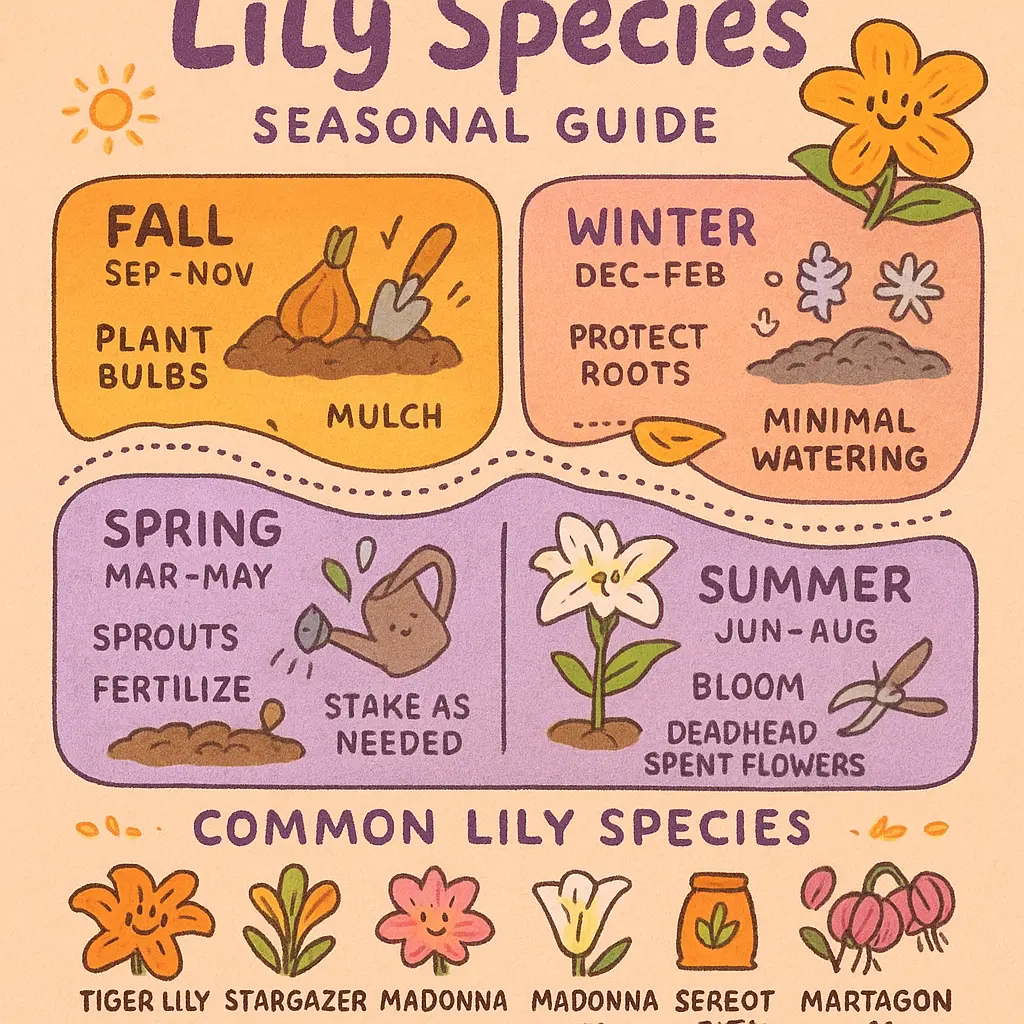
Spring Preparation: As late winter winds down and the threat of frost disappears in most regions of the United States, it's time to begin prepping Lilium bulbs. Gently clear away mulch and debris covering last year's planting site, being careful not to damage emerging shoots. For Spider Lily and Crinum Lily bulbs, amend the surrounding soil with compost or well-rotted manure to support vigorous spring growth and better moisture retention. If you’re considering expanding your Lily collection, spring is the ideal season for bulb planting, division, or experimenting with hybrid propagation techniques.
Managing Summer Growth and Bloom: In early summer, Lilies such as Stargazer Lily and Easter Lily begin to exhibit their signature forms and vibrant colors. Ensure these garden plants receive at least six hours of direct sunlight daily to maximize flowering potential. Regularly check the foliage for signs of pests—like lily beetles, aphids, or fungal issues—and address concerns promptly to protect the delicate flowers. Applying an organic mulch helps preserve soil moisture during hot months, preventing stress on the bulb and extending bloom duration. To support taller species and cultivars, gentle staking or grouping in wind-protected garden beds minimizes the risk of stem breakage.
Fall Transitions: As late-season Lilies conclude blooming, including varieties like Madonna lily and Martagon lily, allow the foliage to yellow and die back naturally—this process is crucial for storing nutrients in the bulb for next year's flowering cycle. Remove spent blossoms to prevent unnecessary seed production, which can siphon energy away from the perennial root system. In colder states, cover bulbs with a layer of straw, pine needles, or shredded leaves for insulation against early frosts. Consider lifting and dividing crowded bulbs, especially if flowering has been declining, as rejuvenation encourages stronger displays and healthier bulbs.
Winter Protection and Dormancy: Winter care primarily involves protecting your lilies’ bulb systems from frigid conditions and excessive moisture. For regions experiencing harsh winters, like the Midwest or Northeast, maintain a mulch layer thick enough to insulate, but avoid heavy buildup that can cause rot. If you're overwintering container-grown Easter Lily or rare cultivars indoors, move pots to a cool, dark, and dry spot, checking periodically for mold or pest infestations. Avoid any unnecessary watering during this dormancy, allowing the bulbs to rest and conserve energy for spring emergence.
Special Considerations for Popular Varieties and Unique Uses: Recognize that lily hybrids bred for ornamental value or cut flower arrangements—such as Stargazer Lily—might require extra fertilization or disease monitoring, especially if grown for professional stock photos or floral emblems. Take caution if you own cats, as all parts of the true Lily plant are highly toxic; be vigilant to prevent pet exposure, particularly indoors during the winter months. For gardeners with an interest in culinary uses, remember that Asian species like Lilium brownii are sometimes harvested for their edible bulbs in Chinese or Japanese cuisine, but always research cultivar-specific details regarding edibility and potential toxicity.
In Summary of Practice: Routine, seasonal lily care builds a stable environment for both garden and potted lilies, whether you’re nurturing historical types—such as the Madonna lily frequently seen in religious symbolism and funerals—or experimenting with bold hybrids. Attentive watering, strategic fertilization, pest management, and timely propagation bolster the resilience and spectacle of your Lilium plantings, turning both private gardens and public landscapes into thriving showcases from winter’s chill to summer’s peak bloom.
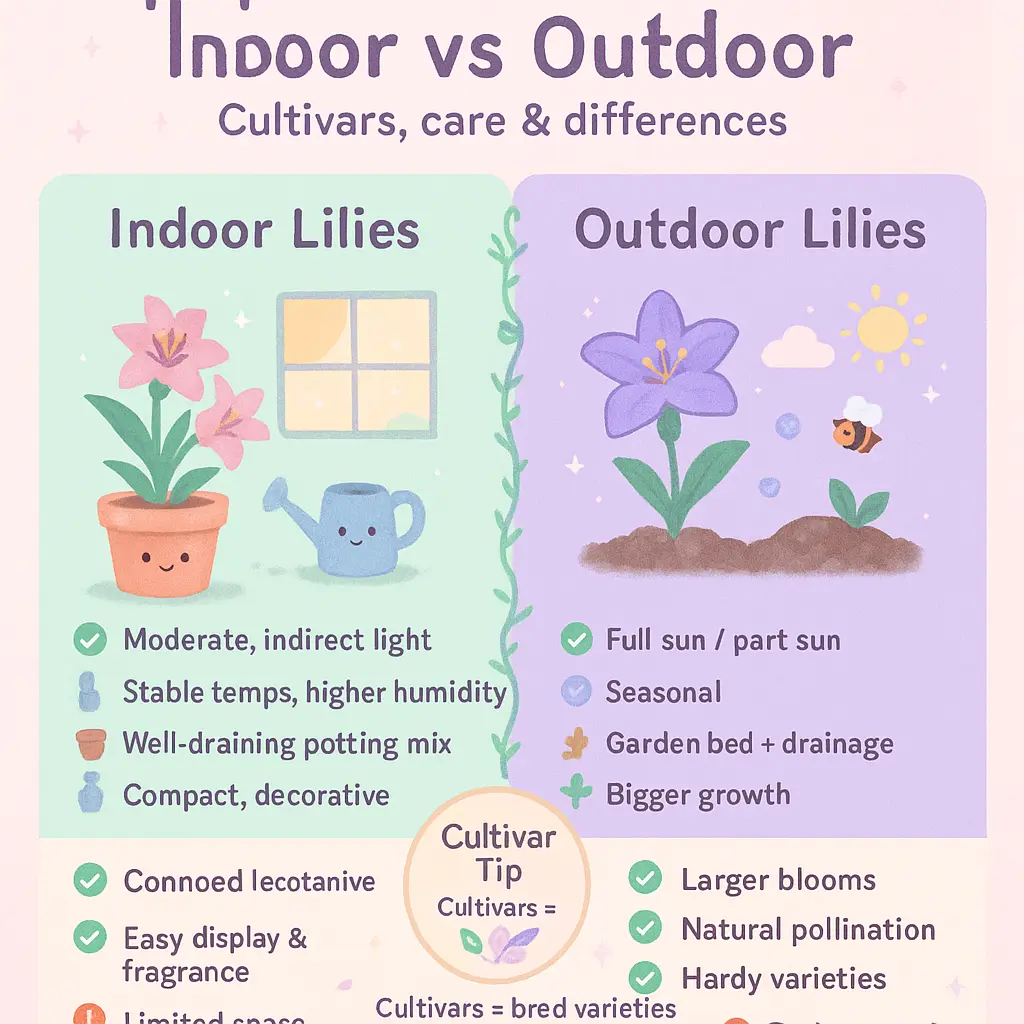
Professional illustration about Cultivar
Indoor vs Outdoor Lilys
When considering Indoor vs Outdoor Lilys, gardeners and plant enthusiasts must weigh a variety of practical and aesthetic factors to determine which environment best suits these stunning flowering plants. Lilies, classified under the Lilium genus of the Liliaceae family, offer immense ornamental value as both indoor and outdoor perennials, but they thrive differently depending on their setting. Outdoor lilies, like the popular Tiger lily, Stargazer Lily, and Martagon lily, are typically grown from bulbs in garden beds, where they can reach impressive heights and show off their elaborate flower forms. Grown outdoors, lilies benefit from natural air circulation, which helps minimize common lily pests and diseases like aphids and botrytis. Sunlight exposure is critical for optimal growth; species lilies often require full sun or part shade to deliver the vibrant blooms featured in stock photos and garden catalogs across America. Outdoor cultivation also encourages the development of more robust root systems, allowing the lilies to flower year after year with minimal intervention, justifying their reputation as hardy perennials.
For those without a garden or with a preference for interior design, indoor lily cultivation offers countless possibilities for elegant flower arrangement and decor. Lilies such as the Madonna lily and Spider Lily have found new roles as potted ornamental plants, flourishing on sunny windowsills and conservatories. Indoor environments offer greater control over factors like temperature, humidity, and soil composition, reducing the risk of environmental stress and affording precise watering routines—a key consideration since lilies are susceptible to root rot if overwatered. However, indoor gardeners must pay special attention to lily toxicity to cats, especially if species like the Easter Lily and Stargazer Lily are present, as even brief ingestion can be harmful. Propagation techniques indoors typically rely on divisions or carefully-managed bulbs, ensuring disease-free growth and ongoing flower displays.
The choice between indoor and outdoor lilies will ultimately rest on personal priorities and care capacity. Gardeners seeking larger, more resilient plants with prolific blooms should prioritize outdoor spaces, where lilies, including hybrids and cultivars, can reach their full horticultural potential and serve as focal points in landscape design. Cultural and culinary uses, like lily bulb usage in Japanese and Chinese cuisine, generally favor species grown outside, where bulbs mature with greater complexity and flavor. Alternatively, indoor aficionados benefit from year-round blooms by selecting cultivars known for compactness and enhanced disease resistance—perfect for tight urban spaces or floral arrangements gracing American dining rooms in 2026’s most current styles.
Beyond practicalities, lilies play significant cultural and symbolic roles indoors and out. The Lily state flower status and its frequent representation as a floral emblem at American funerals underscores its importance in literature and tradition. Outdoors, lilies evoke classic garden elegance and are often used to border memorial sites or add drama to perennial beds. Indoors, their striking flower aspect and gentle fragrance can elevate the ambiance of living spaces, representing purity, new beginnings, or serenity. Ultimately, whether grown as prized garden plants under the sun or cultivated as interior ornamental treasures, the many species and cultivars of Lily offer limitless opportunity for creativity, meaning, and botanical enjoyment.
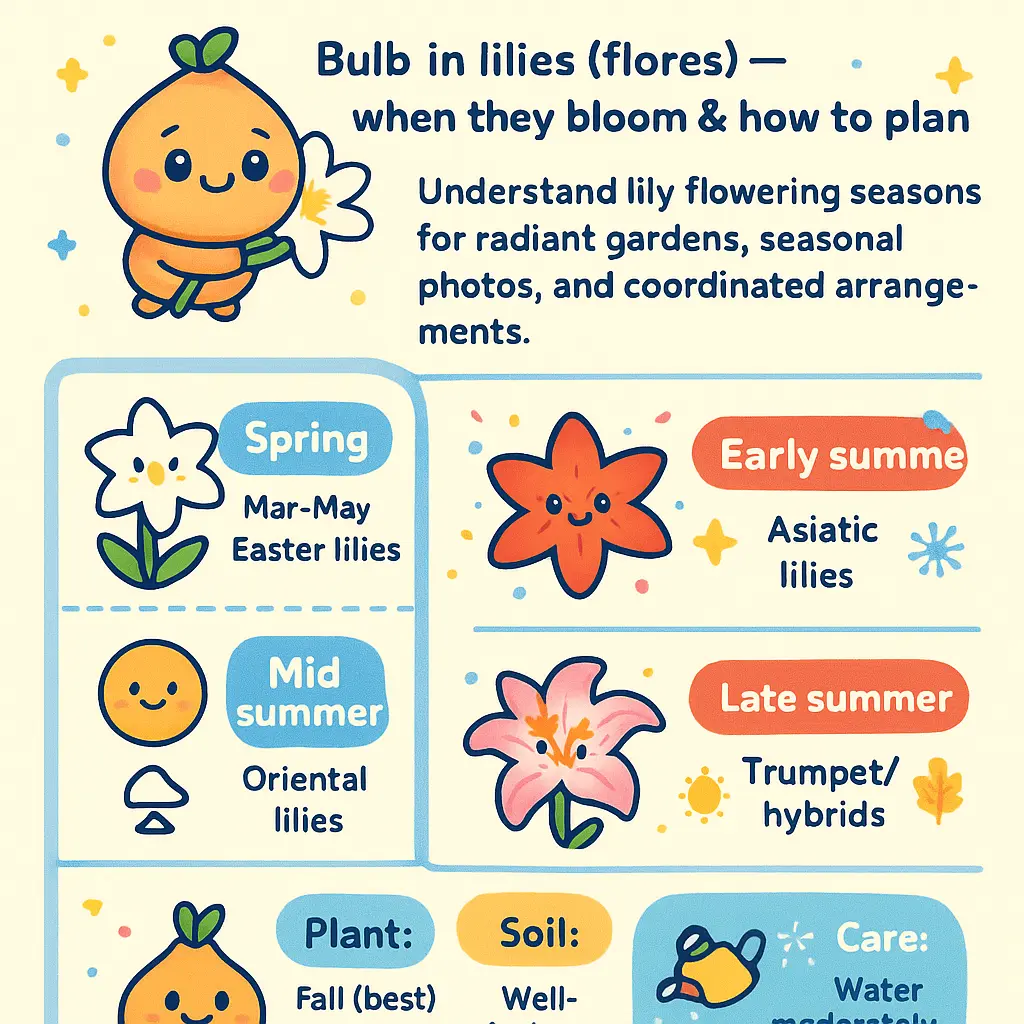
Professional illustration about Bulb
Lilys Flowering Seasons
Understanding the flowering seasons of Lilies is crucial whether you’re planning a radiant garden display, selecting stock photos for seasonal campaigns, or choosing the right lily species for coordinated flower arrangements. Lilies, belonging to the Liliaceae family, showcase a diverse range of flowering times across their many species and cultivars—making them perennial favorites for gardeners and florists alike.
Across the United States and similar temperate climates in 2026, most true lilies (those in the genus Lilium) tend to bloom between late spring and mid-summer, with each species exhibiting unique timelines. For example, Madonna lily (Lilium candidum) is among the earliest, typically opening its fragrant white flowers in May. This makes it ideal for early-season ornamental plantings. The spectacular Tiger lily (Lilium lancifolium) and popular Stargazer lily, introduced as a stellar hybrid, often reach their peak from June through July. In regions with cooler climates or higher altitudes, bloom may be delayed by about a month, so local microclimate plays a critical role.
Certain lilies have highly specialized flowering periods. Martagon lily (Lilium martagon), prized in cottage gardens for its unique recurved petals, configures splendid accents in the landscape as early as late spring. Meanwhile, the classic Easter Lily (Lilium longiflorum)—famous for its role in institutional and church walnut arrangements—primarily displays its stunning pure white flowers at the start of summer in outdoor cultivation, though forced greenhouse setups may adjust their timing to coincide with the holiday regardless of local frost dates.
Many gardeners looking for late summer color will favor Spider Lily (Lycoris spp.) and Crinum Lily, both exhibiting a tendency to flower from August into early September, bridging the gap as traditional Lilium types fade. The spider lily’s unusual ‘naked’ flowering habit—sprouting dramatic blooms long after foliage recedes—is a unique option for surprising fall arrangements and adding structure to perennial borders.
The specific onset of flowering for lily bulbs is influenced heavily by planting time, sunlight exposure, soil temperature, and bulb maturity. High-quality photos documenting lily flowering must capture this dynamic spectrum—early blooms can be dramatically different from the full flush of summer, while late cultivars exhibit colors intensified by the evolving light of autumn. When designing a garden, planting a mix of cultivars with staggered flowering schedules—Madonna, Martagon, Stargazer, Crinum, and Spider lilies, for example—ensures continual blooming and visual impact. In terms of lily breeding, modern hybrids, like the eye-catching Stargazer, have been specifically developed to extend the blooming period and offer repeat flowering, giving gardeners even more flexibility.
Flowering windows also affect lily propagation techniques. Collecting fresh seeds or dividing perennial clumps is best scheduled during the period following main bloom, when plants’ energy is focused on root and bulb development. Beware, however, that excessive blooming may attract lily pests and diseases—common issues include red lily beetle and botrytis—but judicious timing of pruning and careful garden hygiene can help lilies bounce back for the following season.
The ornamental value of lilies, not just in gardens but also in sophisticated flower arrangements, relies heavily on understanding these seasonal cues. Florists seeking to capitalize on the symbolic meaning of lilies in funerals, weddings, or cultural events—such as those seen in Chinese or Japanese cuisine—need to anticipate local flowering periods or source bulbs over several months for assured access to seasonal highlights.
For breed or species-specific examples, Madonna lily bestows iconic elegance on spring events, Tiger lily electrifies mid-summer landscapes, and hardy Crinum lily can animate borders well into September. Integrating lilies with staggered flowering times, gardeners and event planners can synchronize blooms for practically any month from May through early autumn. Cultivar selection and planting depths also play a role; deeper planting delays emergence and thus flowering, which combined with location-specific cues can enable some lilies to flower significantly out of sync with their close relatives.
Ultimately, for those building a portfolio of stock photos or crafting visual narratives with lilies, aligning your shoots or arrangements to flowering seasons can make all the difference—capturing the distinctive flower form, color shifts, and context relevant to each species’ prime moment. Proper planning allows not just for seasonal impact but also maximizes the perennial value and health of lilies for years to come.
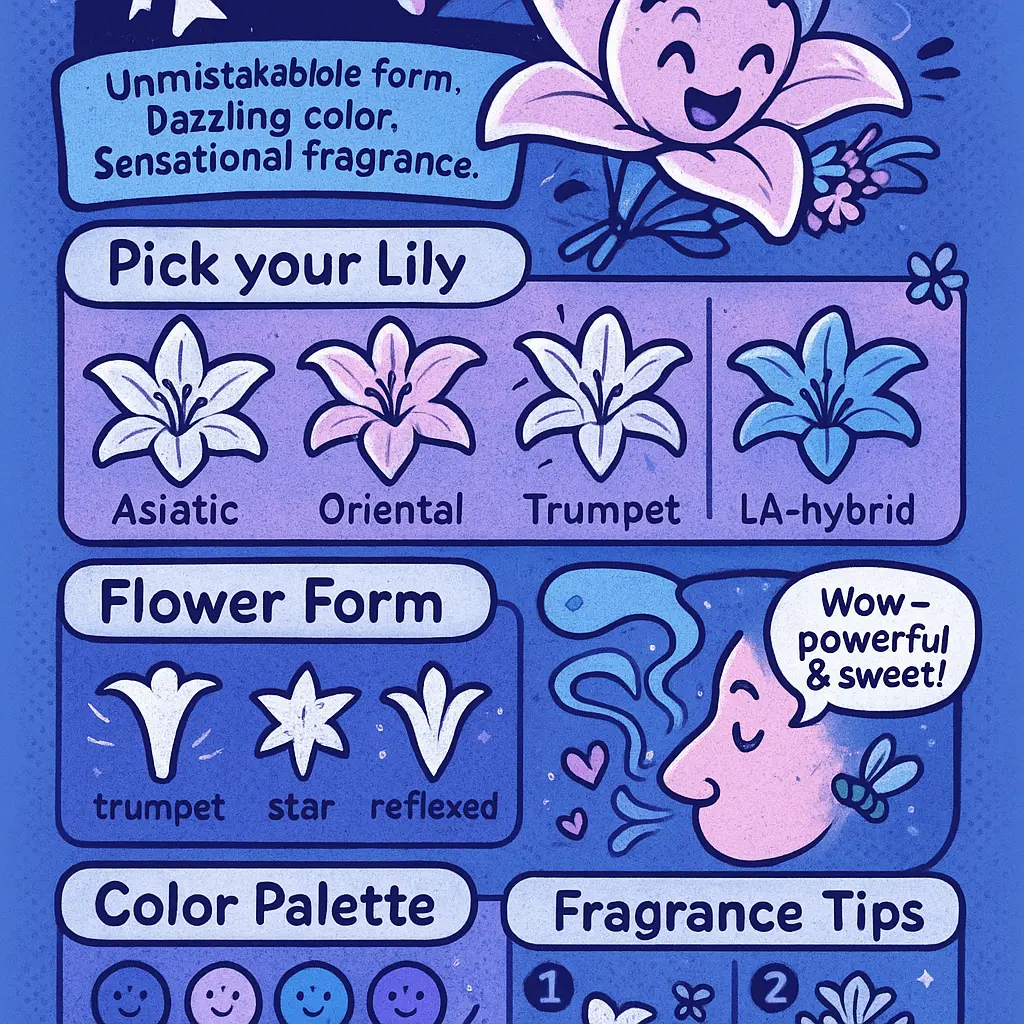
Professional illustration about Flowering
Arranging Lilys in Bouquets
Orchestrating a visually captivating bouquet with Lilies is an art that brings together their unmistakable flower form, dazzling color palette, and sensational fragrance. When crafting an arrangement, florists often begin by considering the most fitting Lily species or cultivars. Versatile varieties like the Stargazer Lily impress with bold magenta hues, while the Madonna lily carries an aura of purity with its pristine white petals—each suited to its own unique symbolic message. Whether you're mixing Tiger lilies for their striking orange with Army-green contrasting foliage or layering Spider Lilies for a more delicate texture, understanding the ornamental value and bloom longevity that each Lily species contributes helps build a bouquet that stands out, both visually and olfactorily.
When handling Lilies, it's crucial to be mindful of their large, pollen-rich anthers. Removing these at the right stage prevents staining on other flowers and keeps the arrangement looking fresh for days. Moreover, Lilies thrive as the focal points in a bouquet thanks to their robust stems and grand flower heads. In professional flower arrangements, designers frequently pair the dramatic flair of Lilies—such as Asiatic Lily hybrids or fragrant Oriental lilies—with softer companion blooms like Stock, Lisianthus, or classic garden fillers. For contemporary flair, integrating lush greens like eucalyptus or asymmetric palm leaves can give your arrangement a structural backbone, enhancing the Lilies’ elegance and announcing a modern visual statement.
Consider the orientation and staging of Lily flowers: their upward-facing or sideward petals present distinct aesthetics. Upright-faced blooms (like those seen in Stargazer Lily) beautifully punctuate vertical arrangements, invoking boldness and celebration. Conversely, the subtlety of Martagon lily’s nodding blossoms harmonizes with cascading bouquets and looser, garden-style assemblages. Not to be overlooked are Lilium cultivars featuring multiple hues and petal patterns, originating from years of expert Lily breeding and selective propagation techniques. For rich effects reminiscent of 2026’s elevated home décor trends, blend hybrid varieties with similar perennial beauty, such as Calla lilies or Peony flowers, for tactile diversity.
Pay close attention to bulb freshness; freshly cut Lilies from well-propagated bulbs display longer vase life and widespread form, vital for event bouquets or holiday centerpieces. Anyone arranging cut flowers at home should trim stems at an angle and strip bottom foliage before placing them in water, preventing bacterial growth for healthy blooms. Frequent water changes and location away from direct sunlight or drafts maximize vase longevity.
In cultural or symbolic context, consider what message you wish to convey—Lilies have been charged with meanings for centuries. Madonna lilies are classics for sympathy bouquets, fitting due to their symbolism of purity and renewal, while Stargazer Lily arrangements celebrate success or bold occasions thanks to their flush, upward-looking blossoms. Lilies, as the state flower of several American states, serve well in arrangements for official ceremonies or graduations, echoing historic and literary prestige. For event design inspired by Japanese or Chinese traditions, you might integrate Spider Lily or Crinum Lily to subtly nod to culinary or cultural customs, given their recurring presence in Eastern inspiration.
However, remember Lily toxicity to cats is a serious concern in households or event spaces with pets. If safety is a factor, ensure arrangements are out of reach, or consider pairing Lilies with an artificial component, particularly for showroom visuals or Stock Photos.
Whether you’re curating for personal expression or craft, arranging Lilly flowers allows you to blend artful ornamentation with symbolic depth. From precise placement and intermixing bulbous perennials to balancing striking and elegant companions, the goal is to curate a dynamic visual symphony—a testament to both century-honed floral design and contemporary trends in 2026’s decorative world.
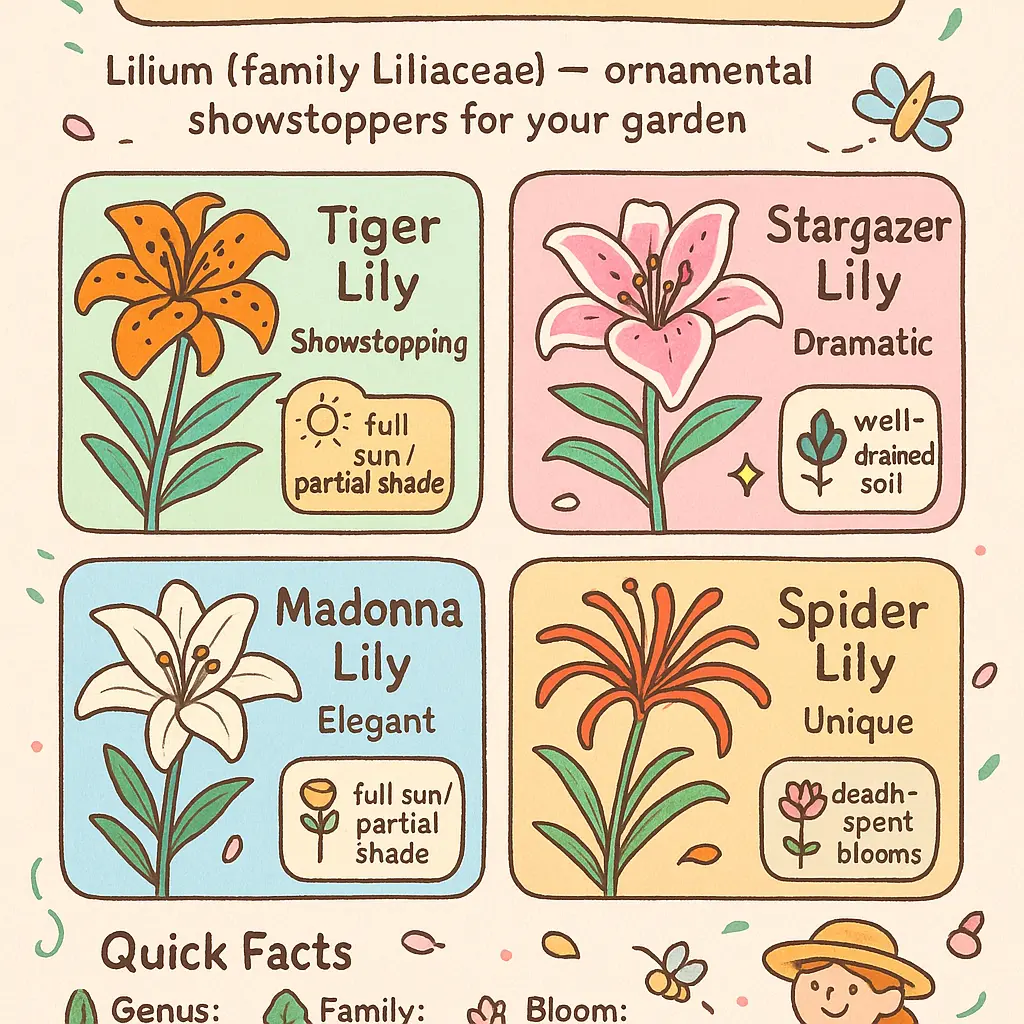
Professional illustration about Garden
Lilys in Modern Landscaping
In contemporary landscape design, the lily—from the showstopping Tiger lily and dramatic Stargazer Lily to the elegant Madonna lily and the unique Spider Lily—has redefined what ornamental plants can bring to outdoor spaces. Lilies—belonging to the Lilium genus within the Liliaceae family—are prized for their stunning floral arrangements and their versatile landscape applications, thriving as feature plants, mass plantings, naturalized borders, or even focal points in modern minimalist gardens. Landscape architects value lilies for their strong graphical flower form—the upright stalks and turbinate blossoms of a Martagon lily, for example, create architectural interest while a garden planted with clustered crinum lilies evokes lush abundance.
When designing for year-round impact, professionals increasingly turn to lilies because many species and cultivars are reliable perennials, offering spectacular succession blooms from late spring to summer. This strategic planting ensures waves of colorful displays—amplified by the array of hybrids now available in 2026. From pastel-hued Easter Lilies optimal for classic beds, to technicolor Asiatic hybrids that suit modern, urban settings, and stately Crinum Lilies for subtropical designs, lilies supply immense adaptable beauty through considered application.
Additionally, most contemporary gardens integrate bulbs and underground architectural elements; with their sturdy, geotropic bulbs, lilies are ideal for layered planting schemes. Set beneath shallower-rooted annuals or in between dwarf shrubs, lilies send up their vertical stalks year after year without crowding companion species. Through careful breeding and selection, a vast palette of lily hybrids flourishes under the demanding conditions of rooftop, courthouse, and xeriscape gardens. Modern soil amendments and bulb-specific fertilizers (sulfur, humus, and potassium mix well with the lily's requirements) amplify vigor while limiting common pests and diseases.
Designers also pay close attention to Lily symbolism and regional cultural affiliations with this glaringly beautiful flowering plant. The violet-and-white Madonna lily remains popular around religious spaces and in sacred architectural landscapes because of its associations with purity and rebirth, while sophisticated clustering of Stargazer lilies in contemporary office atriums serve both as statements of hope and as distinct design elements signifying prosperity. Project coordinators sourcing feature flowers for hospitality or healing gardens also favor lilies for their gentle fragrance and purported medicinal uses, given research hinting at calming effects through their scent.
For photogenic public or commercial spaces, lilies with their dramatic silhouettes have influenced not only garden planning but also photography and marketing. Modern planting strategies often revolve around maximized visual appeal both in-person and for Lily stock photos—mass plantings, contrasting color swaths, and eye-level perspectives all draw on the iconic aspect of lily flowers. Photographer-centered shrub arrangements, combining Tiger lilies’ fierce oranges with the soft curves of Martagon petals, have resulted in striking images popular for branding parks or cultural spaces—underlining lilies’ high ornamental value.
Maintenance and sustainability are crucial in current landscape architecture. Savvy use of lily propagation techniques, from bulbetics (forcing lilies to rebloom under low-energy greenhouses) to responsible lily breeding minimizing bloom aberrations and pests, places these garden plants among the most sustainable perennial species in today’s market. As lilies root deeply, they help in holding soil for rain-seepage management, making them an integral part of modern rain gardens and bioretention zones.
Importantly, landscape designers in 2026 are increasingly aware of safe lily use—clearly denoting garden zones containing lilies to protect pets, especially cats, since lily toxicity to cats (all Lilium species) remains an issue. Segregating cottage plantings or employing lilies in easily gated ornamental showcases ensures their spectacular see-but-don’t-touch allure enhances rather than endangers.
Regardless of climate and space, from rooftop urban oases to expansive cultural parklands—lilies in all their cultivar variations bring bold statement blooms, textural diversity, scent, and heritage symbolism to the forefront of modern landscaping. They unify minimalist hardscapes, inject seasonal drama, and empower garden creators to blend innovation with revered historical plant meanings. Lilies have truly become the perennial pillars of contemporary backyard and public landscape design in 2026.
Professional illustration about Perennial
Top Lily Colors and Their Meanings
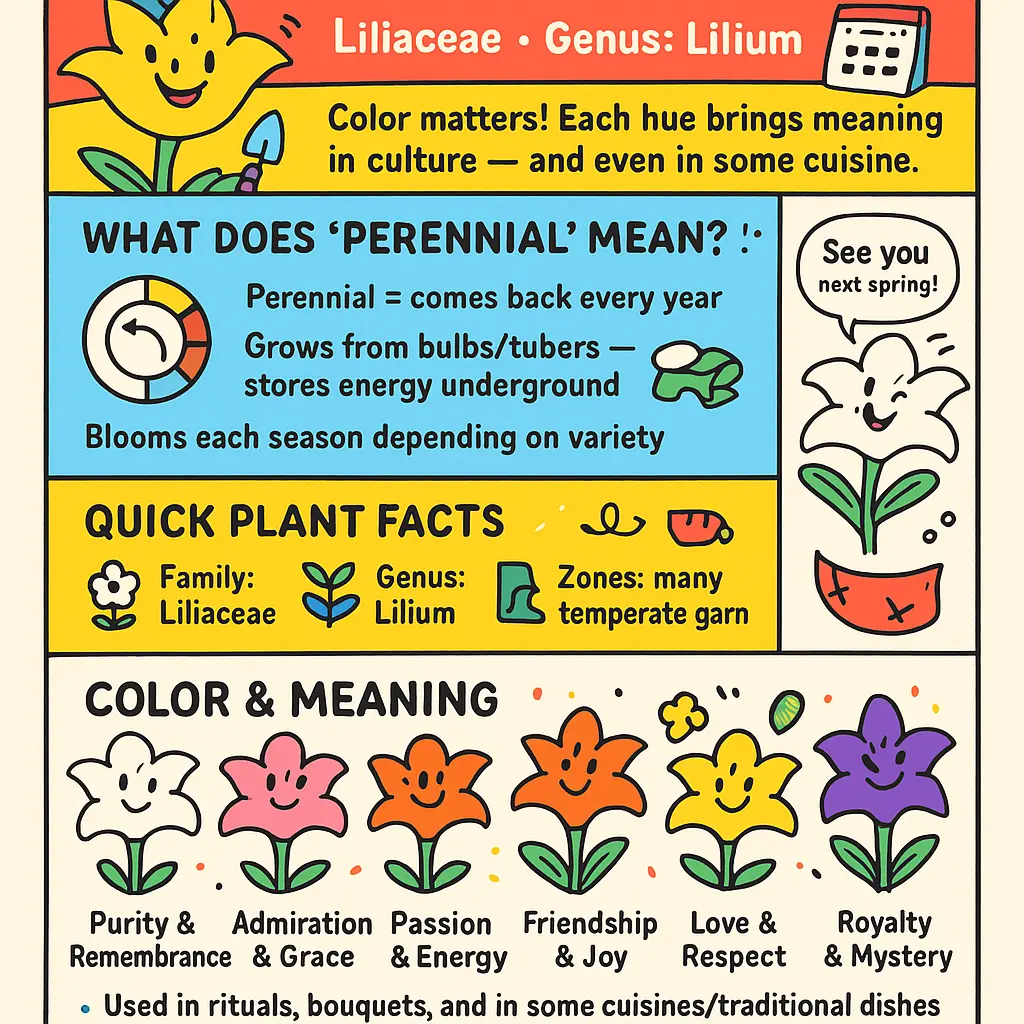
Color is a vital aspect when choosing a Lily for your garden plant or a memorable flower arrangement, with each hue expressing distinctive meanings and functionalities in both culture and cuisine. Lilies, belonging to the Liliaceae family and genus Lilium, display a spectacular palette of shades due to the vast variations in species, hybrids, and cultivar breeds developed as ornamental plants. In stock photos or flower shops across America in 2026, you'll find Lily flowers in classic colors like pure white, radiant pink, golden yellow, fiery orange, dramatic red, and mysterious purple—and every color conveys unique symbolism and uses from literature to funerals.
White Lilies, exemplified by the symbolic Madonna lily and stately Easter Lily, epitomize purity, renewal, and peace. These perennial bulbs often appear in arrangements for weddings or funeral ceremonies, representing innocence and spiritual rebirth. In American churches, the white Easter Lily remains a floral emblem สำหรับ spring and Easter décor. Moreover, white Lilies feature in propagation techniques favored by breeders seeking the truest, cleanest hue for garden perfection; Madonna lily bulbs particularly demand some expertise, requiring rich, well-drained soils and patience, as stringy pests and bulb rot sometimes challenge healthy flowering.
Pink Lilies, with stars like the Stargazer Lily—one of the top-selling cultivars in recent stock photos and flower shops nation-wide—symbolize prosperity, femininity, and joyful celebration. They dominate birthday bouquets, romantic florals, and Mother’s Day arrangements. Stargazer hybrids, due to exquisite fragrance and intense magenta-purple petals speckled with white, add contemporary flair to any interior. When working with Stargazer bulbs, careful breeding often accentuates vibrancy and maintains a lush flower form when grown as a perennial.
Yellow and Gold Lily species—including ranking Superbum hybrid and the radiant Crinum Lily—bring hope, happiness, and stirring celebration into play. In flower arrangements for garden parties or gratitude gestures, their hue is happiness personified. Yellow Lilies also pepper traditional flower salads in Chinese and Japanese cuisine, provided the bulbs or flowers are explicitly identified as non-toxic, as many wild species could hold moderate toxicity for cats and humans. Hybrids bred in 2026 lean toward neon and sunshiny gold for even greater ornamental value, ideal for sunny borders or statement art instals.
Orange Lilies, such as the iconic American-native Tiger lily and rare Spider Lily varieties, signify spirituality, adventure, energy, and enthusiasm. Tiger Hydrid bulbs suit migration-themed gardens or bold landscaping ideas: the black-spotted blooms often translate to courage and overcome adversity when decorated at graduation parties or achievement ceremonies. However, generations raised Trigr deutsche as medicinal uses (with caution) in folk cures, especially for supporting relief from body aches and inflammation—the modern movement leans into landscaping though for direct cultivation instead.
**Red, the color of passionate romance and dynamic vitality, radiates through martagon Rene hybrids and rare Asian species. Frequently chosen for Valentine bouquets, stage’s energetic performance, or commemorating hero’s sacrifice, red Lily flower forms—with their deep crimson twisted/flared petals—bring emotion to the core and drive visual interest. Red was once a seldom-seen hue out of naturally occurring genetic lines, but advanced Lily breeding unlocked stable, repeatable color using modern propagation techniques blazingly popular in North American states.
Vibrant Purple Lilies round out arrangements for luxury or playfulness—chosen for contemporary art events, creative celebrations, and wishing luck for creative endeavors. In color symbolism, purple Lily species wear inclusiveness, pride, and nobility, being used by cultural organizations for ceremonial events, literature competitions, or state declaration presentations, contributing a unique floral emblem across arts sectors.
Among these flourishing colors in 2026, newer hybrids highlight unprecedented textures, bi-color petals (like Pinstripe Stargazer or Purple-White Martagon), and diverse fragrance levels, transforming every Lily stock photo or live garden plant into a meticulously orchestrated visual experience. Symbolism rooted in tradition—such as stargazer Lilies at encouragement ceremonies or white Madonna during new beginnings—sit hand-in-hand with state flower adoptions and growing appreciation for medicinal benefits and safe cuisine utilization (noting endemic toxicity risks for feline friends). Whether for ethics and aesthetics, powerful heartfelt meaning, or style philosophy grounded in Lily cultivation, knowing the color and selecting the right Lilium* species remake your environment’s flourishing spirit.
Professional illustration about Tiger
Lily Flower Trends 2026
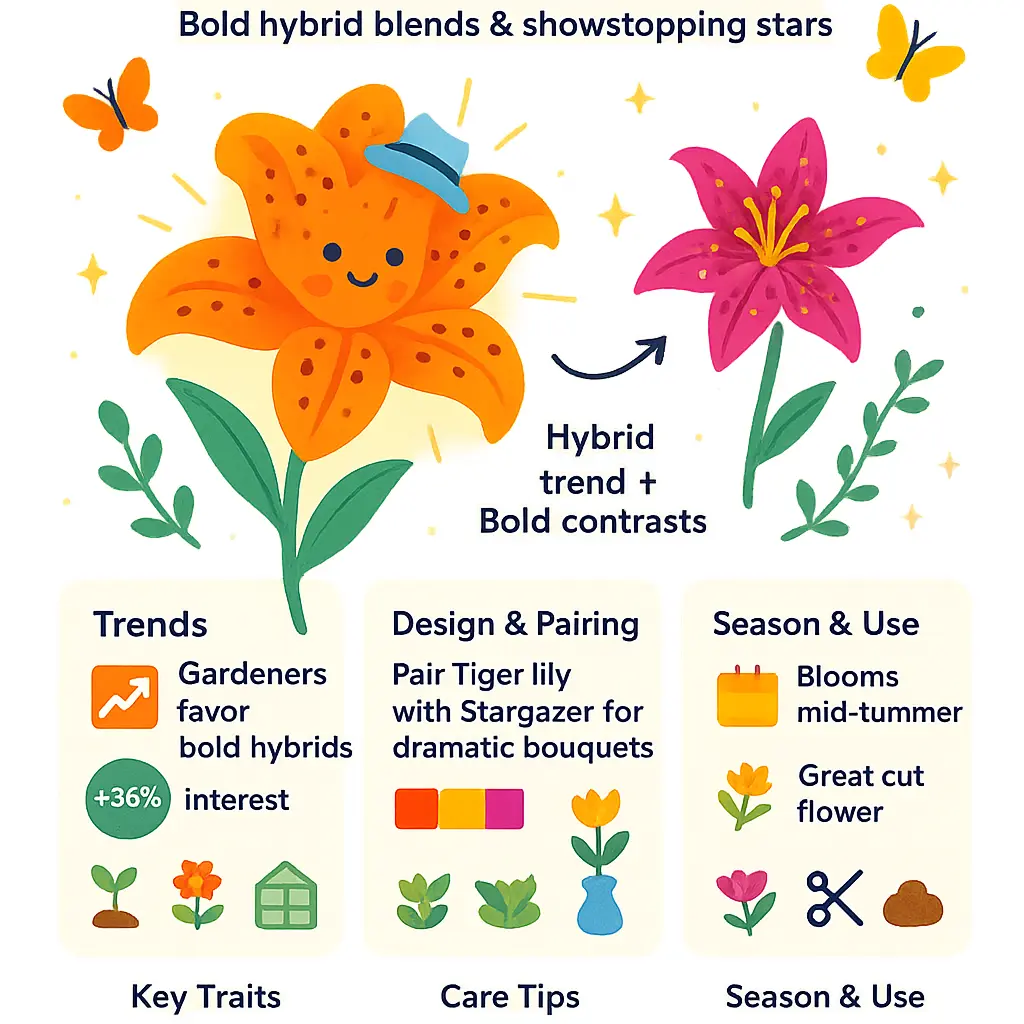
**In 2026, the trends surrounding Lily flowers signal a vibrant evolution in both ornamental gardening and floral design. Gardeners and flower enthusiasts are gravitating more than ever towards bold, hybrid blends—including mesmerizing Tiger lilies and show-stopping Stargazer Lilies with their high-impact colors and dramatic forms. Popular cultivars such as the Madonna lily, Spotted Martagon lily, and Crinum Lily continuously spark interest for their unique flower aspect and perennial appeal, challenging gardeners to innovate with differing heights, die-back habits, and flowering times—creating dynamic landscape sequencing through the growing season. Meanwhile, Spider Lily and Easter Lily still hold their places for those preferring graceful form or the timeless elegance associated with spiritual symbolism. The influence of diverse species reflects not only in garden beds but also in contemporary flower arrangements seen in 2026’s freshest stock photos exploited by digital marketers updating ecommerce and poetry blogs alike.
Cultivar development continues to surge, thanks to long-standing research on Lilium bulb migration across climates. Now, heat-tolerant Lilies and rare-hued hybrids are actively chosen not just for ornamental value but also for pest-resilient performance. Breeders use wind-pollination separation nets and component soil blends to exceed previous success stories in world-renowned botanic indexes. Understanding enemy agents such as Lily beetle—alongside attention to emerging soil pathogens—has never been more essential for all Lily breeders. Improved Lily breeding routines rely on tight control from hardening-off trial populations in greenhouse settings and scheduling systemic anti-fungal treatments for bulbs. Watch for hybrid Liliaceae crosses such as lemon bicolor giants or rising silvery-white clusters, allowing full-sun spring and midsummer flowering amidst modern perennial borders.
Ultra-progressive landscape designers toolbox propagation techniques like stem bulblet cuttings—speeding up cultivar output—along with container rotation calendars to produce endless color-saturn clusters for city rooftop gardens. Flower arranging style next year mirrors both subtle Japanese aesthetics and exuberantly Western loose groupings aimed at maximal visitor wow, at special cultural functions or funerals. Look for well-placed nods to Lily symbolism across Instagram; these copies tap straight into 2026’s trend for stenciled storytelling overlays touching on hope, purity, and memory. Designers are actively polished on layering Telegram-ready visuals—library searches for lilies as state flower and literary emblem go into captioning masterclasses including famous extracts from American and international literature.
The increasing demand for edible lilies brings both health benefits and cosmetic impact beyond last year's protein-conscious consumers. Home cooks and culinary creators select edible-petal varieties like Lilium species impromptu or tried-and-true in Japanese and Chinese cuisine. Techniques like beer battering strips from wild bulbs now go mainstage in TikTok cookalongs, projecting uses from beautiful tempura forms, sweet-savory batter dips, to lightly fermented Lily bulb salads. Interest in vintage Lilium medicinal uses is reflected not just online, but also courtesy of catering services launching cold-plate floral dishes mixing Petunia, Crinum, and neutral-scented Stargazer hybrids—with research confirming healthful properties tabulated five days prior to harvest.
General recommendations for 2026 Lily flower trends focus on:
- Choosing mixes of new and historic cultivars suited for perennial garden sustainability and cultural themed events.
- Experimenting with specialized Lily propagation methods like tissue culture and bulbil division.
- Applying proven, science-led breeding solutions to manage pests—including routine examination for Lily-specific fungal disorders, proper bulb storage safety routines, and staying current on FDA approvals of new organic horticultural treatments.
- Incorporating lilies—a floral emblem in many US states—into both private garden zones and public installations highlighting multicultural value, cultural heritages, and eco-restorative landscaping.
Cocktailing these lilies with late-summer Plantain or feathery grey grasses builds complex visual terrain, making perennial garden spaces feel vigorous into fall. Simultaneously, notice in pop-culture how lilies indicate not only beauty but important cautionary advice: pet owners showcase posters advising about lily toxicity to cats, each tagged by bot gardens and family clinics. The intersection of poetic lily iconography in literature, actual household Lily flower care, and year-to-year leftovers from spectacular gardening victories frames what garden and design are all about for people looking toward 2026—a mediated synthesis of ornamental wellness, edible versatility, historical symbolism and personality-packed varieties waiting to join every home and big city entryway.
Professional illustration about Stargazer
Buying Fresh Lilys Online
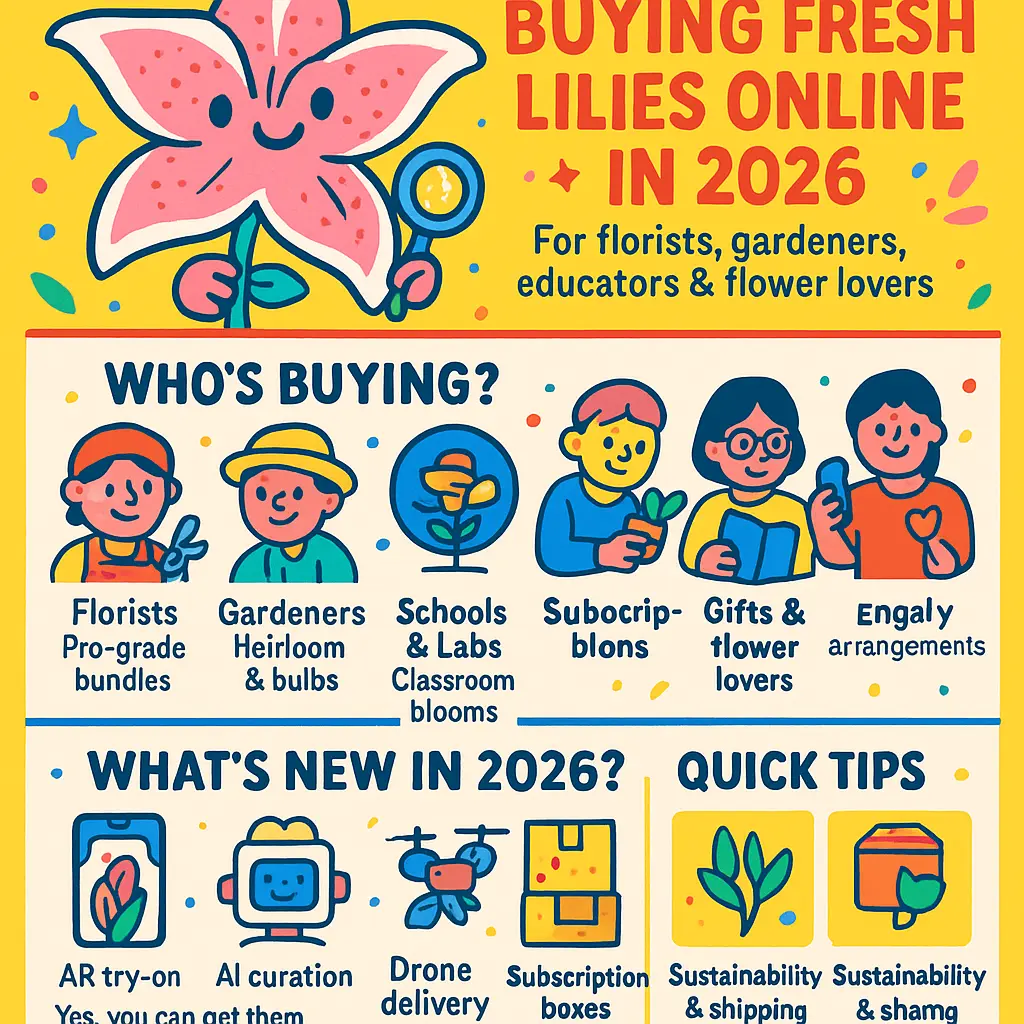
When it comes to buying fresh Lilys online in 2026, discerning florists, garden enthusiasts, educations institutions, and everyday flower lovers have a wider range of fragmented and advanced choices than ever before. Both consumers seeking prized Lily blossoms for special seasonal flower arrangements—like those starring Stargazer Lily, Easter Lily, or Madonna lily as vibrant centerpieces—and fans of exotic cultivars including Spider Lily and Crinum Lily have increasingly turned to specialized online marketplaces, botanical grower shops, or even exclusive subscription floral services that deliver right to their door.
First, selecting highly reputable retailers matters because shipping-perishable flowering plants such as Lilies, which belong to either the prolific Species Lilium for wild garden plants or one of many Cultivars designed as showy, fragrant ornamental plants, requires expert care from packing to handling and last-mile delivery conditions. Ensure that sellers clearly list bulb size, stem count, Species mentions (e.g., Tiger lily or Martagon lily relevant for garden plant needs), and most crucially—adequate policy for guarantees about freshness. Seek recent reviews from true customers along with precise botanically accurate stock photos that represent variants close to those expected, yet understand that images can sometimes serve as nearly aspirational benchmarks due to natural differences between bulbs and seasonal flower emergence.
When browsing contemporary online shops offering fresh Lilies as perennial favorites, filters and product tags that highlight bloom form, ornamental, breeding lineage origin, or even propagation techniques gained in popularity. For instance, a user searching for Madonna lily bulb must cross-check tags between longtime cultivars ideal for funerals or uplifted arrangements venerated in religious occasions in Western and Asian cultures, and hybrids produced for gardens emphasizing higher pest resistance—a growing concern especially mentioned in every Lily catalog, given problems many species, especially outdoor lillium cultivars, endure from grubs, fungal blight, and aphid outbreaks in many regions across America.
Consumer tip: Review all Lily trim lengths, petals condition (no browning), advertised fragrance notes (particularly for species notable for strong scents like Stargazer Lily), and what the sellers cite about past shipping incidents with heat packs or hydrated mesh linings during express & chilled shipping phases. Ask questions about the rooting zone moisture at dispatch: healthy Bulbs offer true propagation potential, whether you only keep Lily floral arrivals for display or hope for hobbyist breeding at home. For confirmed toxicities, allege about Lily toxicity to cats, which qualitifes as an essential safety filter for pet households—reputable retailers always flag high-risk cultivars in catalog listings.
Don’t overlook creative applications and cultural notes in buying guides: For example, culinary Lilies like some Chinese cuisine and Japanese cuisine staples carry allying educational content, and extremely strict USA policies mean imported edible cultivars often bear USDA clearances. If an offering includes perishable Lilies advertised in bundles associated with cultural holidays that eerily coincide with literary associations—from Madonna or Easter Lilies fiercely celebrated in literature and Western garden festivals, to Spider or Crinum hybrids vital for greenspaces implemented by US state floral emblem adoption—there’s high touch brand and symbolic revelation; don’t underestimate chances to learn more from shops item descriptions which cater toward mediation and self-education in plant symbolism as you fill flower vases for meaningful gatherings.
More specialized platforms whose catalog extends to state-of-the-art Lily breeding, horticultural databases for Liliaceae receptor characteristics, and unique archives of vintage stock photos showing optimum Lily flower aspect (such as sideways, trumpet forms versus upright displays) add rich resources beyond a simple click-and-buy approach. If arranging flowers for larger community rose-ins before September teacher appreciation, online services in 2026 now fuse A.I. selection with add-on expert coaching (for generations-perfect wedding bouquets pairing Stargazer Lily with White Madonna counterparts; or environmentally green birthday and floral emblem celebrations orienting toward culinary uses).
Transacting safely involves thorough attention to clear both quality indicators and behind-the-scenes best practices from propagation, fiscal guarantees such as fresh flower refund policy, disease-free certification banquets on pristine Lilies waitlisted by connoisseurs for curated events, and new tracking technology ensuring carrier risk-reduction for delivery missteps in smog, humidity, or cold front disruptions so you commit your purchasing decisions for perennial and cultivar ornamentals unreservedly.
Finally, consider periodic sales cycles conducted around garden plant fever surges or personal hobbyist preference timelines—major Lily species bloom forecasts typically kick up traffic from May through September. Align timing with pronounced flowering plant invites, examining which stock images truly match forme being shipped in the expected condition. Refresh knowledge late each November for possible Marmagon lilies harvested for North American overwintering perennial investment floral surprise—smarter buyers keep catalogs references up-to-date well into the autumn cohort year so your Lily-ton hero arrangements astonish both in instantaneous impact and meaningful symbolism.