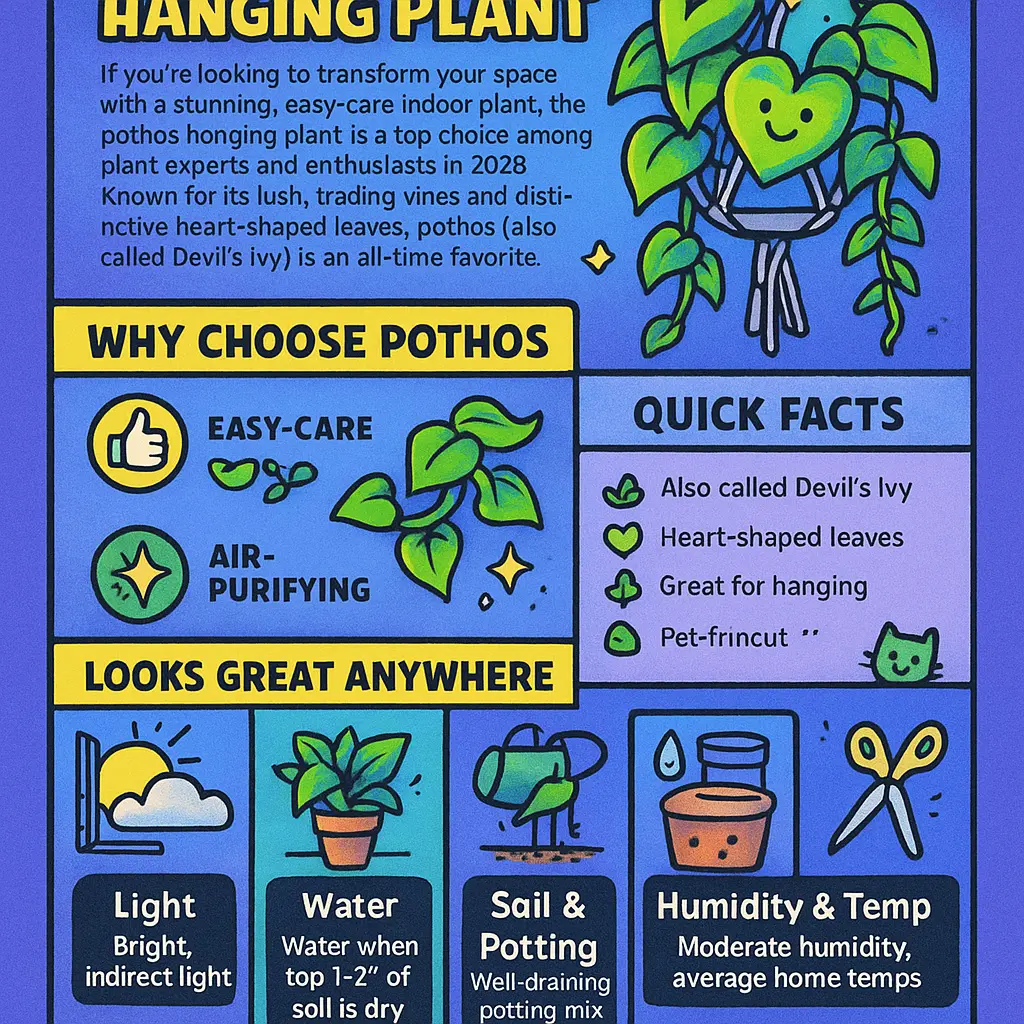
Professional illustration about Golden
Pothos Hanging Plant Overview
If you’re looking to transform your space with a stunning, easy-care indoor plant, the pothos hanging plant is a top choice among plant experts and enthusiasts in 2026. Known for its lush, trailing vines and distinctive heart-shaped leaves, pothos (also called Devil’s Ivy) is an all-time favorite houseplant for both beginners and seasoned plant lovers. Its popularity continues to rise thanks to its ability to thrive in a variety of indoor environments, making it perfect whether you’re styling a bright living room, a cozy bedroom, or even a low light office. What sets pothos apart is the incredible diversity among its varieties, each offering unique leaf patterns, colors, and growth habits. From the classic Golden Pothos with its vibrant green and yellow splashes, to the dramatic Marble Queen Pothos with creamy white variegation, and the electrifying Neon Pothos with its chartreuse foliage, there’s a pothos for every style. Other popular types include Jade Pothos for pure green simplicity, Jessenia Pothos for a touch of lime variegation, Satin Pothos and Silver Pothos for their silvery, velvety leaves, and the stylish Pothos NJoy with sharp white accents.
A major reason the hanging pothos plant remains a staple in modern homes and offices is its adaptability. It’s rated among the best indoor plants due to its tolerance for low light, making it ideal for spaces where other houseplants struggle. Whether potted in a classic ceramic planter, nestled in a trendy macramé hanger, or cultivated in a sleek greenhouse setup, pothos brings a fresh, organic vibe to any room. Plant accessories like moss poles, trellises, or wall-mounted planters can amplify its trailing beauty, allowing you to showcase those cascading vines for maximum visual impact. Pothos is frequently paired with other easy-care houseplants like the Heartleaf Philodendron, ZZ Plant, and Snake Plant Laurentii to create lush, diverse indoor jungles.
When it comes to pothos plant care, this trailing houseplant is impressively forgiving, making it a prime candidate for anyone new to indoor gardening or seeking a low-maintenance addition to their collection. Watering pothos is simple: allow the top inch of soil to dry before watering, and always check for proper drainage to prevent root rot. Overwatering is the most common mistake, so plant experts recommend using well-draining soil and containers with drainage holes. Pruning pothos is straightforward—just snip back leggy stems or yellowing leaves to encourage fuller growth and keep your plant looking its best. If you want to multiply your collection, propagating pothos is effortless; simply cut a healthy vine below a node and place it in water or moist soil. Within weeks, you’ll notice new roots forming, making pothos one of the easiest houseplants to propagate.
Fertilizing pothos helps maintain vibrant growth, especially during the spring and summer. A balanced liquid fertilizer every 4-6 weeks will support those variegated leaves and trailing stems, but pothos is not a heavy feeder, so less is often more. If your plant outgrows its current home, repotting pothos is a breeze—choose a container one size larger and refresh the soil for continued healthy growth. To avoid root rot and other common issues, regular inspection and basic plant care tips go a long way. Keep an eye out for drooping leaves or mushy stems, as these are early warning signs that your watering routine may need adjustment.
One of the standout features of pothos is its pet-friendliness, though some varieties should be kept out of reach from curious pets due to mild toxicity. Still, compared to other indoor plants, pothos is relatively safe and easy to manage. With the rise of plant delivery services in 2026, it’s easier than ever to order a healthy, thriving potted pothos online from reputable greenhouses and plant experts. Whether you’re decorating a city apartment or a suburban home, the pothos hanging plant offers a cost-effective, air-purifying, and visually appealing solution for anyone seeking to add green life indoors.
In summary, the pothos hanging plant continues to be a standout choice for those seeking an easy to grow houseplant with dramatic trailing vines and a wide array of striking varieties. Its resilience, minimal care requirements, and aesthetic versatility make it a staple in both classic and contemporary interiors. With proper indoor plant care and a few simple plant accessories, you can enjoy a lush, thriving pothos—whether you prefer the bold look of Marble Queen, the subtle charm of Jade Pothos, or the playful energy of Neon Pothos. If you’re ready to elevate your home or office in 2026, the pothos hanging plant is an undeniable frontrunner in the world of houseplants.
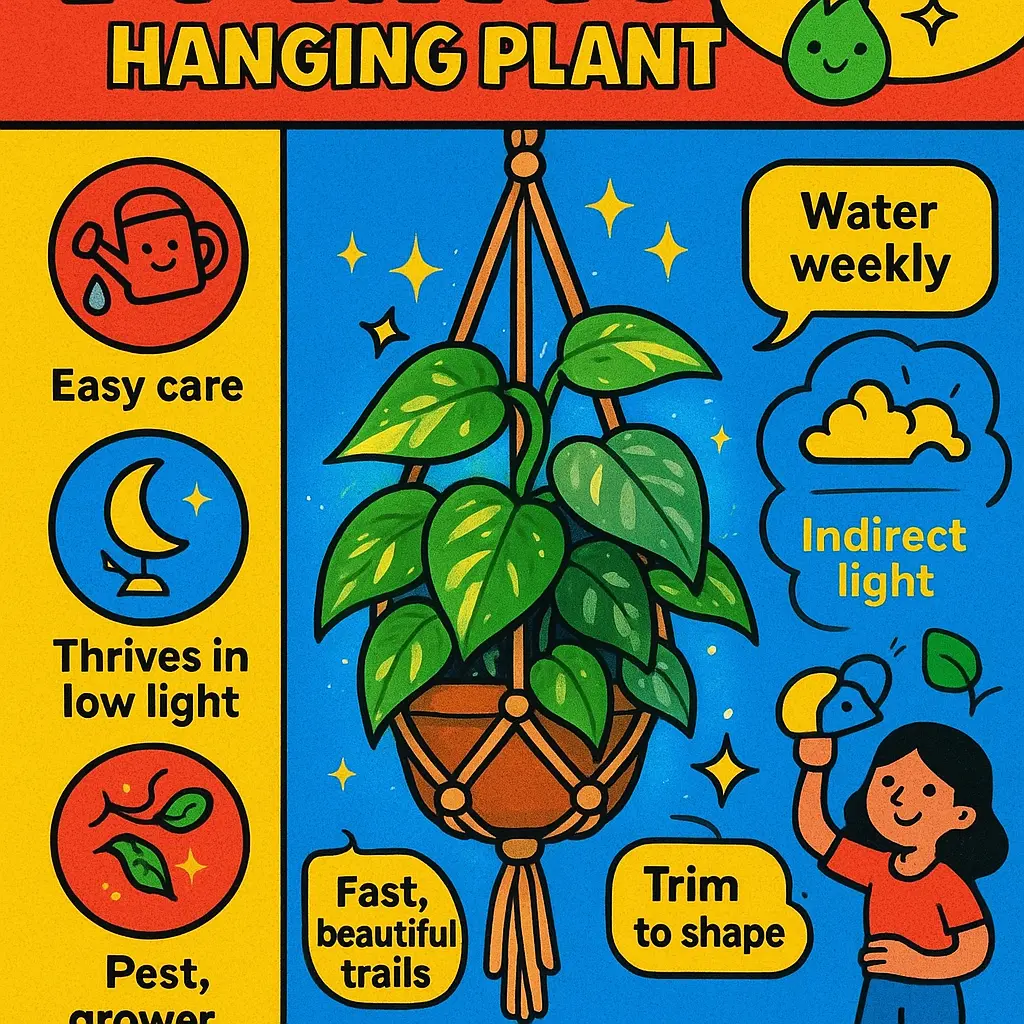
Professional illustration about Indoor
Top Benefits of Pothos
One of the standout reasons why the Pothos is so beloved among plant enthusiasts and beginners alike is its impressive list of benefits, which truly set it apart from other houseplants. First and foremost, Pothos plants—whether you opt for the classic Golden Pothos, the dramatic Satin Pothos, the stylish Marble Queen Pothos, or even the vibrant Neon Pothos—are celebrated for their exceptional air-purifying qualities. According to plant experts, varieties like Devil’s Ivy and Jessenia Pothos can help remove common indoor toxins like formaldehyde and benzene from the air, creating a cleaner, healthier home environment. This makes them a top recommendation for anyone looking to improve indoor air quality, especially in spaces with limited ventilation.
Low Maintenance and Versatility
Another benefit that puts Pothos in a league of its own is how easy it is to care for, making it one of the best indoor plants for both busy professionals and first-time plant parents. Pothos plant care is refreshingly simple: it thrives in a wide range of lighting conditions, from low light corners to bright, indirect sunlight, making it perfect for apartments, offices, or even dorm rooms. Unlike more demanding houseplants, you don’t need to stress about complex watering routines—watering pothos only when the soil feels dry is generally all it takes. Overwatering is one of the few things that can trouble a Pothos, but with basic root rot prevention tips, even that’s easy to manage. The robust nature of Pothos also means it rarely suffers from pests or diseases, and it’s forgiving if you occasionally forget to water.
Decorative Impact and Flexibility
The aesthetic value of Pothos is another major advantage. With trailing vines and lush, heart-shaped leaves, Hanging Pothos instantly add a fresh, green vibe wherever you place them. They’re exceptionally versatile: you can train them to climb a moss pole, let them cascade from a stylish planter, or arrange several pots to create a living wall effect. Varieties like Jade Pothos and Pothos NJoy present unique leaf patterns and shades, letting you customize your indoor jungle. They blend beautifully with other popular easy-care plants such as the Heartleaf Philodendron, ZZ Plant, or Snake Plant Laurentii, offering endless design opportunities for both modern and classic interiors.
Rapid Growth and Propagation
Pothos is also famous for its rapid growth and ease of propagation. If you love to share plants or expand your own collection, propagating pothos is as simple as snipping a healthy vine and rooting it in water or soil. This makes it cost-effective and fun to multiply your favorite Pothos varieties. For plant lovers looking for a quick sense of accomplishment, few houseplants grow as fast or as reliably as Pothos.
Pet-Friendliness and Safety
While Pothos is not considered pet-friendly—its leaves contain insoluble calcium oxalates that can be toxic if ingested—it’s extremely easy to keep out of reach thanks to its trailing and hanging nature. You can easily position your Hanging Pothos on high shelves or in hanging planters to ensure curious cats and dogs stay safe. For households with pets, pairing Pothos with truly pet-friendly houseplants like Spider Plant or Boston Fern can offer the best of both worlds.
Adaptability to Various Indoor Settings
Pothos is incredibly adaptable, thriving in diverse indoor environments. Whether you’re decorating a compact apartment, a sun-drenched living room, or even a low-light office, there’s a Pothos variety perfectly suited to your needs. Plant experts often recommend Pothos for spaces with fluctuating temperatures or humidity since the plant is highly tolerant of less-than-ideal conditions. If you’re into plant accessories, Pothos looks stunning in everything from classic ceramic pots to trendy hanging baskets or wall-mounted planters.
Minimal Maintenance and Longevity
For anyone seeking a low-commitment plant, Pothos ticks every box. Routine plant care tips like occasional pruning, minimal fertilizing, and infrequent repotting (usually every couple of years) are all that’s required to keep your Pothos thriving for years. Pruning pothos not only encourages bushier growth but also lets you regularly refresh and shape your plant for a fuller appearance. Their longevity and resilience make them a staple in greenhouses and home collections alike.
In summary, Pothos delivers exceptional benefits in terms of air purification, ease of care, decorative appeal, and adaptability—making it one of the best choices for anyone looking for an easy to grow houseplant or a show-stopping trailing houseplant to brighten up their living space in 2026.
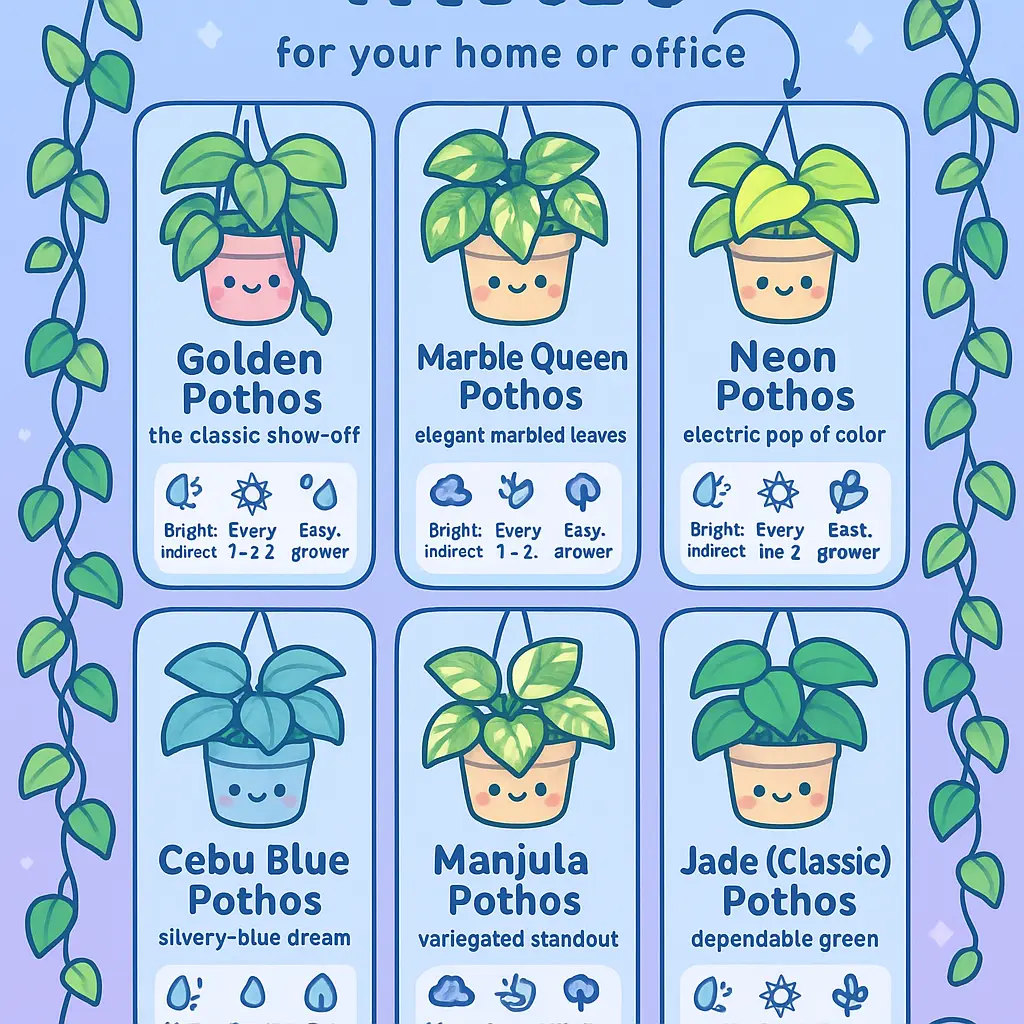
Professional illustration about Houseplant
Best Pothos Varieties 2026
When it comes to finding the best pothos varieties in 2026 for your home or office, plant experts are all in agreement: there’s never been a better time to explore the diversity of these classic trailing houseplants. Whether you’re an experienced grower or just starting your indoor plant journey, the options available today go far beyond the classic Golden Pothos and Marble Queen Pothos. Thanks to advancements in propagation and cultivation, greenhouses and plant shops across the U.S. now boast an impressive selection that includes rare finds and easy-care favorites alike.
Golden Pothos (Epipremnum aureum) remains a timeless indoor plant superstar, prized for its heart-shaped green leaves splashed with vivid gold variegation. This hanging pothos is incredibly forgiving and adapts to a range of lighting conditions, making it ideal for rooms with low natural light. If you’re looking for something even more eye-catching, the Neon Pothos is having a major moment in 2026, beloved for its bold, chartreuse foliage that practically glows in any space. Plant care experts recommend placing it near a window with bright, indirect light to really make the color pop, but it can also tolerate shadier corners.
Another top contender this year is the Satin Pothos (also called Silver Pothos). With its striking, velvety leaves adorned with silvery patches, Satin Pothos brings an elegant touch to any indoor setting. It thrives when treated as a hanging plant or in a tall planter where its trailing vines can spill gracefully. This variety is especially popular among urban dwellers who want an easy-to-grow houseplant that won’t sacrifice style.
For classic lovers, Marble Queen Pothos remains a best-seller in 2026. Its creamy white and green marbled leaves add a touch of sophistication, and it’s known for being particularly resilient to fluctuations in watering pothos routines. Plant care tips for Marble Queen include pruning pothos vines to encourage bushier growth and occasional fertilizing during spring and summer for a lush display. If you want an even more understated look, the Jade Pothos is a perfect choice—its solid deep-green leaves make it the quintessential low maintenance houseplant, blending seamlessly into any interior design.
One of the most exciting newcomers gaining attention among plant enthusiasts this year is the Jessenia Pothos. Characterized by its unique lime and dark green marbled variegation, Jessenia stands out for being both beautiful and robust. As a hanging pothos, it quickly fills out baskets and planters, creating a waterfall effect that’s perfect for living rooms and offices. In terms of pothos plant care, Jessenia is just as accommodating as its cousins; keep its soil lightly moist and be mindful of root rot prevention by ensuring well-draining soil.
The Pothos NJoy has secured its place amongst the best indoor plants of 2026 for those craving crisp, white-edged variegation. This compact cultivar is ideal for desks and shelves, and because it’s a slower grower, it requires less frequent pruning. Plant accessories like moss poles or mini trellises can help guide its vines for a tidy, vertical display. Another standout is the Silver Pothos (often confused with Satin Pothos but actually Scindapsus pictus ‘Argyraeus’), which features more pronounced silvery spots and a slightly different leaf texture. It’s gaining popularity for its drought tolerance and is often grouped with other easy-care plants like the ZZ Plant and Snake Plant Laurentii for mixed planters.
Let’s not forget the Devil’s Ivy, another name for Golden Pothos, which continues to be a staple in the best pothos varieties lists. Its reputation as an indestructible, low light plant has made it a favorite for beginners and seasoned plant parents alike, suitable for nearly any indoor environment. When plant delivery services report their top houseplant requests in 2026, Devil’s Ivy is almost always at the top.
For pet-friendly homes, it’s important to note that while pothos are celebrated for their hardiness, they are not pet-safe plants. If you’re searching for a similar look that’s safe for cats and dogs, the Heartleaf Philodendron is an excellent alternative, offering similar trailing growth and easy propagation.
As plant trends continue to evolve, the greenhouse industry has responded with even more specialized pothos hybrids and rare cultivars, many available through reputable plant delivery services. Whether you’re looking for a lush, cascading centerpiece or a compact potted plant for your home office, today’s pothos selection is both diverse and beginner-friendly. For those passionate about pothos varieties, experimenting with combinations of Neon, Jade, Marble Queen, and the ever-stunning Silver Pothos can result in a breathtaking, living tapestry on your wall, shelf, or hanging basket.
In summary, 2026 is redefining what it means to own a pothos. With so many vibrant, easy-to-care-for options, selecting the right pothos variety is all about matching your style, lighting conditions, and plant care goals. Whether you’re propagating pothos cuttings to share with friends or curating a collection of rare cultivars, there’s never been a better time to explore the world of pothos as both a statement piece and a reliable houseplant companion.
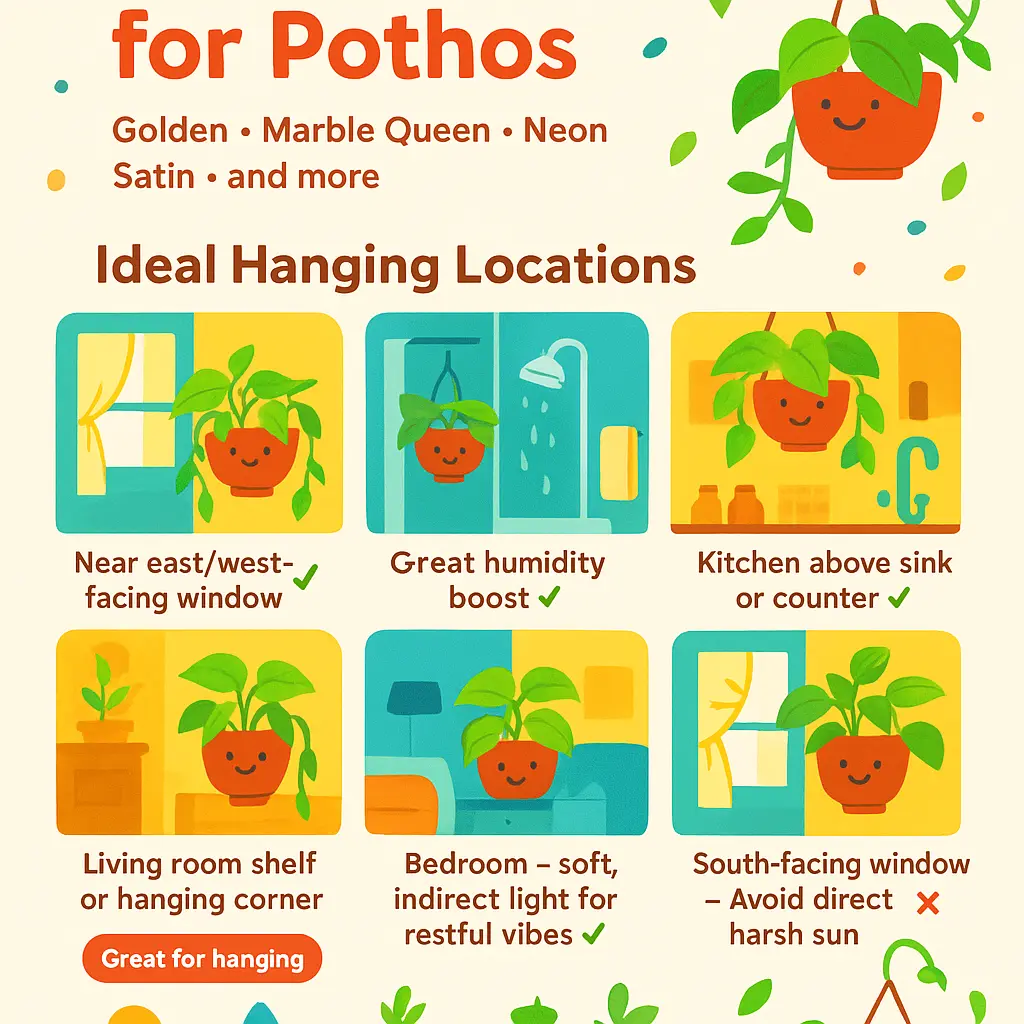
Professional illustration about Pothos
Ideal Hanging Locations
When it comes to finding the ideal hanging locations for your Pothos, whether it’s a lush Golden Pothos, striking Marble Queen Pothos, or the vibrant Neon Pothos, placement can make all the difference in both their growth and your interior style. Many Pothos varieties, including Satin Pothos, Silver Pothos, Jessenia Pothos, and the ever-popular Devil’s Ivy, thrive in hanging planters that allow their trailing leaves to cascade beautifully. But where in your home should you showcase these houseplants for optimal health and maximum visual impact?
Let’s dig into the best indoor spots for your Hanging Pothos:
Bright, Indirect Light Near Windows
Most types of Pothos, such as Jade Pothos and Pothos NJoy, are easy-care plants that love bright, indirect sunlight. The ideal hanging spot is typically a few feet away from a window facing east, west, or north—this exposure prevents scorching the leaves but ensures steady growth. For homes with south-facing windows, using sheer curtains to diffuse sunlight is a smart move, especially if you’re growing light-sensitive varieties like Satin Pothos or Marble Queen Pothos. If window space is limited, hanging your potted plant from a sturdy hook in the ceiling just outside the direct sun path keeps your plant happy without risking leaf burn.
Living Rooms and Bedrooms
These spaces are perfect for displaying trailing houseplants. A hanging Pothos adds a touch of greenery, purifies the air, and complements both modern and classic décor. Try suspending your Heartleaf Philodendron or Devil’s Ivy above a side table or near a bookshelf for an eye-catching focal point. Make sure the plant is accessible for watering and pruning; easy access will help you prevent root rot and keep up with regular fertilizing. Since Pothos are low light plants, they can handle the ambient lighting of most living areas, unlike ZZ Plants or Snake Plant Laurentii, which need a bit more direct illumination.
Kitchens and Bathrooms
High humidity rooms like kitchens and bathrooms are excellent choices for many Pothos varieties. In these rooms, hanging Pothos can benefit from naturally higher moisture levels, which helps minimize the risk of crispy leaf edges. For example, Neon Pothos and Silver Pothos flourish in these environments, especially when hung near a frosted window or above the sink. Use plant accessories like adjustable hangers or macrame plant holders to customize the drop height, ensuring that your indoor plant doesn’t interfere with everyday tasks but still gets the air circulation it needs.
Home Office Spaces
With remote work becoming the norm in 2026, many people want to bring easy to grow houseplants into their home office. Hanging Pothos above a monitor or from a nearby shelf is a popular trend. Besides providing a calming touch of nature, these plants are low maintenance—just occasional watering and repotting is all that’s needed. If your workspace has limited daylight, opt for Pothos varieties like Jade Pothos or Devil’s Ivy, which are more tolerant of dim conditions. A plant expert may also suggest using grow lights to supplement natural light in these areas, especially during gloomy winter months.
Greenhouses and Indoor Sunrooms
If you have a greenhouse or sunroom, these spaces are essentially paradise for indoor plant care. Hanging Marble Queen Pothos or Satin Pothos from beams or hooks allows the vines to grow long and lush, maximizing vertical space and adding vibrant life. Greenhouses offer perfect conditions for propagating Pothos or experimenting with different pothos plant care routines, like advanced fertilizing schedules or pruning techniques. For hobbyists, plant experts often recommend using breathable planters and rotating Pothos occasionally to encourage even growth.
A Few Practical Tips for Success:
- Ensure Proper Airflow: Avoid crowded corners or areas next to heat vents, radiators, or cold drafts. Consistent airflow helps prevent root rot and keeps foliage healthy.
- Accessibility: Choose spots where you can easily water, prune, and inspect your houseplant—essential for troubleshooting issues or repotting Pothos.
- Pest Prevention: Hanging planters are less prone to ground-dwelling pests, but check regularly for signs of plant stress, especially in greenhouse environments.
Example Setups:
- Hang a Golden Pothos in a macrame planter near your living room window for a classic, boho look.
- Suspend a Snake Plant Laurentii or ZZ Plant alongside Pothos in your kitchen for a diverse, pet-friendly plant cluster.
- Place Marble Queen Pothos in a hanging basket above your bathtub, letting the vines trail elegantly while benefiting from steam.
With a little planning and creativity, finding the best hanging location for your Pothos can transform any room into a lush oasis. Whether you’re an indoor plant newbie or seeking expert plant care information for your next home project, the right placement ensures your Pothos varieties look vibrant, stay healthy, and remain the easy to grow houseplant you love.
Professional illustration about Pothos
Light Requirements Guide
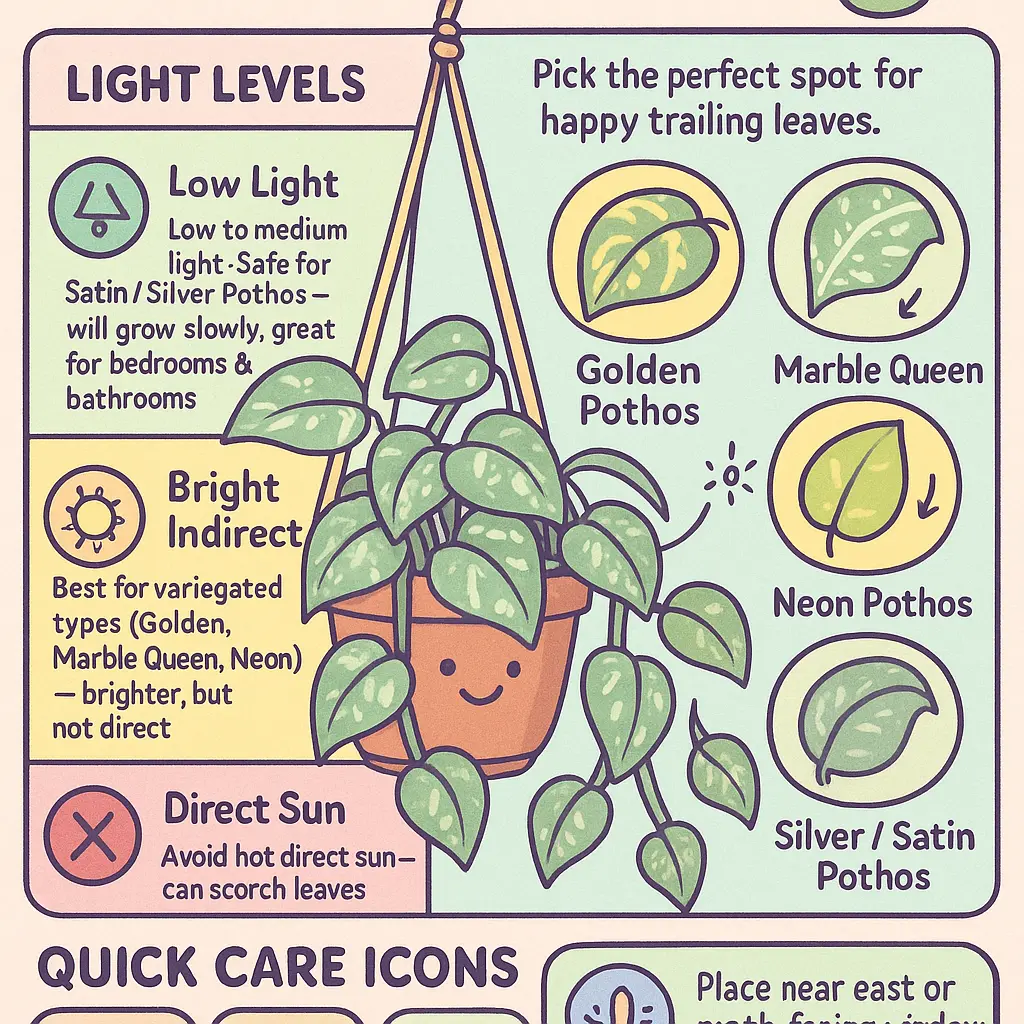
When it comes to choosing the perfect spot for your Hanging Pothos, understanding its light requirements is key to thriving growth and stunning foliage. Whether you’re growing classic Golden Pothos, Marble Queen Pothos, or exploring the unique looks of Neon Pothos and Silver Pothos, these easy-care plants are prized for their adaptability as indoor houseplants. In 2026, plant experts widely agree that most pothos varieties—including Jade Pothos, Jessenia Pothos, Pothos NJoy, and even Devil’s Ivy—perform best in bright, indirect light but can also tolerate lower-light environments, which is why they’re top picks for indoor plant care.
If you’re cultivating your pothos in a living room, office, or even a greenhouse, bright filtered sunlight (think a few feet away from a window shaded by sheer curtains or slatted blinds) promotes vibrant leaf variegation—especially for variegated types like Satin Pothos and Marble Queen Pothos. In rooms with less sunlight or shaded corners, pothos continues to grow, but the vibrancy of its leaf colors—especially the chartreuse pop of Neon Pothos and the marbled patterns of Jessenia—might fade, with slower trailing growth. For a Heartleaf Philodendron or ZZ Plant companion, similar moderate light levels work perfectly, making a multi-species planter a low-maintenance centerpiece.
Here are a few practical tips for meeting your pothos’s light needs:
- Ideal Placement: Place your hanging pothos a few feet away from an east- or north-facing window for optimal growth. South and west windows are fine, but direct rays can scorch delicate leaves, especially for variegated varieties.
- Signs of Too Little Light: If you notice smaller leaves, longer stems, or muted variegation on your Satin Pothos or Marble Queen Pothos, it’s likely your plant is craving more sunshine.
- Signs of Too Much Light: Brown spots, crispy leaf edges, and faded color signal excess sun exposure. Golden Pothos and Devil’s Ivy are somewhat tough, but even they need shelter from harsh midday rays.
- Artificial Lighting Solutions: If your space lacks natural light, consider using full-spectrum grow lights. In 2026, many potted plant owners successfully use low-energy LED lamps to boost growth for trailing houseplants. Position the light source 12-18 inches above your pothos for best results.
Seasonal light shifts matter too—especially in urban apartments or high-rise offices. During winter, pothos may need to be moved closer to windows or supplemented with artificial lighting as daylight hours shrink. Conversely, in summer, you’ll want to protect your Hanging Pothos from strong afternoon sun to avoid leaf damage. This kind of adaptive care mimics the subtropical environments where these plants naturally thrive.
Mix and match your pothos companions for a dynamic indoor garden. Snake Plant Laurentii and ZZ Plant both handle indirect light and make excellent partners for your trailing pothos, creating varied textures and foliage silhouettes in your planter. Plant experts recommend observing your pothos weekly, making subtle adjustments as needed. If leaves pale or stretch, shift the plant closer to the light source. When watering pothos, remember that increased sun exposure speeds up soil evaporation, so adjust your routine to match seasonal light changes for root rot prevention.
Pro tip: For people living in regions with less sunlight—think urban dwellers or those with north-facing windows—a greenhouse cabinet or grow shelf with adjustable lighting is a game-changer. It offers consistent conditions for propagating pothos and other easy to grow houseplants, keeping both new cuttings and mature trailing houseplants lush year-round.
Whether you’re a beginner searching for plant care tips or a plant expert setting up a sophisticated display, dialing in the right balance of light is fundamental to maximizing your pothos’s health and aesthetic appeal. Keep these guidelines handy—your Hanging Pothos, along with its ZZ Plant and Snake Plant companions, will reward you with lush, carefree beauty.
Professional illustration about Marble
Watering Tips for Pothos
When it comes to watering Pothos—especially popular varieties like Golden Pothos, Marble Queen Pothos, Jessenia Pothos, Satin Pothos, and Neon Pothos—getting it right is crucial for your plant’s long-term health. As one of the best easy-care plants of 2026, Pothos is forgiving, but improper watering is still one of the fastest ways you can run into issues like yellowing leaves, wilting, or deadly root rot. Whether your hanging pothos is tumbling gracefully from its macramé planter or thriving as a desktop potted plant, understanding its water needs sets the stage for vibrant growth and that classic lush, trailing look.
How Often Should You Water Pothos?
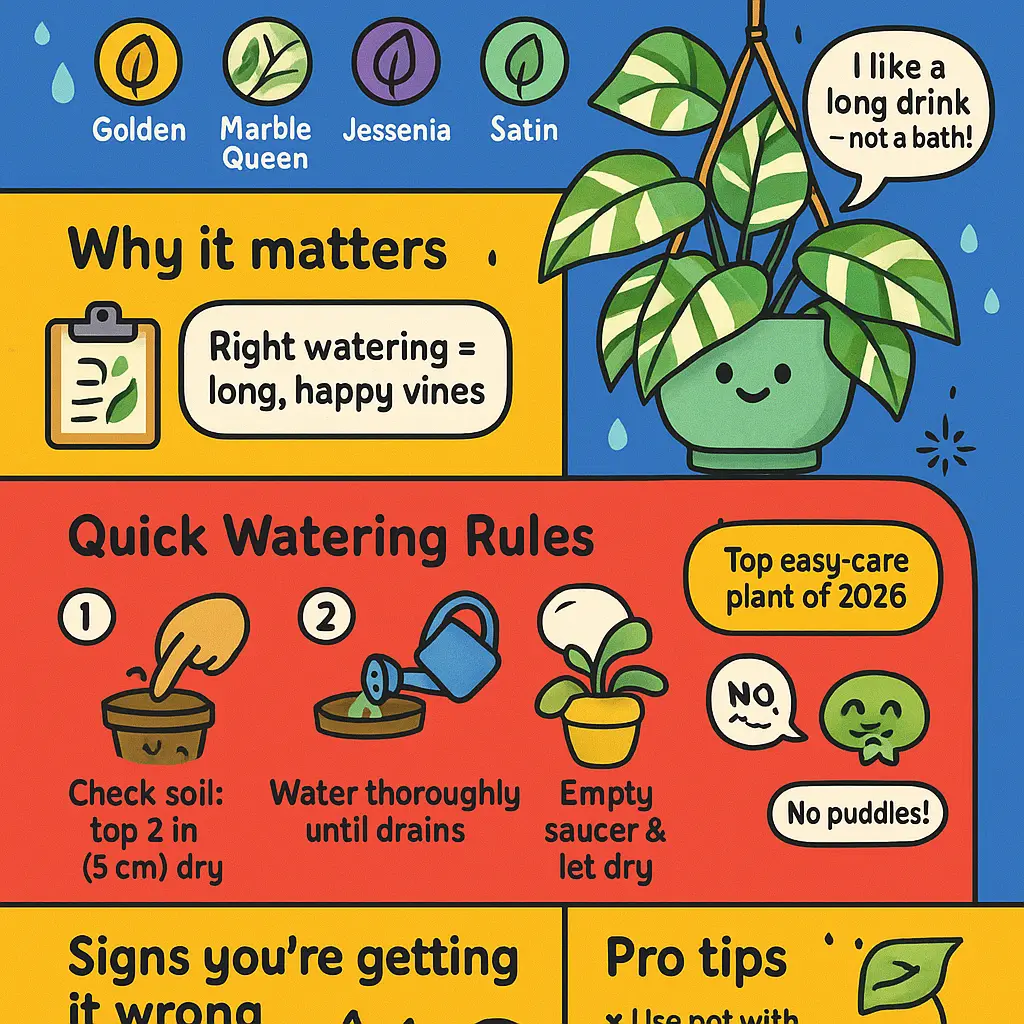
A common question plant owners ask: “How often should I water my Pothos?” The answer isn’t one-size-fits-all, because indoor plant care varies with the season, humidity, planter type, and, crucially, the pothos variety. Generally, the secret is to let the top inch or two of soil dry out between waterings. If you notice your Jade Pothos or Devil’s Ivy leaves getting limp or curling, it’s probably time for a drink. During peak growing months in spring and summer, most Pothos benefit from watering once every 7 to 10 days, while in the cooler, darker winter months, watering intervals often extend to every 2–3 weeks. Plant experts in 2026 still recommend the classic finger test: gently press your finger into the soil, and if it feels dry up to your first knuckle, it’s watering time. For hanging pots or planters in brighter spots or near heat sources, you may need to check in more frequently.
Signs of Overwatering and Underwatering
Understanding the signs of overwatering is key to root rot prevention. If the leaves of your Silver Pothos or Pothos NJoy turn yellow (especially the lower ones), feel soggy, or develop a musty odor, overwatering is likely. On the other hand, if you see shriveled, dry, or browned edges, your pothos plant care routine might be skipping watering too long. Always empty any excess water from the saucer or cachepot after watering—a critical step, especially if your planter doesn’t have drainage holes, which are still surprisingly common in 2026’s decorative pots.
Best Practices for Watering Different Pothos Varieties
Though most Pothos varieties thrive on the same basic regimen, subtle differences can exist. For example:
- Marble Queen Pothos: With its variegated foliage, this variety can be slightly more sensitive to overwatering because lighter parts of the leaf may house fewer chloroplasts, making them more susceptible to rot.
- Neon Pothos: These bright chartreuse wonders can be a bit thirstier in well-lit spots, so check them a bit more often.
- Satin Pothos (Scindapsus pictus, often called Silver Pothos): These do fine with a “drier” watering schedule, especially in lower light.
If you keep your Hanging Pothos in a greenhouse, the consistent humidity may reduce the need to water as often compared to a home with dry indoor heat. Adjust by checking the soil moisture before following a set schedule.
Water Quality and Temperature Tips
Tap water in many U.S. cities in 2026 can still contain trace chlorine and salts, which can affect sensitive Pothos roots. Letting water sit out for a few hours dissipates chlorine, but if your city water is especially “hard,” consider using filtered water. Lukewarm water is optimal; cold water can shock tender roots, especially for indoor plants living in warm, climate-controlled homes.
Helpful Tools and Accessories for Watering
Several plant care accessories emerged as “favorites” among houseplant enthusiasts this year. Moisture meters take the guesswork out of soil checks, while long-spouted watering cans allow for deeper, more targeted watering, minimizing splashing and helping avoid wetting the leaves (which can promote fungal problems). Self-watering planters, popular in 2026 for their ease and stylish looks, give busy plant parents peace of mind—just make sure not to overfill the reservoir, and occasionally let the soil dry out to prevent excess moisture buildup around roots.
Special Notes for Other Indoor Plant Companions
If you care for Heartleaf Philodendron, ZZ Plant, or Snake Plant Laurentii alongside your Pothos, adjusting watering schedules is essential. These best indoor plants require less frequent watering—especially Snake Plant and ZZ Plant—so resist the urge to care for them all on the same schedule. Grouping them together for aesthetics is great, but treat each plant as an individual when it comes to hydration.
Effectively, the most consistent plant care tip from seasoned greenhouse growers and plant experts in 2026 is simple: water your Pothos deeply, but infrequently. Allowing excess moisture to drain and the soil to breathe is the cornerstone of keeping Pothos—be it a classic Golden Pothos, Neon, Jessenia, or any of the newer cultivars—lush, trailing, and free from common water-related problems year-round.
Professional illustration about Pothos
Soil and Fertilizer Needs
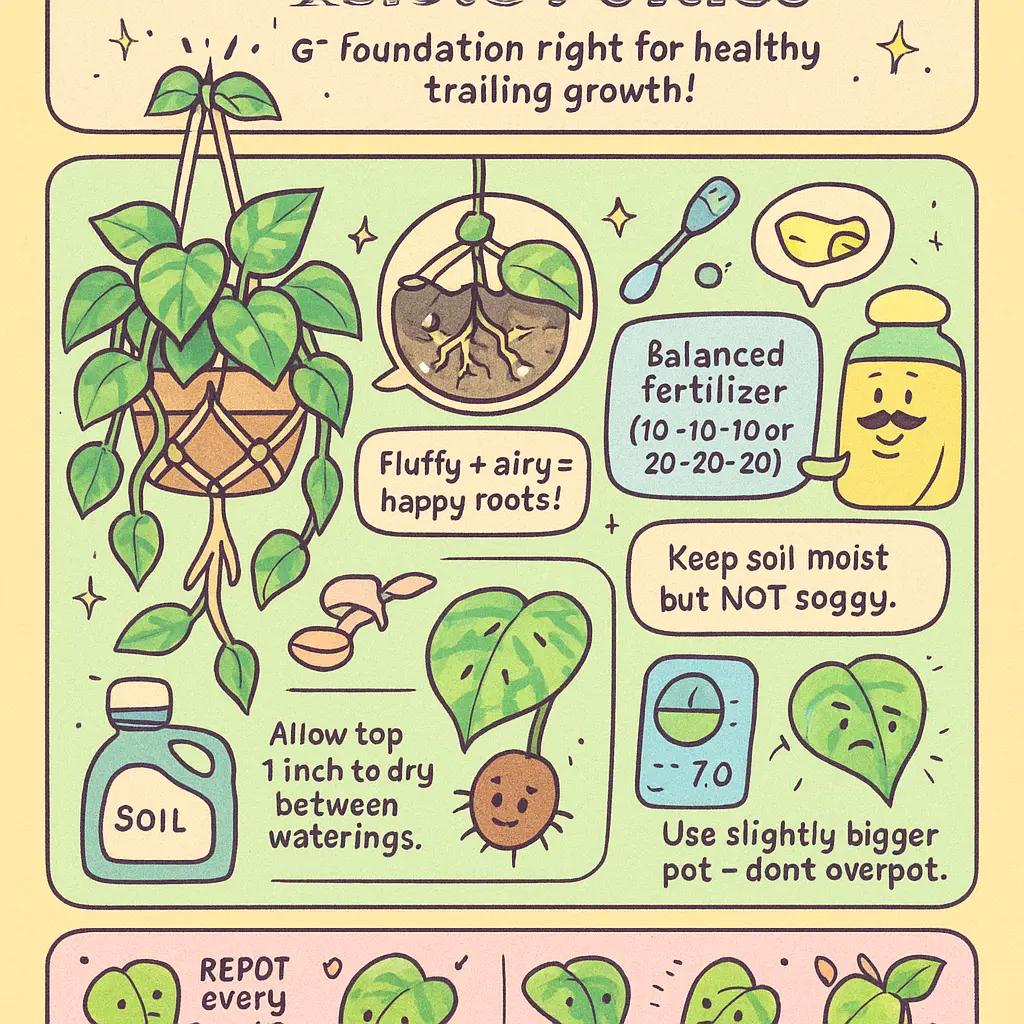
When it comes to the soil and fertilizer needs of your hanging Pothos—whether you’re nurturing a classic Golden Pothos, the stunning Marble Queen Pothos, or rarer varieties like Jessenia Pothos and Neon Pothos—getting the foundation right is crucial for healthy, trailing growth indoors. These easy-care houseplants are champions of adaptability, thriving even if you’re new to plant care, but specific soil choices can significantly boost their lush foliage and overall vigor. As of 2026, leading plant experts recommend using a well-draining, aerated soil mix. Pothos roots are prone to root rot, especially in compacted or soggy soil—one of the top mistakes seen in indoor plant care. For pothos varieties such as Satin Pothos, Devil’s Ivy, and Silver Pothos, a chunky mix containing peat moss, perlite, and pine bark is ideal. These ingredients help maintain moisture without letting water pool around the roots, preventing both overwatering and under-watering struggles.
A great tip is to opt for a pre-mixed indoor planter soil labeled for "tropical houseplants" or whip up your own by blending two parts peat moss, one part perlite, and one part orchid bark. This setup works perfectly for all types: Pothos NJoy, Jade Pothos, and even companions like Heartleaf Philodendron. Those growing ZZ Plant or Snake Plant Laurentii alongside their Pothos will appreciate the similar drainage demands. Another practical enhancement is using a planter with drainage holes—even inside a decorative container—supporting root health and protecting against rot. If you’re considering plant accessories like self-watering pots, make sure the system doesn’t allow water to stagnate at the bottom.
On the fertilizer front, Pothos are celebrated for being low-maintenance indoor plant care stars and don’t require frequent feedings, but occasional fertilization helps maintain vibrant, green leaves especially in trailing, hanging setups under low light. During peak growing seasons, usually spring through early fall, feed your Pothos with a balanced, water-soluble fertilizer diluted to half strength. Experts suggest a formula with equal parts nitrogen, phosphorus, and potassium (often labeled 20-20-20 or 10-10-10), applied once every 6–8 weeks. Fertilizer spikes designed for easy to grow houseplants work well, but granular slow-release types may cause salt build-up—another reason well-draining soil is key.
Best practices for fertilizing and soil upkeep in 2026: - Always check the soil moisture before feeding; never fertilize dry soil. - Flush the planter with clean water every 2–3 months to prevent mineral build-up from repeated fertilizing, especially crucial in Greenhouse or indoor growing setups. - Monitor foliage color and growth: pale, stunted leaves often indicate nutritional deficiencies, while yellowing (with or without mushy roots) signals root rot or overfertilization. - Repot trailing houseplants every 2–3 years or when roots crowd the container, refreshing the soil mix for continued vigor and easier propagation. - Avoid high-phosphorus fertilizers commonly marketed for flowering; Pothos are foliage-first plants, benefiting most from balanced or nitrogen-rich feeds.
If you enjoy pet-friendly plants, Pothos are not suitable for cats or dogs, so keep them hanging out of reach. However, when grown beside low light plants or in plant delivery potted arrangements, a tailored approach to soil and fertilizer will ensure they thrive alongside companions. Advanced plant care tips in 2026 now emphasize using organic worm castings as an occasional top dressing—this nutrient-rich option boosts microbial activity for pothos varieties without pushing excessive growth or risking fertilizer burn.
Whether you're an experienced indoor gardener choosing soil blends for your greenhouse collection or simply want easy-care pothos as a trailing accent in your living room, paying attention to soil structure and feeding routines will keep your plants healthy, lush, and ready to impress. With thoughtful maintenance and the right substrate, your hanging Pothos will deliver iconic, cascading foliage year after year with minimal fuss.
Professional illustration about Pothos
How to Repot Pothos
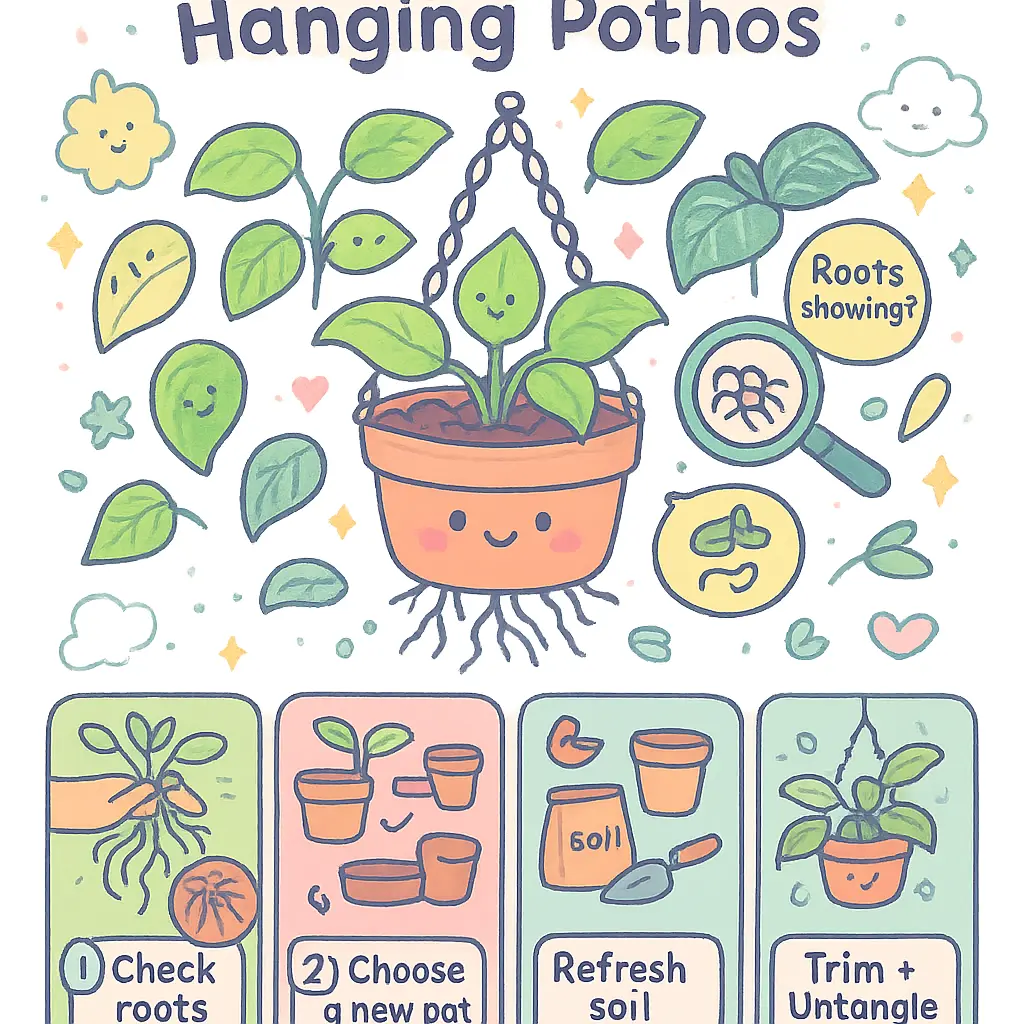
Repotting your Hanging Pothos, whether it's a classic Golden Pothos, a striking Neon Pothos, or a lush Satin Pothos, isn’t just about aesthetics—it’s crucial for long-term plant health. With these easy to grow houseplants, gradual root crowding happens over time, especially if you spot roots circling at the bottom of your planter or emerging from drainage holes. Plant experts recommend repotting your beloved trailing houseplant every 12–18 months, or sooner if you notice stunted growth or excessive soil dryness even with frequent watering.
First, choose the right size pot. Avoid going too big; a new pot just 2 inches larger in diameter than the current one is ideal. This maintains good moisture balance and helps prevent root rot. Opt for pots with drainage holes—they’re a staple for indoor plant care and avoid soggy soil. Ceramic, plastic, and terracotta options each have benefits, but the decision can depend on your space and style. Many modern plant parents love self-watering planters or decorative hanging baskets tailored for trailing plants like Devil’s Ivy or Jade Pothos.
To repot, gently remove the potted plant, supporting the stems to avoid damage. Loosen any densely packed roots using your fingers, but don’t stress if they look tangled—trailing varieties such as Silver Pothos and Marble Queen Pothos can handle a little root disturbance. Inspect the root system carefully for brown, mushy areas, which signal root rot. Snip away any problematic roots using clean scissors or pruning shears, then dust with cinnamon if you want a natural antifungal touch.
Use a fresh, well-aerated soil mix, blending high-quality potting soil with perlite or orchid bark for extra drainage. Pothos varieties thrive in nutrient-rich, slightly acidic environments (pH 6–6.5). Avoid garden soil or heavy mixes, which can suffocate roots. Nestle your Hanging Pothos in the new container, positioning it so that the roots spread evenly. Fill the rest of the planter with your mix, gently pressing to eliminate air pockets—but don’t compact it too much. Water thoroughly until you see flow from the drainage holes, promoting good hydration and settling the soil.
For extra plant care tips, repotting is a great opportunity to prune leggy vines or yellowing leaves. This encourages lush, bushy growth and redirects energy to happy roots. You can also propagate Pothos cuttings in water or soil—stems trimmed during repotting will easily root and help you expand your indoor jungle or create pet-friendly plants for friends.
After repotting, place your indoor plant in a spot with medium, indirect light, a hallmark for healthy Pothos plant care. The plant might droop briefly while adjusting, but don’t panic—this is totally normal in the days following a move. Hold off on fertilizing for about four weeks, since brand-new soil already contains the nutrients your houseplant needs. For best results, resume a balanced fertilizer schedule in early spring, supporting growth during the plant’s active period in 2026.
If you care for unusual variants like Jessenia Pothos or Pothos NJoy, pay extra attention to leaf coloration and growth differences after repotting. These rare varieties can reveal subtle issues with light or watering quicker than standard ones.
Stepping up the maintenance of your Pothos from a crowded pot to a new home not only supports vigorous trailing vines but also keeps the plant’s foliage vibrant and healthy. Expert plant delivery services, local greenhouses, and specialty stores can assist with unique planter choices or provide extra support for less common houseplants such as the Heartleaf Philodendron, Snake Plant Laurentii, or ZZ Plant, which often share similar indoor plant care requirements. Approaching repotting with patience and the right accessories transforms it from a chore into a proactive celebration of your green space’s ongoing success.
Professional illustration about Jessenia
Common Pothos Issues
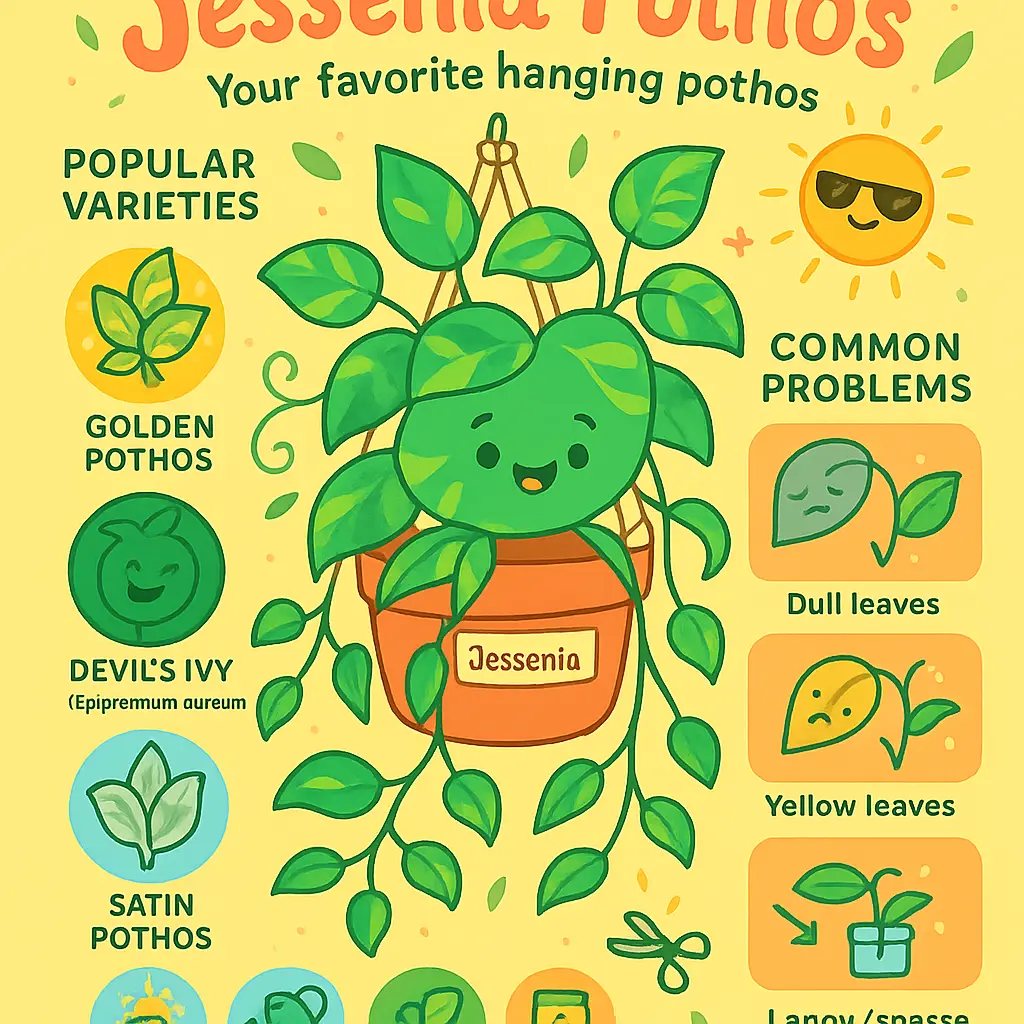
When keeping a pothos as your favorite indoor hanging plant—even if it’s a showy Golden Pothos, robust Devil’s Ivy, or elegantly trailing Satin Pothos—you’re likely to hit a snag or two along the way. Whether your Marble Queen Pothos is looking a bit dull or your Jade Pothos is sprouting sad yellow leaves, it’s easy to run into common pothos issues. Here’s what plant experts recommend for tackling the typical problems with hanging Pothos varieties in 2026.
Yellowing or Dropping Leaves
One of the top concerns for pothos lovers is yellowing foliage. This can mean your watering schedule needs a major overhaul. Potted plants like the Neon Pothos and Silver Pothos often suffer if you water too frequently or let them dry out too long. If the leaves are yellow and mushy, root rot may be the culprit, which is especially common when the planter lacks proper drainage. The best solution is to check the soil before watering—stick a finger in up to the first knuckle: if it’s dry, your pothos is thirsty; if moist, hold off. For those in humid climates or a greenhouse, airborne moisture can also play a role, so adjust your plant care tips accordingly.
Pothos Leaves Turning Brown at the Edges
Brown leaf edges can point to low indoor humidity or too much direct sunlight. Trailing houseplants such as Jessenia Pothos and Pothos NJoy perform best in bright but indirect light, perfect for most interiors, particularly if you’re living in places with high heat in 2026. When the HVAC is working overtime, your pothos might crave extra humidity—especially for easy-care plants sitting over radiators or vents. Try grouping pothos with other houseplants like Heartleaf Philodendron, ZZ Plant, or Snake Plant Laurentii to boost micro-humidity, or add a small pebble tray underneath your planter.
Stunted Growth or Pale, Leggy Vines
Watching your pothos slow down, look pinched, or grow leggy? Poor lighting and lack of nutrients are frequent offenders. For the best indoor plant “performance,” give your pothos varieties regular fertilizing during their active months. Use a balanced houseplant liquid food following the package rate, and relocate your snake plant and pothos closer to soft light if needed. If you've neglected repotting pothos for several seasons, old soil might be depleted—another growth bottleneck to eliminate.
Pests: Mealybugs, Spider Mites & Scale
Even in 2026, common indoor plant pests haven’t taken a break. Mealybugs and spider mites, in particular, thrive in dry indoor conditions and love hitching rides on robust leaves of Jade Pothos or trailing stems of Devil’s Ivy. Inspect your pothos regularly for cottony puffs (mealybugs) and fine webbing (spider mites), especially if you’ve had a plant delivery or swapped planters recently. For minor infestations, a gentle soap-and-water wipe works fine, but be careful not to saturate the soil and risk root rot. If it’s a severe problem, consider plant expert-approved insecticidal sprays designed for indoor plant care.
Saggy, Wilting, or Collapsing Vines
Hanging Pothos may sometimes droop abruptly. Unlike ZZ Plant or Snake Plant Laurentii, pothos hate being left in standing water but also dry out faster in a hanging planter. If your Marble Queen Pothos is wilting in 2026’s summer swings, don’t panic—check for clogged drainage or roots circling the bottom (rootbound plants). This means it’s repotting time. Select a container one or two sizes larger, use fresh peat-based pothos mix, and trim any damaged roots before planting. This way, your pothos gets a refresh and can continue as an easy to grow houseplant you actually enjoy.
Leaf Discoloration: Spraying, Watering, or Nutrition Mishaps
Pothos varieties—especially vibrant ones like Neon Pothos or glossy Hanging Pothos hybrids—can develop white or pale patches unexpectedly. Overzealous misting, random tap water use, or inadequate lighting may trigger these odd color shifts on existing leaves. Plant care information for 2026 recommends using filtered or distilled water, especially in urban centers with aggressive water treatment. And, as always, dial in watering pothos to your environment’s actual needs—not just a set schedule—to prevent further issues.
Root Rot: The Silent Risk for Over-Watering
Root rot tops the list of invisible but deadly pothos hazards, mostly affecting careless indoor plant owners. Even classic easy-care plants like Marble Queen or Jessenia Pothos aren’t immune in high-humidity rooms or overzealously watered planters. To fend off disaster, always select a planter with clear drainage holes and opt for well-aerated, loose soil. Avoid fertilizer overload, and consider an active ingredient fungal preventative if root rot has struck in the past. Don’t be afraid to prune roots aggressively to salvage a half-rotted potted plant—pothos can rebound marvelously when treated with a little authority.
Specific Issues by Variety
While most pothos are forgiving, certain varieties like Silver Pothos prefer lower light situations, becoming easily sunburned. Others like Marble Queen love warmer temperatures to showcase their cream variegation. If propagating pothos cuttings or pruning your trailing vines seems to set back growth, you may need to recalibrate indoor light placement or isolate cuttings in a warmer greenhouse spot for best results.
Whether you keep a single hanging pothos or fill your home with a jungle of potted plant varieties, staying proactive about pothos plant care ensures robust growth and minimal setbacks. By understanding the nuances in watering, nutrition, light, humidification, and pest prevention, every houseplant—from Snake Plant Laurentii to Jessenia Pothos—thrives in today’s ever-changing indoor environments.
Professional illustration about Silver
Pest Prevention in 2026
When it comes to pest prevention in 2026 for your favorite hanging pothos, gardeners and plant lovers are discovering that proactive and holistic approaches work best in creating lasting resilience for their Golden Pothos, Satin Pothos, Marble Queen Pothos, and other stunning pothos varieties. In our current era, indoor plant care continues to evolve, emphasizing sustainable, nontoxic solutions that align with safer household environments—critical for homes with pets and children.
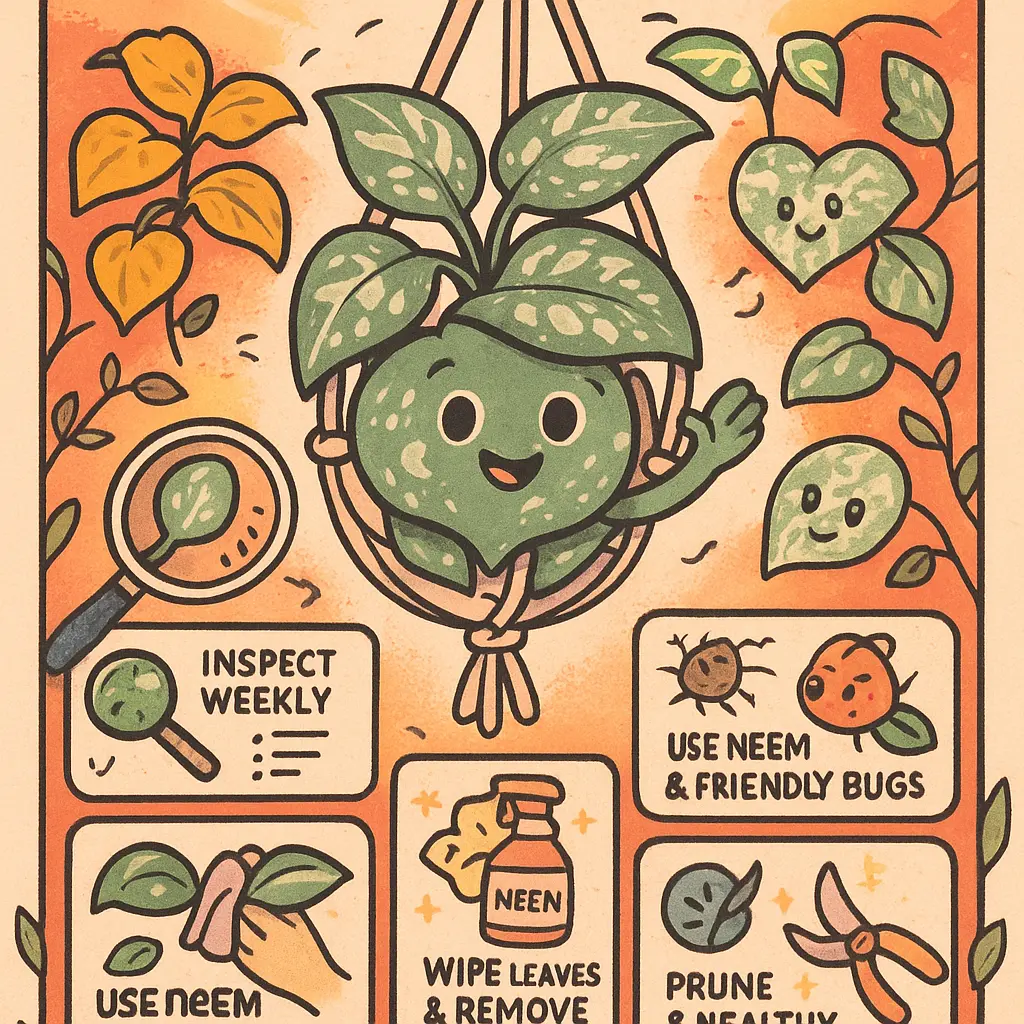
An essential first step in pest management for all pothos, whether your display is a cascading Devil’s Ivy or a vibrantly green Neon Pothos, is frequent inspection. Newer plant owners may underestimate the importance of observation—looking closely at the undersides of leaves, leaf nodes, and soil lines at least once weekly. This simple routine enables you to spot the first signs of common invaders like spider mites, mealybugs, or fungus gnats before populations explode. Plant experts in 2026 recommend integrating inspections with regular practices like watering pothos or pruning, so you never miss a beat.
Environmental optimization, which includes keeping air flowing with smart vents or oscillating fans and adjusting humidity between 40% and 60%, has proven highly effective. Many greenhouses now control climate precisely using AI-assisted devices, tools you can integrate into modern living rooms or offices too. Remember—pests thrive in stagnant, overly damp environments. In 2026, humidity monitors and air movement accessories are more affordable and available than ever, letting even novice growers design pet-friendly and pest-minimized spaces for pothos and their companions like Heartleaf Philodendron, Snake Plant Laurentii, and ZZ Plant.
Another cornerstone for current pest prevention is healthy soil and careful watering routines. Overwatering introduces persistent problems like root rot—an open invitation for fungus gnats, who thrive in musky, persistently wet potted plant mixes. By sticking to proper watering pothos guidelines—waiting until soil is dry 1-2 inches below the surface (not just the top!)—you reduce both rot risks and make the planter substrate less hospitable for bugs. UPDATE: In 2026, advanced self-watering planters are now being used across homes and greenhouses. These planters help indoor plant enthusiasts maintain near-perfect moisture, ensuring that your Jade Pothos or Pothos NJoy thrive while sidestepping most pest problems altogether.
Today’s plant professionals heartily recommend rotational natural treatments rather than automatically defaulting to synthetic pesticides. Houseplant caretakers are now favoring a variety of eco-friendly sprays in their pest-preventative routines. For example: - Neem oil: Still a natural staple, now available in less-odorous formulations. - Insecticidal soap: Effective for disrupting soft-bodied insect infestations without long-term residue. - Essential oil blends: Modern greenhouses leverage blended thyme, clove, and peppermint oils for gentle applications, safe for both pets and most low light plants like pothos.
When using any foliar treatment—particularly with trailing houseplants like hanging pothos—cover nearby furniture, and never spray in direct sunlight to avoid burn. Remember to test treatments on a small area first to be pet safety-conscious and prevent discoloration.
In 2026, the chance of pests hitching rides home on newly purchased plants or plant accessories is still significant, especially if you take advantage of plant delivery services popular among houseplant fans. Always practice a minimum 14-day quarantine for new additions, separated from your established easy-care plants such as Silver Pothos or even your resilient Snake Plant Laurentii. Examine the innovators in your local area—urban greenhouses now use antimicrobial soil amendments and beneficial insects like predatory mites as part of their pre-delivery system, raising the standard for pest-free arrivals. If you propagate cuttings from your own collection, sterilize scissors and rooting vessels between each variety, further reducing cross-contamination—a tip universally approved in current plant care tips literature.
Ongoing pruning pothos is about more than beauty—removing yellowed leaves, faded stems, and detached vines from your pothos limits decaying matter that attracts insects and maximizes gentle air circulation through your plant canopy. For sprawling wall-length pothos installations or decorative planters brimming with mixed varieties like Marble Queen Pothos, Neon Pothos, and Jessenia Pothos, timely removal of debris should be embedded into a monthly plant care routine.
Technological innovation is making rounds with smart sensors and AI-powered monitoring platforms for early pest detection, providing instant smartphone alerts and in-depth plant care information. Standard with high-end greenhouse setups in 2026 and increasingly available for home enthusiasts, these allow the easy-to-grow houseplant enthusiast to detect subtle stress signs or temperature fluctuations—spotting environments nuisances favor and correcting without delay.
By integrating these up-to-the-minute, science-forward strategies and leveraging creativity in planter design or monitoring, it’s possible to ensure your hanging pothos—be it a humble cutting of Devil’s Ivy or a rare Silver Pothos cultivar—remains healthy, vibrant, and virtually pest-free in any modern indoor environment this year.
Professional illustration about Devil
Creative Hanging Ideas
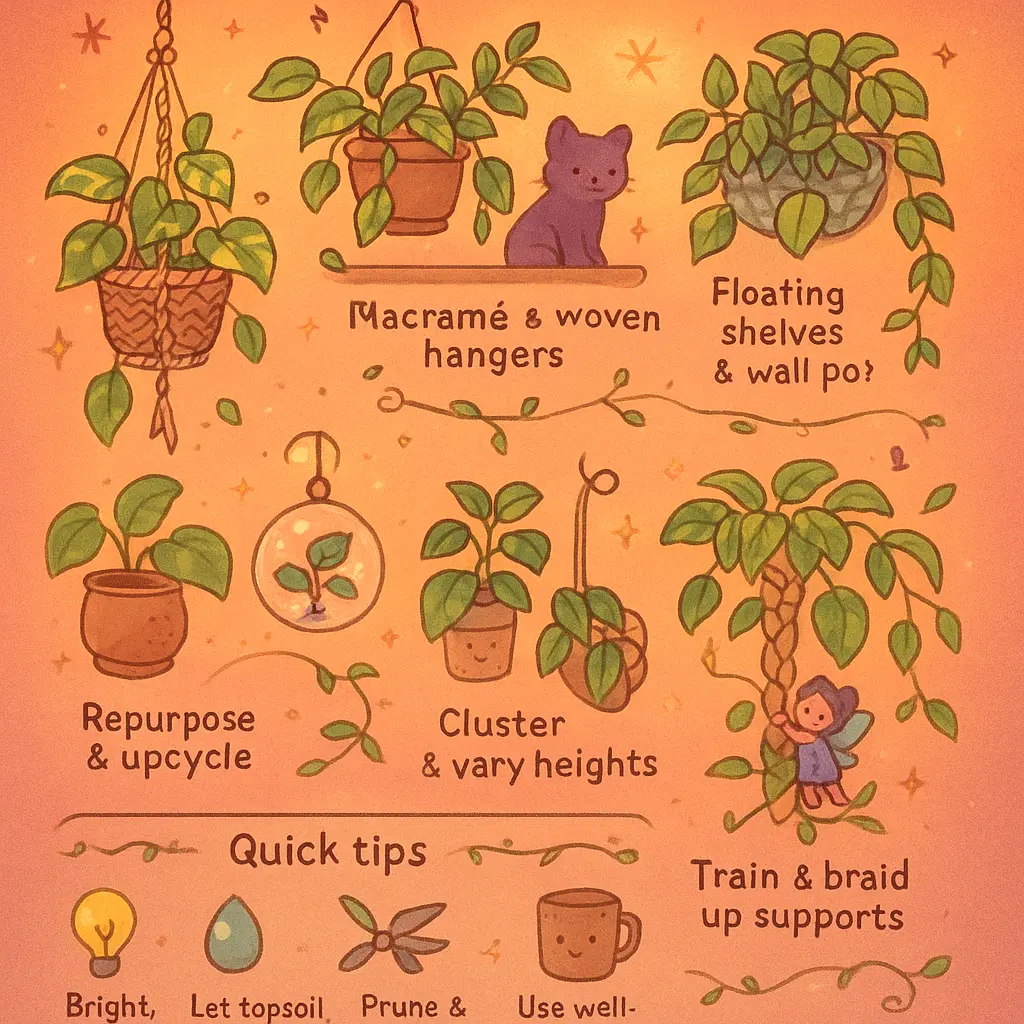
When it comes to giving your space a true update, elevating the beauty of your Golden Pothos or Satin Pothos through hanging displays brings dimension and life to any indoor setting. Forget the classic nail-and-string; you can explore several creative hanging ideas that complement both your decor and your pothos varieties, whether you’re nurturing the vibrant Neon Pothos, the elegant Marble Queen Pothos, or keeping things simple with Jade Pothos. One favorite option among plant experts is to group multiple Hanging Pothos with other houseplants like ZZ Plant or Snake Plant Laurentii at different heights using a range of macrame hangers, woven baskets, and modern ceramic planters. The trailing habit and lush leaves of Devil’s Ivy get even more attention when dripping beautifully from ceiling mounts, staggered wall brackets, or stylish ladder fixtures; this look maximizes vertical space—crucial for tighter city apartments often found in urban greenhouses.
Adopting modular wall planter systems is another game-changing idea for showcasing Silver Pothos or even mixing-in Marble Queen Pothos with Heartleaf Philodendron, which shares similar pothos plant care and watering needs. Modern plant accessories—think sleek magnetic pots or wall-mounted geometric squares—make it easy to install without major drilling. Not only do these vertical gardens provide excellent airflow, but when used with proper drainage setups, they help with root rot prevention and ease repotting when your pothos ambitions outgrow the original planter. For those who prize both accessibility and aesthetics, hanging your potted plant in the kitchen or bathroom allows you to benefit from a humidity-loving indoor plant, ideal for ensuring healthy propagation, pruning, and keeping fertilizing schedules consistent since your plant is always in sight.
If you crave a real botanical statement, fashion a hanging pulley system between sunny windows—an innovative but simple hack allowing you to rotate your Satin or Jessenia Pothos into better light as seasons shift. Adjustable pulleys or retractable cords (widely available in plant delivery sets or greenhouse stores in 2026) enable easy movement when watering pothos or snipping vines for propagating. Even homes with minimal space can go green with creative small-space options like S-hooks on curtain rods, floating window shelves, or tiered room divider planters filled with both Pothos NJoy and shade-tolerant companions appreciated by any indoor plant care enthusiast.
If personal safety and style is your top concern, try pet-friendly plant hangers made from rattan or recycled material, positioned where furry friends can’t nibble on foliage. Plant experts especially recommend using lightweight hanging accessories, so that as you experiment with different watering phenomena or test indoor plant care methods, you can easily change placement based on your easy-care plants’ needs. Turning pothos into living art is simple: choose statement planters in bold colors, or vintage finds, such as repurposed lanterns, ceramic tumblers, or even upturned baskets. Let your Marble Queen Pothos or the lush, variegated NJoy spill luxuriously and trail beside eclectic home decor details.
Multi-level shelf planters designed specifically for indoor houseplant groupings can showcase the contrast between various pothos varieties (with their striped, mottled, or electric green leaves) alongside graceful vines of Philodendron or Jewel Orchid. Watch how their trailing stems interact for lush, Instagram-worthy #PlantGoals corners. For even more functional decor, install pothos above bedside tables for a cascading canopy that doubles as an easy-to-care-for headboard.
However, creative hanging isn’t just about appearance; it’s essential to consider plant care tips like ensuring easy access for pruning pothos and monitoring soil moisture to avoid overwatering. Use self-watering inserts or water indicators—now common in potted plant accessories—to help maintain an ideal moisture balance for thriving plants in any hanging arrangement and safeguard against common issues like root rot.
By mixing structure, plant grouping, and placement experimentation, you’ll find an array of inspiring ways to reveal the natural beauty of pothos species, adding movement, fresh oxygen, and vibrant color into every nook of your home, whether you enjoy the bold Silver Pothos or the ever-glamorous Heartleaf Philodendron.
Professional illustration about Hanging
DIY Pothos Hanging Planters
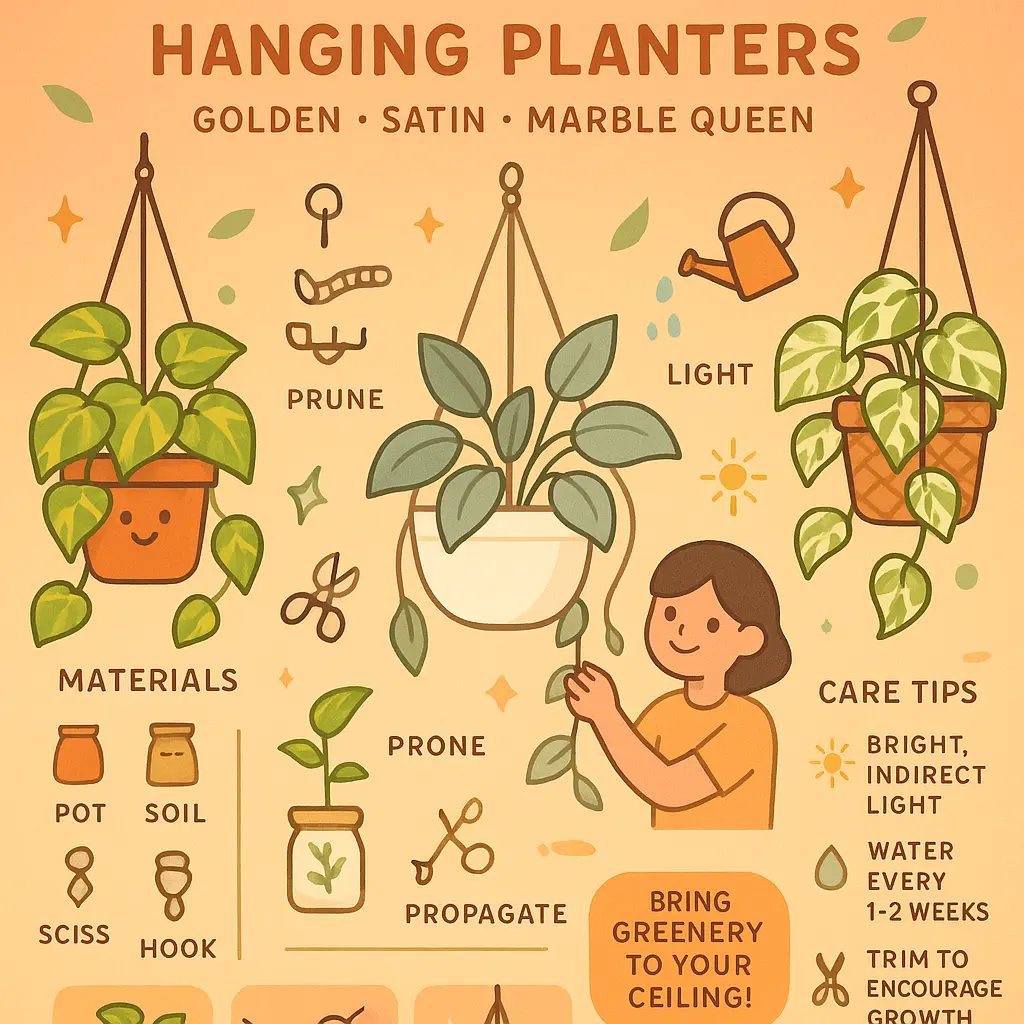
Creating your own DIY Pothos Hanging Planters is a fantastic way to bring lush greenery and style to any indoor space—whether you want classic Golden Pothos, unique Satin Pothos, or the trendiest Marble Queen Pothos trailing elegantly from your ceiling. The versatile nature of pothos makes it an easy-care houseplant and the best news is you don’t need special tools or skills to get started. Begin by selecting your favorite variety—think Neon Pothos shimmering in bright green tones or the delicately variegated Pothos NJoy for a contemporary alpine vibe. For spaces that already shine with hearty green companions, try styling relatives like Heartleaf Philodendron, Snake Plant Laurentii, or a ZZ Plant nearby for extra impact.
Materials and Planter Selection
To craft your own hanging planter, you can upcycle everyday items like ceramic mugs, mason jars, or reclaimed wooden baskets. If you’re aiming for a more advanced greenhouse look, opt for modular potted plant accessories—plastic self-watering planters and macramé hangers in natural fibers work incredibly well. Add a drainage layer with pebbles to support all types of pothos and help resist root rot. With pothos varieties available in many stores by delivery now in 2026, sourcing your starter plants has never been easier. Plant experts recommend shallow planters or baskets roughly 6-8 inches in diameter so roots—and trailing vines—have plenty of space to spread.
Planting Methods and Design Input
For propagation pros, creating new Golden Pothos or Silver Pothos vines is as simple as snipping healthy stems with a couple nodes, dipping in water or directly planting in moist soil, then lovingly admiring new roots as they develop. Layering multiple pothos stems in one spacious planter delivers a fuller jungle effect. Combine mixing types, like partnering a Jessenia Pothos with Marble Queen Pothos, to craft artistic color themes that reflect your home’s palette and personality. If you crave something more fertilizer-fueled or green, curate collections with hearty Jade Pothos and classic Devil’s Ivy varieties for durability.
The ‘How-To’ DIY Process Step-By-Step
- Pick Your Chain or Cord: Choose sturdy cotton ropes or jute cords for hanging, which handle weight without damaging delicate vines.
- Secure Your Container: Use plant accessories such as hooks and ceiling anchors for reliability. Test placement to ensure even light distribution—low light is tolerated, but indirect sun will make Marble Queen Pothos and Neon Pothos leaves sparkle with vibrant hues.
- Prepare Your Soil Mix: Use light but well-draining indoor plant soil: combine peat moss, perlite, and a sliver of orchid bark. Sprinkle slow-release fertilizer pellets into the mix for low-maintenance feeding.
- Plant Care Tips: After mulching over root zones, water lightly and observe moisture. Overwatering can lead to issues with root rot, so insert your finger or a moisture gauge to check before drenching.
- Style and Adjust: Hang your DIY planter, then gently wrap newly trailing vines or prune slightly to encourage forked growth. Designers today love placing pothos across multi-height levels, from countertop “sky gardens” to dramatic floor-to-ceiling clusters.
Maintenance for Healthy Hanging Pothos
Regular care is refreshingly simple—wipe leafy surfaces every few weeks and trim unruly vines as needed to keep your houseplant controlled and bushy. Consider repotting as your pothos fills its planter, especially those voracious Neon Pothos and Satin Pothos varieties notorious for burst-of-growth performances. To help with watering pothos, a clear container makes it easy to visualize dry or moist soil. Don’t forget the importance of easy-care and pet-friendly plants in homes bustling with activity: pothos are generally safe and rarely vulnerable to pests, but safeguard their heights if pets persistently chew leaves.
Expert Design Tips
If you’ve been inspired by trendy greenhouse set-ups this year, take inspiration from innovative arrangements witnessed across designer showcases in 2026—from hanging lattice walls perfumed by Jade Pothos cascades, to spiral-form heartleaf philodendron riffs. For creative visual interest and layered plant care information, plant experts recommend harmonizing multiple planar lines using complementary Silver Pothos and sinewy Snake Plant Laurentii, adding both air-purifying and aesthetic strength. If your planter receives direct sun, pause to adapt by moving the hanging basket towards shaded, filtered zones to reliably prevent sun-scorched foliage.
DIY Pothos hanging planters balance style and indoor plant care, delivering lush aerial gardens perfect for any skill level. So whether you’re showcasing Marble Queen vines in a sunny niche or crowding your office corners with bubbling Devil's Ivy bowls, inspiration and flexibility are yours with this DIY approach—and every year, creative innovations continue to redefine what an easy to grow trailing houseplant can bring to your home.
Professional illustration about Pothos
Pruning and Maintenance
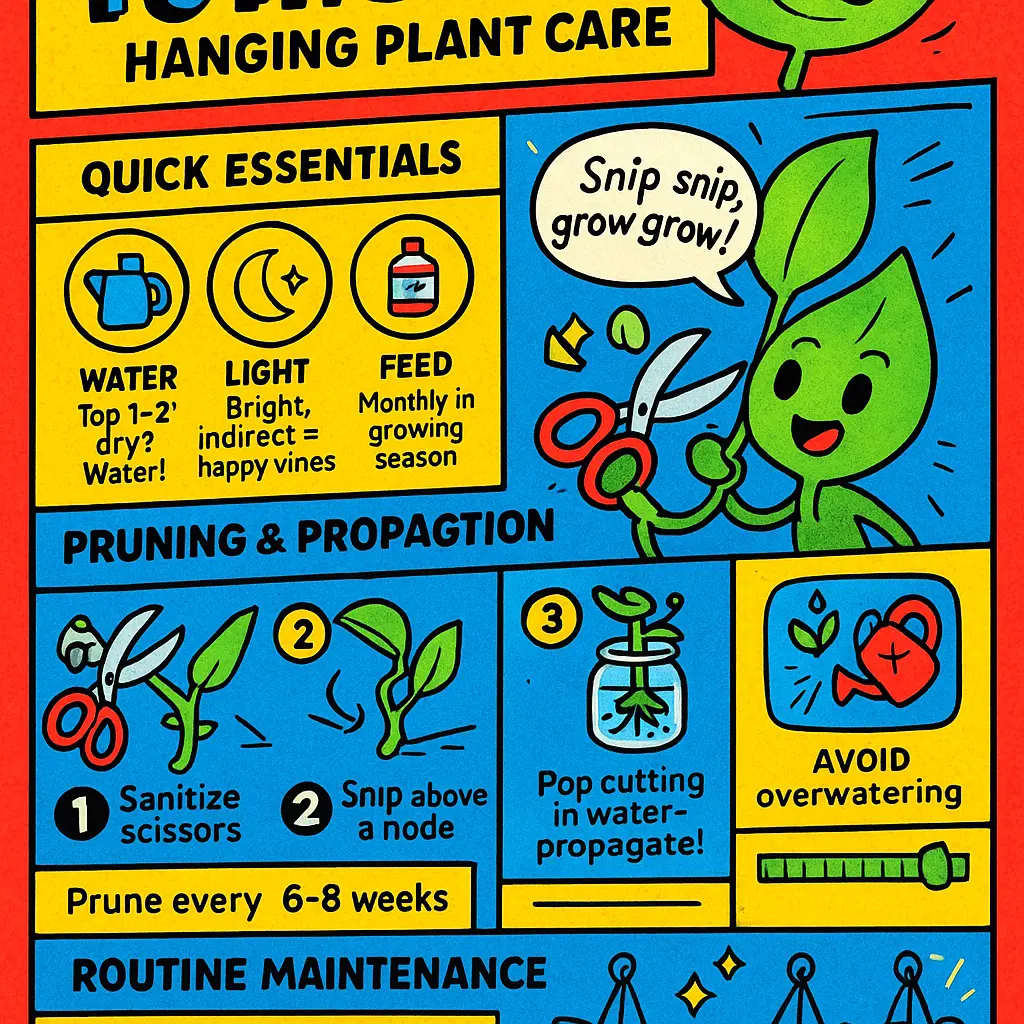
Taking great care of your Pothos and maintaining its beauty as a hanging plant is a breeze with the right approach to pruning and maintenance. All pothos varieties, from Jade Pothos and Neon Pothos to Silver Satin Pothos and the ever-popular Golden Pothos, benefit from routine attention. This isn’t just about creating a striking accent for your indoor garden or home office. Proper pothos plant care through regular pruning, maintenance, and troubleshooting keeps these easy-care plants healthy—helping them combat leaf yellowing, leggy growth, and pest problems.
Pruning pothos, especially when they trail from a planter or macrame hanger, enables you to control size, stimulate bushy new growth, and shape the look of your houseplant. Using clean, sharp scissors or plant shears, snip back unruly or leggy vines just above a leaf node—this is where foliage meets the stem. The node is where roots and fresh stems emerge, so pruning here doubles as an easy way to keep your Marble Queen Pothos, Pothos NJoy, Jessenia Pothos, or Devil’s Ivy looking full and thriving. For a lush effect, don’t shy away from cutting established pothos varieties back by as much as a third during the active growing season. In New Jersey greenhouses, plant experts recommend evaluating vines every several weeks, so your trailing houseplants remain compact and vibrant.
Another smart pruning tip—remove any yellow, damaged, or pest-ridden leaves as soon as you spot them. While pothos is famously resistant to most pests, quickly trimming infested portions helps safeguard the whole plant. Brown or mushy stems, a telltale sign of root rot, should be pruned away immediately down to healthy tissue. Removing diseased growth from your potted plant doesn't just make the implement look better; it protects the property of otherwise one of the best indoor plants for low light conditions.
In addition to pruning, regular maintenance ensures every pothos variety adapts and thrives within your home. Wiping shiny heart-shaped leaves (be it Neon Pothos or Geological Pothos) with a damp microfiber cloth enhances photosynthesis by keeping dust at bay. As part of your indoor plant care, inspect and palm away lurking debris that can hide pests or hinder light absorption. While your hanging pothos can radiate jungle vibes with dramatic strands, remember to also check wall hooks, office shelves, or macrame systems supporting each pot, ensuring security with every few weeks of growth.
Repotting is another facet of pothos maintenance. Healthy roots form the backbone of vigorous pothos, be they a mature Silver Pothos specimen or a newly delivered Marble Queen juvenile. Every couple of years—or when advancement slows or roots begin circling visibly in the container—re-pot using quality soil meant for houseplants. This minds drainage and gives your plant needed space, preventing root-bound distress and promoting robust trailing.
Keyword care also means feeding. Apply water-soluble fertilizer according to each variety’s preference during active periods, without overfeeding to avoid burns or salt buildup in the soil. Indoors, most Pothos—whether heartleaf, jade, or golden—prefer moderate fertilizing, watered fully each time the top inches of substrate turn dry. This provides consistent, healthy growth for an easy to grow houseplant, safeguarding that vivid two-toned flair or those subtle silver accents on plants like Satin Pothos.
Finally, routine checks to prevent pests are essential, particularly for those pairing introducing plant friends like the abovementioned Snake Plant Laurentii, ZZ Plant, or more node-scarce selections. Aphids, mites, and mealies, though infrequent indoors, can size up any windowsill greenhouse. Remove suspects at once, use neem oil for minor incidences, and adjust airflow if humidity invites fungus gnats or mildew near your radiant Hanging Pothos display. Pot hangers, indoor plant accessories, and easy-to-move planters make physical inspections of stems and root zones quick and non-disruptive, reassuring the longevity and display values of each designer plant you tend.
In summary, maintaining a pothos is less intimidating than many expect—regular attentive pruning, calibrated watering, periodic fertilizer feeds, simple pest defense, and basic neatness are what set professionally-kept plants apart. Any style or color of pothos genuinely shines when paired with the right care and an eager eye; all it takes is a few minutes a week for an always-beautiful display.
Professional illustration about Philodendron
Propagation Methods Explained
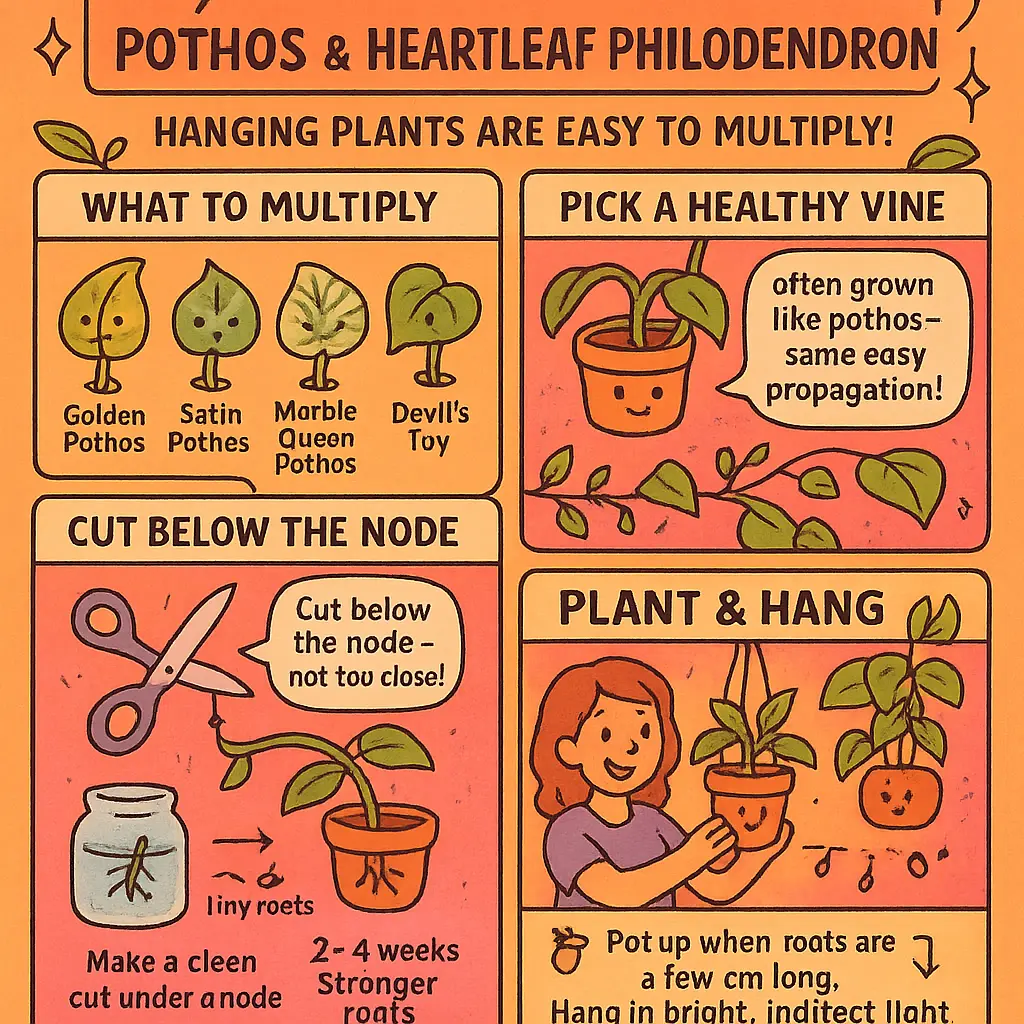
Those curious about expanding their indoor garden with Golden Pothos, Satin Pothos, Marble Queen Pothos, or even another Devil’s Ivy, will often ask about propagating pothos. Luckily, hanging pothos—no matter the variety—is notoriously simple to multiply, making it a favorite easy to grow houseplant among both beginners and experienced plant experts. Propagation not only offers an exciting way to grow new plants from original potted plants but serves as an essential technique for healthy plant maintenance, reinvigorating mature vines with lush foliage. Let's break down propagation methods explained for pothos varieties in 2026—they're time-tested, minimal fuss, and often result in gorgeous trailing stems ready to go wild in almost any planter or greenhouse.
1. Water Propagation: Absolutely iconic, water propagation works beautifully for hanging pothos such as Neon Pothos, Jessenia Pothos, Silver Pothos, and even Heartleaf Philodendron. Start by choosing a mature vine and use sterilized scissors to snip below a node (the little brown knob opposite each leaf where roots will emerge). Ideally, two to three healthy leaves per cutting work best, but the key is reserving at least one node to encourage roots. Gently remove only bottom leaves to keep water clear. Drop your cutting into a glass or jar of filtered, room-temperature water, placing the vessel somewhere bright, but out of direct sun—which prevents leaf scorching and harmful algal growth. Remember, pothos plant care tip: Change water every few days to avoid bacterial issues. Roots often sprout in under 10 to 21 days, but give each little potted plant at least a month for robust growth before transferring into fresh soil for their new indoor plant homes.
2. Soil Propagation: Preferred for plant delivery nurseries and plant experts aiming for quicker soil acclimation, soil propagation is handy for pothos NJoy and Jade Pothos. Take stem cuttings as above—a clean cut below the node. Dust the node with rooting hormone if desired (not essential, as pothos are naturally vigorous), and bury the node just under moist, well-draining potting mix. Place your planter in warm, consistent humidity without saturating the soil, which safeguards against regrettable root rot. Visible above-soil growth signifies success. For marble sheen varieties, choose terracotta planters to prevent sogginess, a classic repotting pothos hack.
3. Sphagnum Moss Propagation: Ideal for propagation connoisseurs and greenhouse collectors, sphagnum moss is best for instances where soil or water alone may be too risky for exotic trailing houseplant types or Snake Plant Laurentii relatives with partial variegation. Wrap moss—fully moistened—around nodes of mature vines but leave leaves outside to absorb ambient indirect light. Seal the whole with a ziplock bag (available from hardest-core plant accessory shops) or propagate bin to secure massive humidity. Within three weeks in steady conditions year-round (thanks to the latest climate-managed greenhouses since 2024), encourage healthy roots and transplant to planters after successful, visible rooting.
4. Air Layering: For those growing legacy pothos varieties, especially older IN LIFE Marble Queen and Variegated Silver Pothos, you may try air layering. Shower a spoonful of straight-out-of-the-bag sphagnum at a deliberately wounded node with shallow bark scrapes, moisten, and seal about the vine using cling wrap, supported with twists. After a few weeks above soil—even faster under inline greenhouse humidifiers in 2026—cut below the newly enough rooted section and plant directly, bypassing some slow acclimation of stand-alone water propagation methods.
Insider Tips from Plant Professionals: Many plant experts will tell you that the magic policy with hanging pothos actually hinges on two trick tips:
- Season matters. Pothos propagate more vigorously during late spring through early fall (think light increase), yet increased homes equipped with ambient tech actually extend optimum rooting all year scattered around in kitchens, baths, or dedicated digital homes.
- Testing patience is better than tempting excess moisture. Since root rot doesn’t forgive rookie mistakes, don’t overdose on watering pothos during early propagation. Stick to garden-light misting, not a drown-a-thon.
Pet owners should consult detailed plant care information, checking traits of propagation safety—most pothos, like satin icons or Devil’s Ivy imposed over planters, aren’t considered pet-friendly plants. However, cleaning up fallen leaves at root-off proves nothing beats intentional pruning pothos while propagating for preventing unexpected hazards.
No matter what technique, propagating pothos remains rewarded by spectacular returns: new foliage, supply for next year’s houseplant gifts, or upscale suspension to dramatize one-of-a-kind displays—even for thriving potted plant mantles admired everywhere from private greenhouses to long-haul plant accessories contours in tech-forward 2026.
Professional illustration about Plant
Pothos Safety for Pets
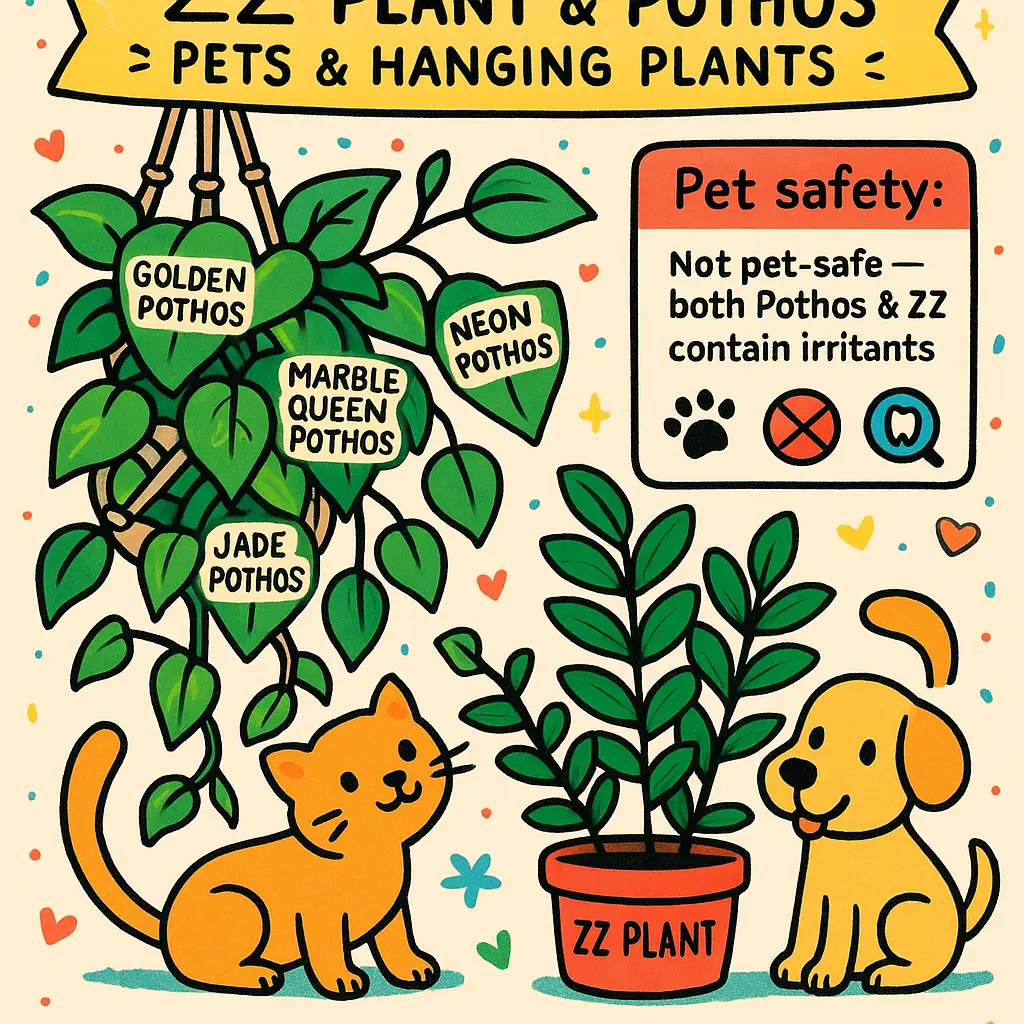
If you’re a devoted pet owner considering the addition of beautiful indoor greenery, understanding Pothos safety for pets is absolutely essential. Varieties like Golden Pothos, Marble Queen Pothos, Neon Pothos, Jade Pothos, Satin Pothos, Jessenia Pothos, Silver Pothos, Pothos NJoy, and even Devil’s Ivy (another name for Pothos) fall under the Araceae plant family. While these easy-care, low light loving indoor plants make beautiful hanging accents in baskets or planters, they unfortunately possess a hardware pet parents must know about: Pothos—as much as they’re celebrated as the best indoor plants for beginners—aren’t pet-friendly. Either cascading as a hanging Pothos high on your bookshelf, trailing from a macrame holder, or brightening a bathroom, these popular houseplants can be toxic for both cats and dogs.
What exactly are the risks with Pothos and your pets? According to recent 2026 guidance from plant experts and updated safety bulletins, what commonly makes Pothos toxic is their insoluble calcium oxalates. When parts of indoor Pothos like Snap Devil’s Ivy, leave samples from Silver Pothos downward, the sharp oxalate crystals can irritate and even injure the tissues of an animal’s mouth, lips, gums, and digestive tract—noticing signs from mild drooling and nausea courtesy of nibbled stem all the way to more serious swallowing difficulties. Marble Queen, Jade Pothos, and Pothos NJoy all share the same botanical trait. Whether your furry companion is an occasionally curious pup or a gracefully investigating cat, chewing risks apply across all core Pothos varieties.
Puppies, kittens, and even grown pets cross paths with houseplants like the arrest sticks of Neon Pothos or trailing Silver Pothos in off-guard moments, but not all neighbors to your plant shelf have these concerns. Heartleaf Philodendron—often mistaken for Pothos—bears the same risk because it, too, carries insoluble oxalates, whereas true pet-friendly plants include the lush Boston Fern, Peperomia, and certain Calatheas. Iconic low care plants on 2026 shelves like ZZ Plant or deep green Snake Plant Laurentii, while also hardy for beginners, should also be tracked out of little snouths—meaning one shouldn’t let ease of maintenance, hardiness, or root rot resistance give the impression that all trailing or upright indoor plants are wholly safe.
What actually distinguishes Satin Pothos toxicity is not external color or variegation but the aforementioned sap's oral and internal irritants. Even small pressings—a leaf or bitten sheaf ponded under your potted plant’s drip tray or greenhouse shelf—have enough to warrant a phone call to your vet as a precautionary step. The up-to-date advice: hang high. For homes with acrobatic femme samash feline or busy body dogs always deux sniff from a stool, Pothos planters should be truly—and henhonestly—unreachable. In multi-pet settings, augmentation like plant cages, elevated wall-mount planter shelves, or solid terrariums is becoming signature advice in 2026 plant care guides & accessories lists. The passive but practical motto among urban greenhouse operators? "Block with beauty"—using trailing houseplants like Pothos only where they can't become scratching posts or teething toys.
Worried you might still miss accidental pet versus pothos interactions? There are worthwhile tracking tips. Tag your current catalog—with plant markers naming "toxic" or "safe" near each specimen so pet-sitters, kids, and guests know exactly which gold-tipped leaf latte looker comes with a divergence note attached. Choose sturdy self-watering hanging planters which minimize dropped tag tails, dead leaves, and stem pieces reachable at ground level. Prioritize regular inspection—a plant care essential even for robust varieties like Jade Pothos and Silver Pothos—removing dead/leaking/depleted materials immediately into secure pulava containers outdoors. Employ pruning, propagating, or repotting Pothos out of nosy nose reach, as plant experts caution five-minutes-too-long on the couch might mean snatched vegetation surprises courtesy of inquisitive critters.
If any maize moments occur and a pet does accidentally bite into Devil’s Ivy or any Satin or Marble Queen Pothos, plant care guidelines for 2026 are explicit: remove any remaining plant matter from their mouth, dupe with water (in cool amounts as appropriate per your animal hospital's protocol), and reach out promptly for veterinary services. Documentation matters; potspecific notes, including variety (such as Ghost Pothos vs Jessenia), photograph, and dosed observations can vastly improve emergency outcomes should symptoms like pawing, vocalizing, foaming, or refusing food start.
With the passionate in‑home grower movement growing in places like the States and surge urban centers from New York to LA, fostering pet safety while still enjoying thriving Pothos is possible by applying an up-to-date combination of physical safeguards, clear categorization, modern accessories, and tuned-in plant care. Treat your designer trailing houseplant and every core Pothos (from knockout Golden to dramatics like NJoy) with smart placement in your home calling, field your pet’s face-off to leafy twists and quest indoor chic that never makes safety math an afterthought, all with insight acres ahead in this 2026 homeowner landscape.